HIBAPRESS – Rabat
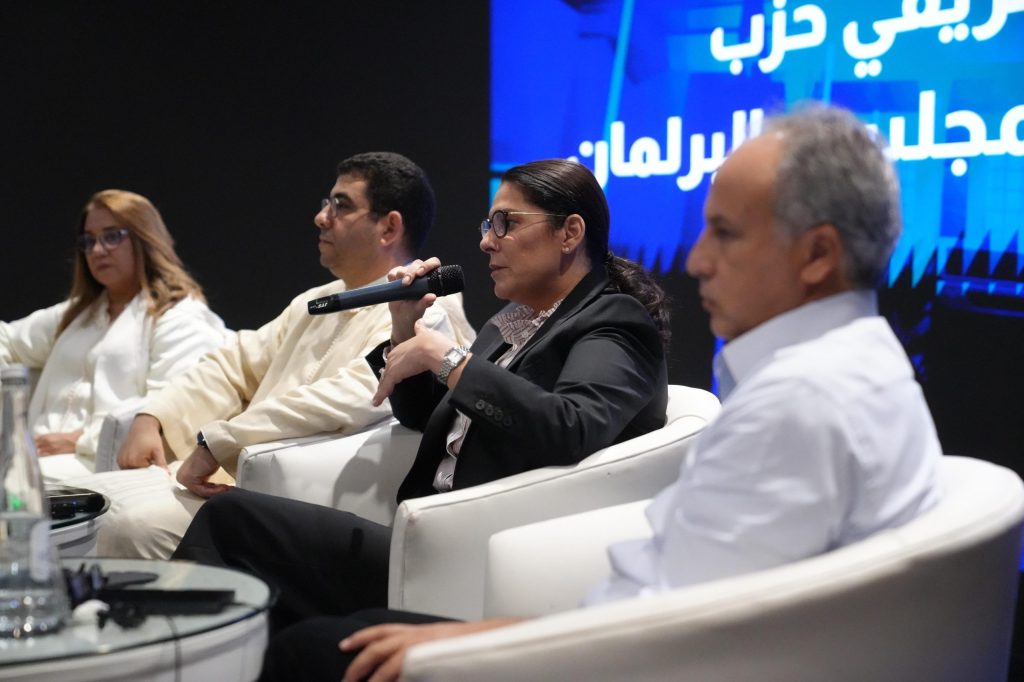
Immediately after the High Royal Speech on the occasion of the opening of the first session of the first legislative year of the twelfth legislative term, the Authenticity and Modernity Party began working internally on ways to implement the royal directives, through a communication meeting for its teams in the House of Representatives and the House of Councillors, held yesterday evening in Rabat.
The discussions focused on the roadmap set by His Majesty the King for the next phase, especially regarding field work, the activation of regionalization and administrative decentralization, and prioritizing youth issues, while calling for these directives to be translated into parliamentary performance that is more committed and responsive to citizens' expectations.
The discussions moved towards the importance of keeping pace with the responsibilities imposed by the upcoming phase, by strengthening harmony within the two teams, ensuring regular and active attendance in sessions and committees, and improving the quality of interventions and engagement with issues that concern citizens.
In this regard, the Prime Minister tasked with forming the government and the national coordinator of the collective leadership of the Authenticity and Modernity Party, Fatima Zahra Al-Mansouri, considered that the electoral campaign and the September 23rd vote contributed to strengthening the party's power, calling for the new phase to be used to review past experiences and correct errors, which would help develop party and parliamentary performance.
Al-Mansouri, in a speech during the communication meeting held this Friday evening at a hotel in Rabat, highlighted the experience of Ahmed Al-Touizi in heading the parliamentary team during the previous term, praising his management of this responsibility and his party commitment, considering that the experience he has accumulated constitutes an asset that can be utilized to continue the team's work.
Her speech focused on the necessity for parliamentary presence to match the level of expected responsibilities, through commitment to attendance and positions, and work within the legislative institution, emphasizing the importance of translating the party's values into actual practice, based on seriousness and taking responsibility.
For their part, the interventions of the "Tractor" party parliamentarians focused on the additional responsibilities that the upcoming phase entails, calling for the two teams to be a support for the next government, through performance that combines numerical presence, effectiveness of positions, and quality of interventions, in order to keep pace with the issues raised at the national level.
The interventions recalled the experience of work during the previous term, and moved towards affirming the necessity of strengthening commitment throughout the upcoming term, and highlighting the majority's presence within the two councils and in various committees, pointing to doubling efforts and consolidating discipline, in order to enhance the ability of the two teams to keep pace with government work.
The territorial dimension was present within the discussions, as the interventions focused on the importance of expanding listening to party militants in various regions, especially remote areas, and on considering competence, commitment, and the ability to respond to needs in the party's choices for the upcoming phase.
The interventions also moved towards calling for the adoption of a comprehensive vision for political work, strengthening proximity to citizens, and linking readiness for collective and regional elections with field work that responds to their expectations and takes into account the specificities of territorial areas.
In this context, they called for vigilance and responsibility in taking positions, and maintaining the coherence of performance, while focusing on work and commitment to the parliamentary tasks of follow-up and attendance.
The interventions also addressed a number of issues raised in the Royal Speech on the occasion of the opening of Parliament, foremost among them regionalization, administrative decentralization, and youth employment, emphasizing that the implementation of these projects requires the provision of necessary mechanisms and resources.
The PAM parliamentarians focused on making these priorities part of parliamentary and field work during the upcoming phase, and strengthening the contribution of the two teams in supporting the government and responding to citizens' expectations, in a way that translates political responsibility into regular efforts within the legislative institution and at the territorial level.