Heba Press – Casablanca
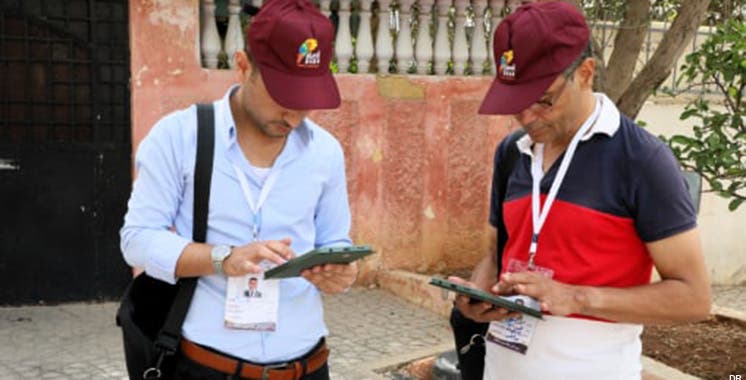
The census process began in our country at the beginning of September and will continue until the 30th, as the High Commission for Planning has trained more than 55 thousand researchers, men and women, to cover different parts of the Kingdom.
The census process, according to data from its first day, generally took place under normal conditions, as researchers ask citizens a series of questions, the answers to which are included in an electronic tablet, and the data is sent directly to the control authority in encrypted form to ensure the protection of private data.
There are two types of questionnaires that ask citizens questions. The first is a short form that includes a limited number of questions that can be answered in a time frame not exceeding five minutes, while 20 percent of Moroccans will be selected “automatically” and “arbitrarily” to answer the long form questions.
The short form includes data on the nature of the family members’ relationship to the head of household, gender, nationality, age, social status, place of birth, age at marriage, type of residence and distance from home to housing facilities, whether related to work, hospitals or educational institutions. In addition to identifying the condition of roads and means of transport, know the quality and availability of means of transport and the structure of roads.
The form will also include questions about the phenomenon of immigration, to determine the age, sex and date of immigration of the immigrant, to know the place of residence before the current residence and to count deaths knowing the date of death, the sex of the deceased and his age at the time of death.
As for the questions related to the long form, they concern fertility, the difficulties encountered by people in particular situations, such as the nature of the care arrangements, the search for care, the ability to communicate or even the health coverage system.
This form also includes questions about the child’s first mother tongue in which they communicate within the home, whether it is Darija, Tashlahit, Tamazight, Trifit, Hassaniyya or other languages used within the home for foreign language speakers, in addition to questions related to reading and writing proficiency in a number of languages, including the Tifinagh script, as well as Arabic, French, English and Spanish.
It also includes questions about the level of education and the nature of certificates obtained, whether educational or professional, in addition to the profession or economic activity carried out, the level of use of modern technology and a number of details related to housing conditions, such as the number of rooms, the nature of home ownership, the source of lighting, the extent of water quality and the method of its supply, the use of renewable energy for domestic purposes and the method of disposal of household waste.