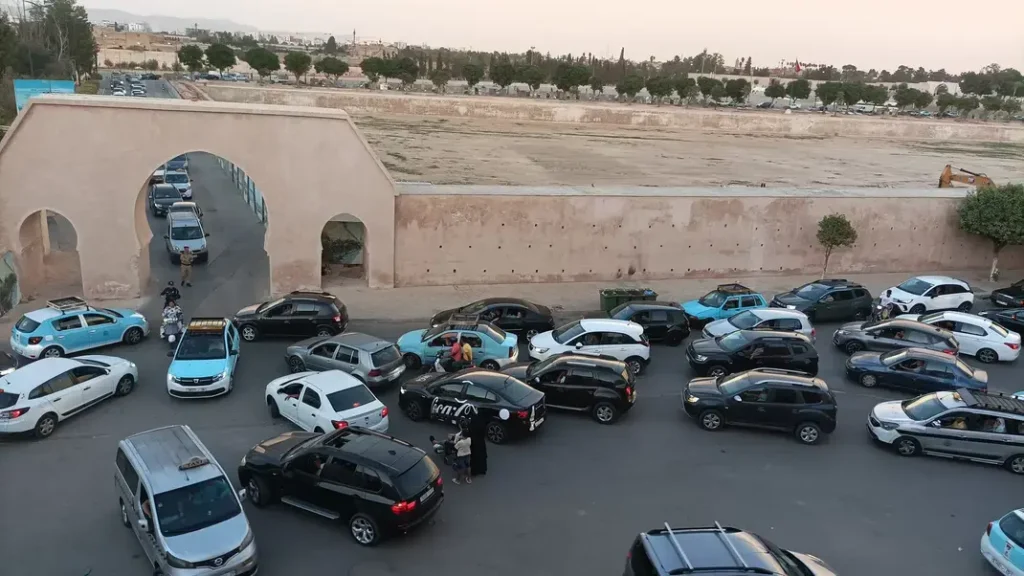
The city of Meknes is facing a growing traffic crisis that is negatively affecting the quality of life of its residents, as local authorities seek to improve infrastructure and expand services. However, the problem of traffic obstructions and deterioration of traffic regulations remain urgent challenges that need to be resolved. solutions.
The notable absence of safety regulations in some neighborhoods and main streets is a major factor leading to increased traffic chaos and a high accident rate.
Lack of effective traffic regulation
Despite the efforts of some parties to improve traffic flow, systematic traffic regulation by security services is still lacking in many regions and in many eras, causing a state of randomness.
This absence from vital city streets makes traffic enforcement less strict and opens the door to illegal behavior by drivers, such as random parking and passing traffic lights.
At some major intersections and busy streets, we see a distinct absence of traffic police during peak hours, making traffic chaos a reality and increasing the severity of traffic jams due to the random behavior of drivers acting out of control. so as to further complicate traffic.
The impact of lack of organization on daily life
A stifling crowd
The lack of traffic regulation leads to repeated daily scenes of congestion on main streets such as Avenue Mohammed V and Avenue Hassan II, especially during rush hours.
In the absence of regular security interventions to regulate traffic, traffic in these places becomes more congested, making it more difficult for citizens to move and delaying their arrival at their destination.
High accident rate
Due to weak organization and control, the accident rate in Meknes is high. In the absence of control over speeding and overtaking, some drivers resort to dangerous behavior, leading to an increase in road accidents that threaten the safety of citizens.
Economic and social repercussions
Citizens face frequent delays in arriving at work and school, which affects productivity and increases stress levels. Furthermore, traffic chaos leads to increased fuel consumption, which doubles the economic burden on individuals and negatively impacts the local economy in general.