This article was automatically translated from HIBAPRESS, the Arabic version:
This article was automatically translated from HIBAPRESS, the Arabic version:
Heba Press – follow-up
The High Accounting Council has published its annual report, which includes a set of points that Hiba Press will publish in detail in subsequent articles.
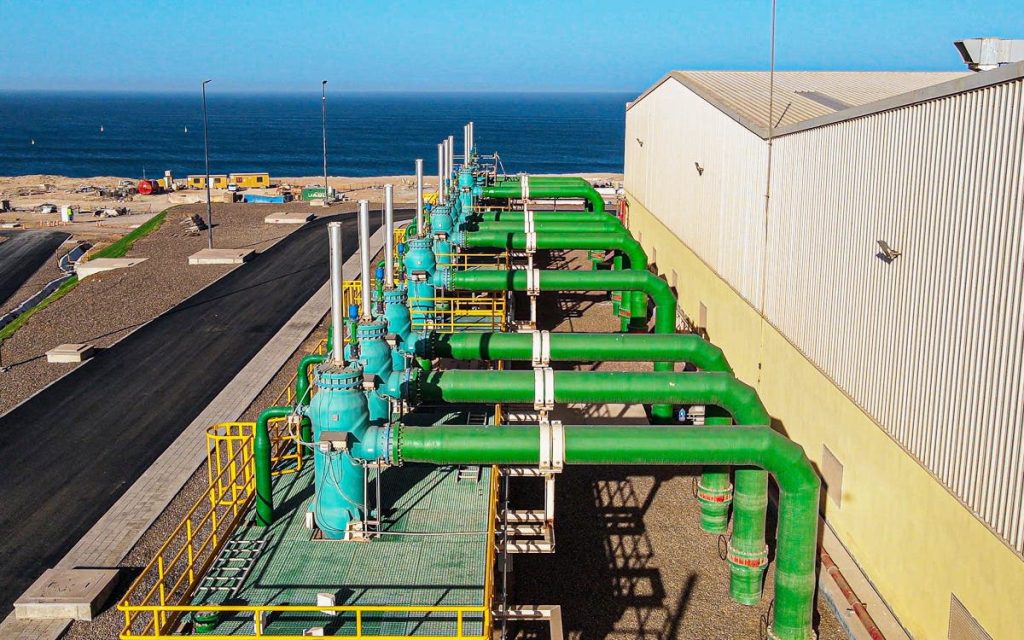
Among the points discussed in the report are seawater desalination plants, as the report confirms that in order to cope with water shortage and fill the water resources deficit, water desalination is one of the solutions that Morocco has resorted to in recent years with the objective of filling 1.4 billion cubic meters per year from 2027, then 1.7 billion cubic meters per year by 2030, in order to secure the supply of drinking and irrigation water and protect the aquatic bed.
Seawater desalination projects will also redistribute water from dams and direct it more towards cities, inland centers, rural areas and irrigation orbits.
The number of water desalination plants increased from eight stations, with a total production capacity of 46 million cubic meters per year, ahead of the launch of the National Drinking Water Supply and Irrigation Program 2020-2027 , to 15 stations in 2024, with a total production capacity of 192 million cubic meters per year, an increase of 146%. One million cubic meters, including the Agadir seawater desalination plant with a production capacity of more than 100 million cubic meters per year.
In addition, six major seawater desalination projects are being implemented, with a total production capacity of 438.3 million cubic meters, including the Casablanca plant, with a total capacity of 300 million cubic meters per year, will lead 250 million cubic meters/year. for drinking water and 50 million cubic meters/year for irrigation.
The start of work on this station was scheduled for June 10, 2024, and it is also planned that 13 additional seawater desalination stations will be built by 2030, in a range of regions, including the cities of Rabat, Tangier , Essaouira. , Tan-Tan, Guelmim and Boujdour, in addition to the Souss-Massa region and the Eastern region.
It should be noted that ultimately, it is necessary to supply water desalination plants with clean energy, in order to reduce the cost of producing desalinated water and reduce the carbon footprint of these plants.