This article was automatically translated from HIBAPRESS, the Arabic version:
HIBAPRESS-RABAT-MJ
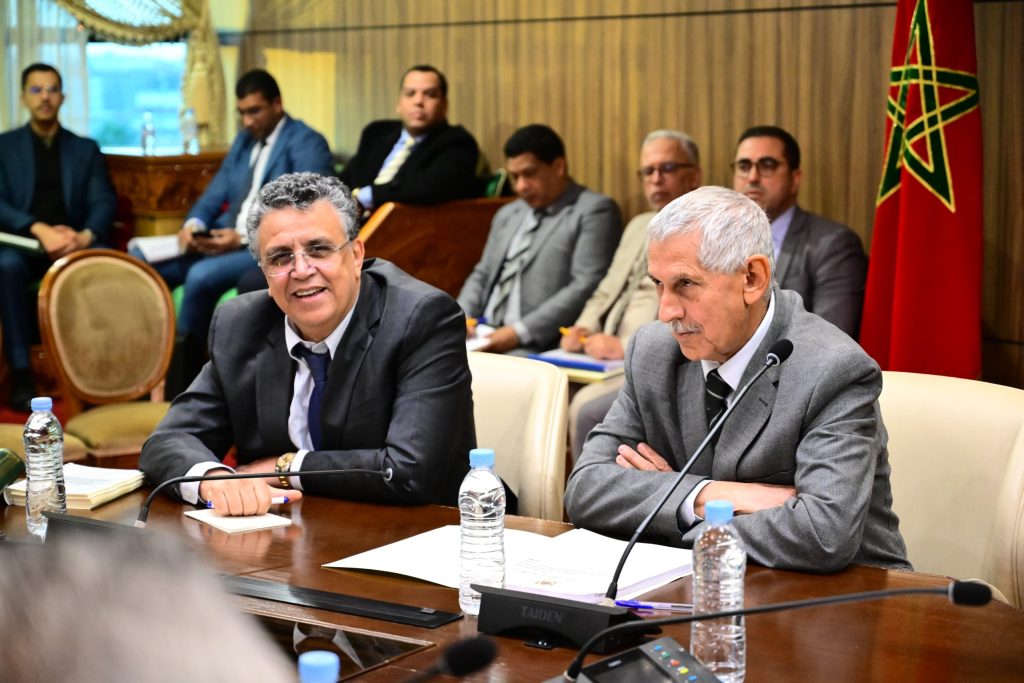
The Minister of Justice Abdellatif Wahbi continued the examination of Bill No. 02.23 relating to civil procedure before the Committee on Justice, Legislation and Human Rights in the House of Councilors, chaired by Mr. . Aboubakr Obaid.
In his intervention on this occasion, the minister noted that his ministry worked on the development of the draft code of civil procedure by adopting a broad participatory methodology during which it collected the opinions and opinions of all stakeholders in the judicial field and worked to align the articles of the project with the requirements of the constitutional document and the principles of Human Rights as an implementation of the recommendations of the Charter of justice reform and the new development paradigm .
The minister also stressed that this bill essentially constitutes a realization of the supreme Royal Will expressed by His Majesty King Mohammed VI in his historic speech of August 20, 2009, on the occasion of the commemoration of the Revolution of the King and the People and Glorious Youth Day, explaining that the new bill includes a number of legislative novelties which are in line with international legislative and procedural developments. It is also consistent with the principles of Human Rights as established in the international conventions ratified by the Kingdom of Morocco, in particular in the clauses relating to justice and human rights in general, such as equality, the right to defense, the delivery of judgments within a reasonable time, legal assistance, free trial, the principle of non-discrimination, etc. In addition to other internationally recognized principles, he reviewed the different stages through which this bill went before being presented to the Commission, as well as the amendments it contains, which aim to achieve a certain number of objectives, the most important of which are the following:
-Base the rules of specific jurisdiction on the principles of unity and judicial specialization, by harmonizing the rules of specific jurisdiction with Law No. 38.15 on judicial organization.
-Simplify legal procedures and procedures, combat vexatious disputes between parties, reduce delays, simplify and rationalize appeals, broaden the scope of exemptions from legal fees, eliminate the values procedure, use the address database residential information of litigants contained in the national electronic identity card when it is not possible to reach the address indicated, and organize a countermeasure mechanism at the Court of Cassation.
-Integrate e-litigation and digitize civil judicial procedures, creating a set of electronic platforms for lawyers, judicial commissioners, legal experts, notaries and sworn translators admitted before the courts, adopting an account, a mail, address and electronic signature, as well as using electronic means in public auctions and notification and advertising procedures.
-Strengthen the rights of the defense by confirming the role of the lawyer in representing the parties before the courts, even in cases where the oral procedure is applied, and investigation procedures such as expertise, inspection and the taking of oaths are now legally carried out only in the presence of the lawyer or after he has been legally summoned.
-Revision of the decision procedure on the exception of specific incompetence and setting of deadlines, and establishment of an execution judge, giving him the power to supervise execution procedures, to monitor execution requests judgments and to rule on material and temporal difficulties raised during execution.
-Regulation of international jurisdiction: The draft also regulated the conciliation procedure before the court of first instance in order to definitively resolve the dispute before the court of first instance, allowing the court to offer conciliation to the parties, or to entrust it to lawyers, social workers or others. It also regulates the mediation process, giving the court the possibility to invite the parties to mediate to end the dispute and granting them a reasonable period of time to present their conclusions.
The bill reorganizes the field of intervention of the public prosecutor in civil proceedings as an agent of society, and grants him, whether or not he is a party to the proceedings, the right to appeal to declare null a judgment contrary to public order, without limiting the time limits for appeal.