This article was automatically translated from HIBAPRESS, the Arabic version:
Hibapress-Rabat
Faithful to their commitment to integrative health and scientific innovation, Mohammed V University in Rabat and the Al Khayzourane association organized, on May 24 and 25, 2025 at the Faculty of Medicine and Pharmacy in Rabat, the international symposium on tumor rehabilitation and integrative medicine innovations.
This major scientific meeting was held in partnership with the World Federation of Traditional Chinese Medicine Societies (WFCMS) and the Private Institute of Traditional Chinese Medicine, with the prestigious support of the Lalla Salma Foundation-Cancer Prevention and treatment, as well as the Ibn Sina-University Hospital Center.
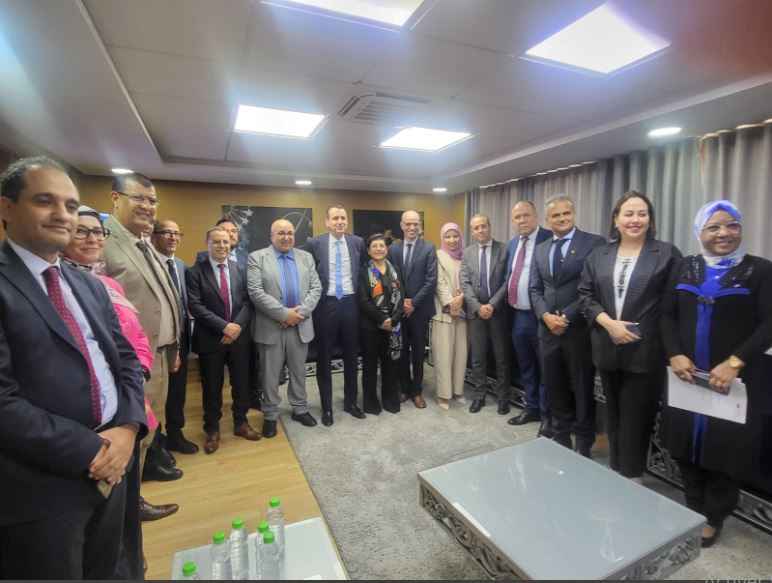
The symposium was honored by the presence of many high -ranking personalities, stressing the importance and radiation of the event. Among them were Pr. Mohammed Rhachi, president of Mohammed V University of Rabat; His excellence Mr. Li Changlin, Ambassador of the People’s Republic of China; Pr. Raouf Mohsine, director of the Ibn Sina University Hospital Center in Rabat; Pr. Brahim Lakhal, dean of the Faculty of Medicine and Pharmacy of Rabat; As well as Dr Naoufal Louati, president of the Al Khayzourane association. A Chinese delegation made up of experts in modern and traditional medicine also took part in this meeting, alongside many figures from the medical, scientific and academic world.
This international symposium brought together specialists from five continents-Africa, Asia, Europe, America and Morocco-and has favored a dialogue between modern oncology and millennial knowledge of traditional Chinese medicine, in an integrative approach focused on the patient’s innovation and well-being.
Two highlights marked this exceptional edition:
The African forum on the cooperation and development of traditional Chinese medicine, and the 2025 annual academic meeting of the committee specializing in WFCMS tumor rehabilitation.
The program proposed plenary conferences, thematic panels, clinical research presentations as well as specialized workshops. Renowned speakers shared their work on complementary therapies, the rehabilitation of patients with cancer, innovative approaches in integrated care, and the prospects for alliance between modern medicine and medicinal traditions. In a global context where chronic diseases require global responses, this symposium has asserted itself as a unique platform for dialogue, exchange and cooperation. He has fed on the ambition to bring out more human, personalized and based on solid scientific bases.
The convergence of knowledge, the pooling of expertise and the common desire to improve the quality of life of patients were at the heart of this international meeting, placed under the sign of scientific excellence and intercultural openness.