This article was automatically translated from HIBAPRESS, the Arabic version:
This article was automatically translated from Hibapress, the Arabic version:
Heba Press -muhammad Zaruh
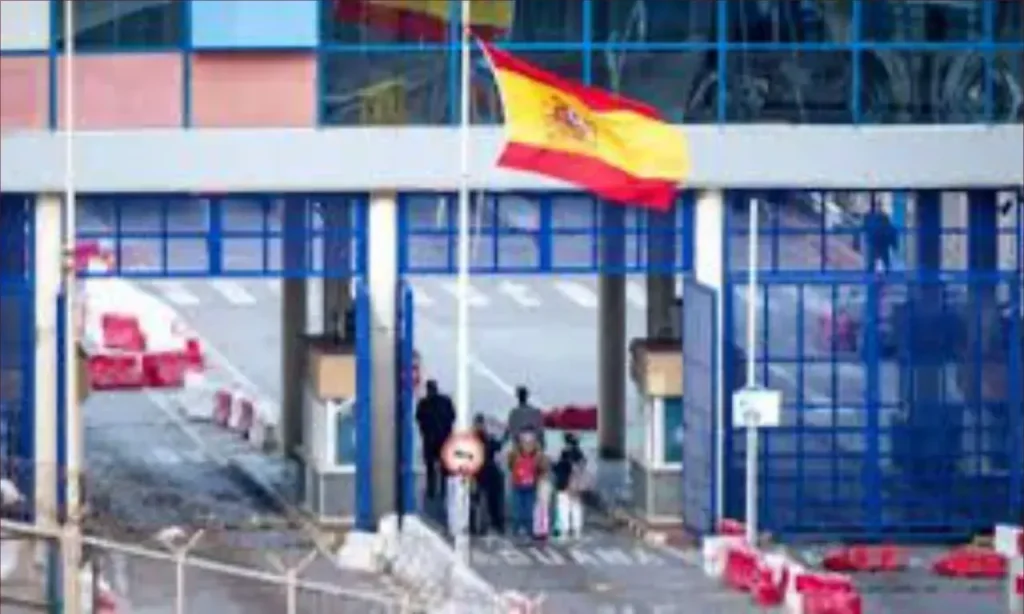
In an unexpected stage, the Spanish authorities refused the Moroccan proposal to open the crossing of Farkhana for a period of four months a year, which aroused generalized controversy in the position of the Spanish government. This proposal aimed to facilitate the circulation of movements between the two countries, as well as to support economic activity in the occupied city of Melilla, which witnesses major economic challenges.
Many local parties in Melilla welcomed this proposal as an opportunity to improve the economic and social conditions of the city. However, the Spanish government, which has chosen to reject the proposal, has provided no convincing explanation for this decision, which exacerbates the crisis situation in the region.
Speaking of this question, the Moroccan deputy of Melilla, Amin Azani, expressed his condemnation of this rejection, stressing that the Spanish government makes a fatal error which negatively affects the inhabitants of Melilla. He declared in an interview with “Cope Melilla” that this decision increases the suffering of the population with economic and social isolation.
For its part, Azani stressed that Melilla residents are faced with great challenges following this decision, which makes the economic situation in the city more difficult. He explained that this decision reflects the lack of understanding by the Spanish government of the needs of the inhabitants of Melilla.
Azani also drawn attention to failures in the annual “Hello” process because the Spanish government has occupied the full responsibility of the suffering of the Moroccan community while it crossed the South Spanish ports. He explained that poor coordination and weakness of the Spanish measure greatly affect the comfort of Moroccan citizens.
In conclusion, Azani stressed that responsibility is not the responsibility of Morocco with regard to these problems, but is rather the result of bad decisions of the Spanish government. Despite continuous Moroccan trends to improve bilateral relations, these policies remain an obstacle to the achievement of fruitful cooperation between the two countries.
.Hibawts {display: inine-flex; Align-Eeetems: Center; Justification-contained: Center; Background color: # 25D366; padding: .5rem 1.25rem; Police size: 1st; Link-Height: 1.5rem; Police-point: 500; -Tw-tox-opacity: 1; Transition time:. 7s; Transition timing funiating: Cubic-Bezier (. 4.0, 2.1); Width: 49%; } .HIBAWTS SPAN {Color: #FFFFFS; } Padding: 10px; Border-Radius: 10px; Color: #FFF; Police: Bold; Display: inheritance; Marge pot: 5px; } Padding: 10px; Border-Radius: 10px; Color: #FFF; Police: Bold; Display: inheritance; Marge pot: 5px; } Padding: 10px; Border-Radius: 10px; Color: #FFF; Police: Bold; Display: inheritance; } Width: 3rd; Height: 2m; ADIGNE VERTICAL: Middle; Display: online block; Marge: Var (-google -News-icon-Margin); } URL (“https://ar.hibapress.com/wp-constrent background-size: auto; background-size: 2m 2em;} url (” https://ar.hibapress.com/wp-constrent-same-size; heba press on Whatsapp.