This article was automatically translated from HIBAPRESS, the Arabic version:
Hibapress-Rabat-Caf
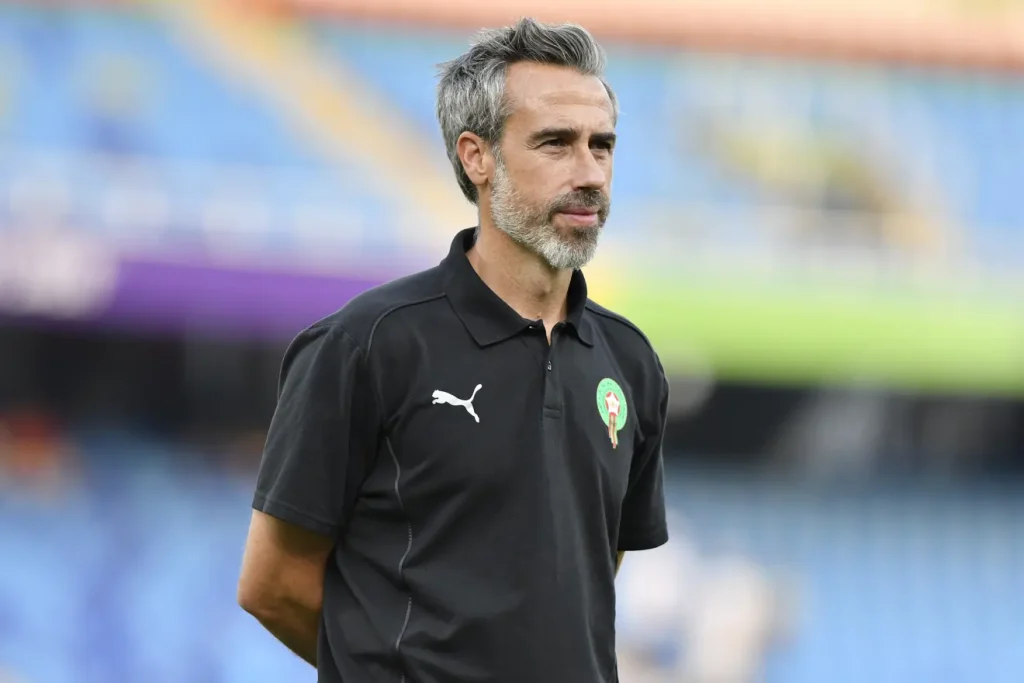
World champion with Spain in 2023, Jorge Vilda now targets the continental title with Morocco The coach of the Atlas lionesses built a solid collective as I approach a CAN organized at home requirement, human management and measured ambition: the Vilda method to mark the history of Moroccan women’s football
He never talks about dreams. Only commitment, method, conquest. In Jorge Vilda, Morocco found a coach with unrivaled list – world champion with Spain in 2023 – but above all a builder. Since last November, the former Roja Women’s Roja has set up at the head of the Atlas lionesses with the same obsession: to transform the essay of Moroccan football in full Ascension, African vice-champion in title and eighth finalist of the last World Cup.
A few weeks before the kick -off of the Totalnergies 2024 female CAF CAN, organized at home, Vilda measures the extent of the challenge. He does not hide. Lucid on the density of group A – Zambia, RD Congo, Senegal -, Spanish knows that the wait is immense. But he prefers to talk about privilege.
“It is not a negative pressure. It’s a huge desire to do well. »»
The 43 -year -old technician was quickly seduced by the Moroccan project. “I felt a real desire to develop women’s football. I was given the means, I was able to build my staff, and the welcome was exceptional. Since then, he has patiently weaves an united, cosmopolitan collective, made up of players from different championships. Integration? “They are the ones who facilitate everything. They are totally committed to the jersey. »»
Vilda claims a style of human management, based on the link, respect, and requirement. A family he hopes to be carried by Moroccan supporters from July 5.
“What I can guarantee is that our players will fight on each ball.” The promise is clear: no hollow dream, but concrete, sweat, ambition, and a can to conquer, finally.
CAFONLINE.COM: Even before the tournament kicks off, what look at you, not only on the competition itself, but also on African women’s football in general?
Jorge Vilda: It is football with immense potential. It has been almost two years that we are working here in Morocco and that we face African teams. There is a real progression.
Everything is more and more balanced. The teams are better preparing, national competitions are improving, the selections have better technical staff that help players to progress. We see more organized training and, above all, endowed with enormous physical potential.
We also note the presence of many players playing in the best world championships, which clearly makes the difference, both in club and selection.
Before taking charge of the Moroccan selection, you were coach of Spain, world champion. How does this experience influence your work with Morocco today?
Winning a World Cup is the fruit of the work of many people for many years. Personally, I spent 17 years in Spanish selections. I started in the categories of young people, first as a physical trainer, then assistant coach, before directing the U17 for several years, then the U19, and finally the selection A that I trained for eight years.
During all this journey, many things have been well done. My goal, as a coach, has always been to help players and teams to progress.
We have also received a lot of support from clubs, regional federations and, of course, from the Spanish Federation, which provided us with the means and the tools necessary to make women’s football grow.
I am very proud that, during this same season, we won the U17, U20 and A World Cup. This is something very rare and difficult to match. All this experience serves me today.
Here, we are in another reality, but I think that in almost two years, we have helped to advance Moroccan selection and women’s football. We really want to see this translate into results, even if we know that it takes time to achieve it.
You took the reins of the Moroccan selection in November 2023. What convinced you to join this project?
Well, first of all, it was the conversation with the president who quickly convinced me, because I received a strong, determined and courageous commitment in favor of women’s football in Morocco, with a real desire for growth. The current immediately passed.
Then, I was visited the facilities, which are, I think, among the best in the world. These are those of the Moroccan Federation. There is also the whole work team of the Federation who takes care of women’s football.
Finally, I met the players during a meeting, and what they liked I liked a lot.
I took a long time to decide, I saw that it was an environment conducive to developing our work. I was also allowed to build my own staff, which is not always possible elsewhere. Everything was facilitated, and I quickly said yes.
Morocco is your first experience abroad. Can you tell us how you experienced this transition? What highlights have you been remembering since your arrival?
I especially remember the first games we played. Just after my signature, I think that after three days, we already had an internship, practically without knowing the players.
We played two qualifying games for the Olympic Games, which we won.
What struck me the most was the way football is celebrated here, the passion of supporters, players.
When we returned to the residence after winning these two games, all the employees welcomed us with flower petals, music … It was a scene that I had never lived before.
Subsequently, I tried to help with the lower categories thanks to my experience. And now Morocco will organize the next five Women’s World Cups U-17.
I think it shows how the country and the federation are committed to women’s football.
Internship internship, we work on a daily basis, here in Morocco, which I find to be a wonderful country that I recommend discovering. People are very hospitable, we woven very good links. And, I am very happy.
The Atlas lionesses are one of the most cosmopolitan selections on the continent, with players from several championships. How do you manage to create a real cohesion despite this cultural diversity and these various journeys?
Finally, they are the ones who make things easy, because they arrive with an involvement and total commitment to the jersey, the coat of arms, the country. They come very motivated.
Then, on our side, we also try to promote the cohesion of the group through joint activities, apart from football.
From the start, it was an objective for us to create this group. And I am proud of what we have built, because it is a very good human group. Players who give everything to each training, who behave with respect, not only between them, but also towards the referees and the staff.
We also have a great staff: medical service, intendants, team manager, media people … We train a real family.
For language, we adapt as we can to understand each other, and in the end, everyone understands. I learned a few words in Darija to coach on the ground, a little French too. But especially I have a very important person for me: my assistant Saad Guermane. He helps me pass the messages with precision, by translating into French and Arabic.
There is a very beautiful harmony among all. And I would like it to last a long time.
Morocco is evolving in group A, alongside Zambia, DR Congo and Senegal. What are your impressions on this group?
I think it is the most raised group, because very balanced. We know Zambia well, we competed in Olympic qualifications. It is a team that has progressed a lot this last year, with very powerful, fast, physically strong players, who evolve in the best championships.
They have a new coach (Editor’s note: Nora Häuptle) which brings them more organization. It’s a very competitive team.
The DR Congo is also a selection made up of very physically strong players. We have already faced them and we know how difficult they are to play.
And Senegal, which we faced in a friendly match, is a team that can pose real problems.
I believe that each victory in this group will be a real conquest. Winning a match in the final phase is already a conquest. And that is our goal: to conquer match after match.
As a vice-champion of Africa, and host of this female CAN, do you feel a particular pressure?
More than pressure, it is above all a great desire to do well.
Of course, we put some pressure on a daily basis to work well. But it is not a negative pressure: it is a privilege to have this pressure, because it means that we have a good team, and that we know that we can do great things. This is why we are fighting.
As for the external pressure-of the public, the press-we feel it less, because basically, those who put us the most pressure, it is ourselves.
What message do you want to send to Moroccan supporters?
We are not going to disappoint them. We want them to come and support us in the stadiums, that they also follow us on television.
What I can guarantee 100 %is that our players will give everything, fight on each ball, not only to win the games, but for each action. This is the identity of this Moroccan team, and I can assure you that you will see that. We want Moroccans to be proud of their team, that’s why we work every day.