HIBAPRESS – Shafiq Anouri: American researcher Michael Rubin urged the White House administration to "not ignore" what he called the "battle of mosques" in Africa, and to work on supporting Morocco, which is keen to spread "moderation" on the continent.
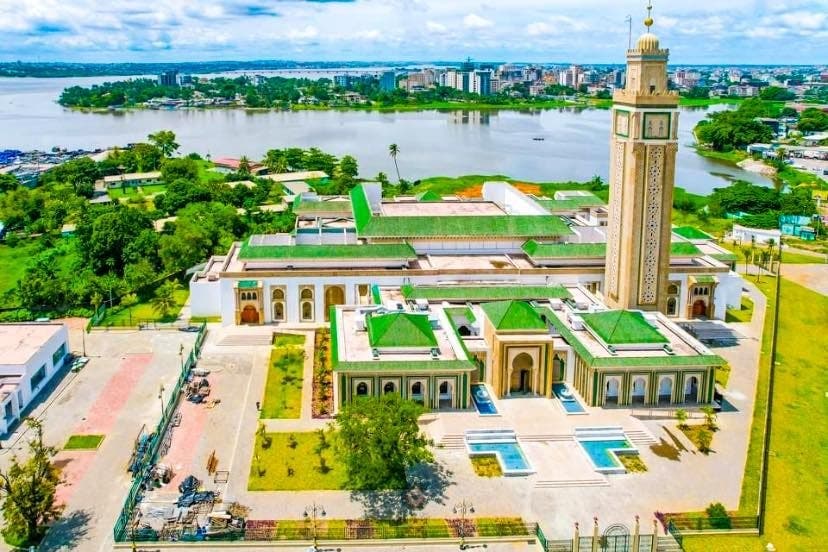
Rubin said in a report published by the American weekly "Washington Examiner" that Morocco inaugurated in April 2024, the Mohammed VI Mosque in Abidjan, the largest city in Côte d'Ivoire, to become a prominent religious and architectural landmark overlooking the "Ébrié" lagoon, which separates vast parts of the city from the Atlantic Ocean. He explained that the Moroccan religious presence in Côte d'Ivoire is of "special importance given that the two countries adopt the moderate Maliki school, one of the four schools of Sunni jurisprudence," adding that this mosque is not the first religious footprint of Morocco in the country, which now has the highest per capita income in West Africa, more than three times that of Nigeria. He pointed out that about a decade ago, in the context of the rise of the "ISIS" organization, (Michael Rubin) visited a center in Rabat where Moroccan scholars were mentoring students and imams from various West African countries, from Côte d'Ivoire to Mauritania, to enhance the purity of the Maliki school in the face of external attempts to distort it or attract young Muslims. The researcher warned that the forces seeking to influence Muslims in the region are numerous, some of them online, and others inside the mosques themselves, continuing that "in the late twentieth century, American diplomats were aware of Saudi attempts to spread extremist interpretations by building mosques and funding religious schools and imams." After the attacks of September 11, 2001, the report explains, "American historian Bernard Lewis likened the Saudi role in spreading Islamic extremism to what might happen if a racist organization like the 'Ku Klux Klan' took over the state of Texas and used oil revenues to spread its extremist ideas in the Christian world." The American researcher mentioned that in recent years, he has visited a number of countries in the region such as Burkina Faso, Côte d'Ivoire, the Central African Republic, the Democratic Republic of the Congo, Mali, and others, and noticed that a struggle for minds and hearts is taking place there to attract Muslims, whether they are a majority or a minority. Rubin pointed out that "Turkey, for example, funded the National Mosque in Ghana, whose official website boasts that it dominates the skyline of the capital Accra, although Ghana is a predominantly Christian country," adding: "Saudi Arabia, according to reports, is still funding the construction of small mosques adjacent to gas stations and rest stops on the roads." The same source continued that "in Côte d'Ivoire, the new Moroccan mosque stands as part of this competition, while Turkey has built an Islamic cultural center, and Saudi charities have continued to build small mosques to target truck drivers." The report stated that Turkey seeks to consolidate its influence through a new initiative in the Sahel region, with the aim of becoming the most influential Islamic power there, continuing that Ankara pressured local governments to close schools of the Fethullah Gulen network, and to take over their management through the "Yunus Emre Institutes," saying that it has graduated approximately 16,000 students from 160 countries, many of whom seek its help to convert to Islam. The report explained that "diplomats usually measure influence through aid and bilateral relations, while American officials avoid addressing religious affairs due to the traditional separation of church and state in the United States," adding "However, the escalating conflict between Washington's adversaries and allies on the African continent, the second most populous continent in the world, requires the United States not to remain on the sidelines." The report considered that "American diplomats and intelligence agencies should assess religious influence and measure its rise or decline," to conclude that "when Morocco dominates the religious scene, moderation prevails, but when Turkey or Iran takes over, the result is often the spread of extremism and terrorism."