HIBAPRESS – Abdelatif Baraka
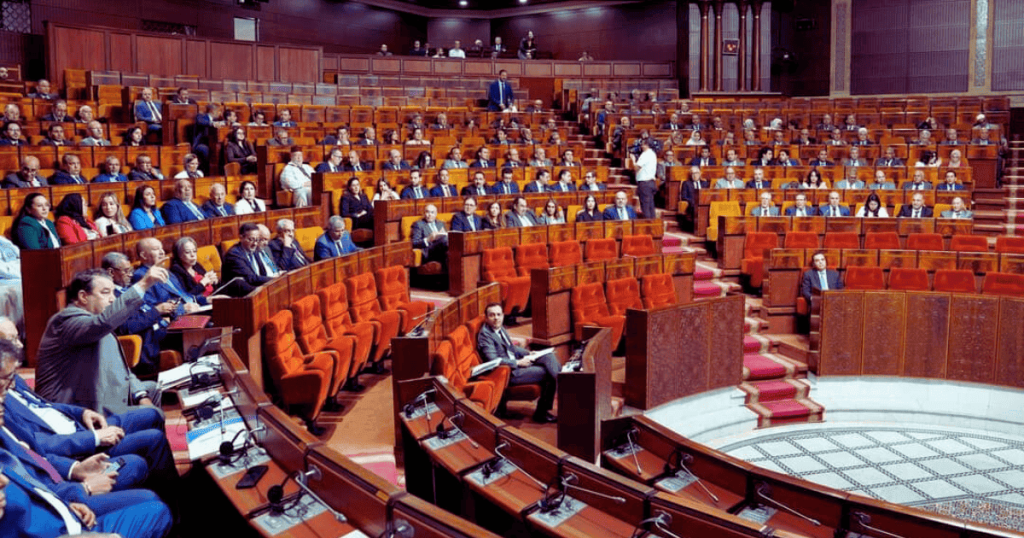
The Moroccan parliament is witnessing unprecedented pressure during the current legislative term due to the accumulation of legal texts, with more than 38 draft laws being presented to the legislative institution, most of which concern strategic and vital sectors. This situation reopens the debate on the priorities of legislative work and the need to reconcile the discussion of laws and the implementation of the supervisory tasks assigned to the institution.
This pressure comes in a precise time context characterized by the preparation for the finance bill, which requires parliamentarians to intensify their efforts to complete their constitutional obligations without disrupting the overall balance of work within the institution. In this regard, some supervisory files are temporarily postponed to allow for the discussion of priority laws, foremost among them are laws reforming education, insurance, and the commercial code, as well as projects related to the energy sector and the transformation of public institutions into joint-stock companies.
To avoid chaos within the general sessions, the legislative institution is moving towards adopting a more organized methodology in managing the discussions, through official frameworks such as the conference of presidents and the council office, while ensuring political consensus before presenting major projects to the general sessions. These bodies have adopted the principle of postponing non-urgent discussions until the appropriate conditions are available, ensuring legislative efficiency and not dispersing efforts.
Added to this context is the political and symbolic momentum that accompanies the current session, especially with the approach of the celebration of the fiftieth anniversary of the recovery of the Moroccan Sahara, which requires Parliament to deal with its intensive agenda with flexibility and realism.
Despite the challenges, the main bet remains to keep pace with major national reforms and fulfill the higher directives that call for strengthening the effectiveness of the legislative institution and ensuring positive interaction with citizens' expectations.