HIBAPRESS – Chafiq Anouri
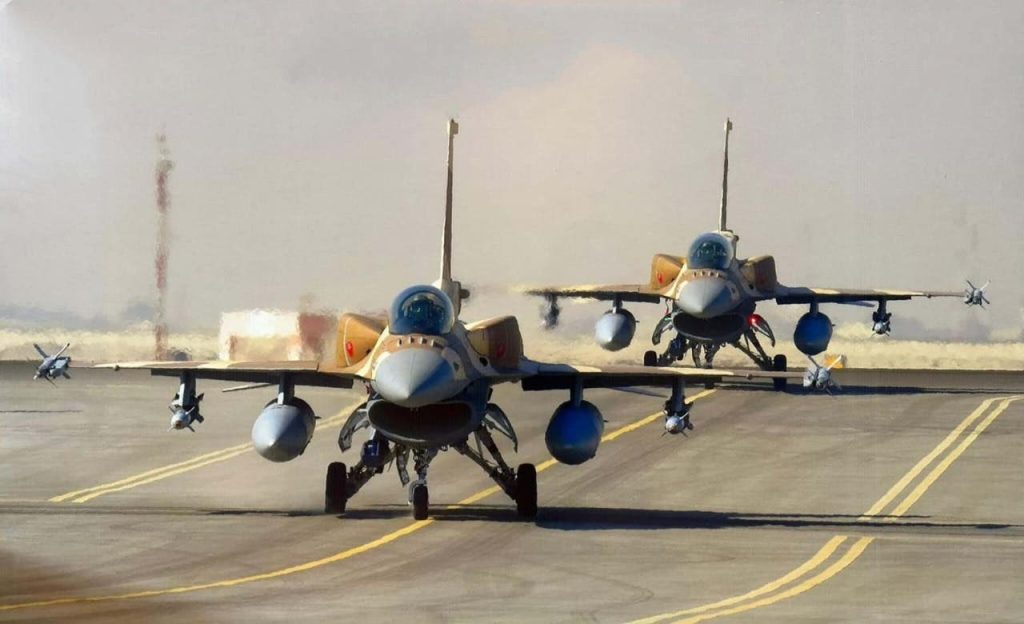
A recent Spanish economic report confirmed that Morocco's increase in its defense budget aligns with its strong economic growth, allowing it to modernize its armed forces and strengthen its position as a regional power in North Africa, given the ongoing tension with its eastern neighbor Algeria and the existing conflict over its southern regions.
The report, published by the Spanish newspaper "Eleconomista," explained that Morocco plans to increase its military spending by up to 18 percent next year, equivalent to 157 billion dirhams, or about $17.1 billion, representing approximately 4.2 percent of its GDP, which is twice what Spain spends relatively. The report considered that this spending is possible thanks to the strong economic growth Morocco is witnessing, which allows the defense budget to be covered without affecting overall financial stability, explaining that Morocco benefits from its distinguished geographical location as a link with Europe, low production costs, in addition to its advanced infrastructure. The report added that these factors make Morocco an attractive destination for foreign investments, especially in the electric car and vehicle battery industry, noting that car production in the Kingdom increased from 40,000 units in 2010 to 560,000 units in 2024, ranking 25th globally in car production, surpassing European countries such as Poland and Hungary. The report pointed out that the tourism sector in Morocco is also a fundamental pillar of economic growth, as the Kingdom recorded more than 17.4 million visitors in 2024, exceeding its expectations for 2026, which put it at the forefront of North African destinations compared to Egypt. These successes, the Spanish report explains, also contributed to Morocco regaining a good credit rating from the American agency "Standard & Poor’s," which re-rated it "BBB-" with a stable outlook, after four years of hesitant ratings. Regarding the defense budget, the report indicated that Morocco has taken extensive steps over the past decade to strengthen its military capabilities, including modernizing equipment and increasing the productivity of local military industries, in addition to diversifying arms suppliers by signing agreements with countries such as China, India, Turkey, Brazil, and Pakistan. The Spanish report continued that increased military spending accompanies Morocco's strategy to reduce the current deficit and achieve greater self-sufficiency in the field of defense, although the Kingdom is still far from manufacturing advanced weapons at the same level as major countries. The report focused on the ongoing regional conflict between Morocco and Algeria, pointing out that the main issue is the Moroccan Sahara, which Algeria is trying to separate from the Kingdom, by supporting the "Polisario" front, explaining that this historical and geographical dispute overlaps with the competition for regional leadership, as Morocco seeks to strengthen its relations with Western powers such as the United States and the European Union, and normalize relations with Israel, while Algeria tends to ally with Russia, whose relations with it have deteriorated significantly in recent years due to the Sahel conflict. The report confirmed that Morocco is benefiting from strong economic growth to expand public spending without causing significant financial pressures, with expectations of continued GDP growth of between 4.2 and 4.4 percent in the coming years until 2030, indicating that Morocco has invested widely in the development of major ports such as Tangier Med and Nador West Med, in addition to building the largest ship basin in Africa in the city of Casablanca, which reflects the Kingdom's keenness to strengthen its logistical and infrastructure capabilities to keep pace with economic and defense growth. At the end of the report, the "Eleconomista" newspaper linked Morocco's economic success with increased defense spending, considering that the Kingdom achieves a balance between developing its economy and making its army more efficient and capable of facing regional challenges, which enhances its position as a key player in North Africa and allows it to invest in economic and political opportunities at the regional and international levels.