HIBAPRESS – Abdellatif Baraka
The recent Russian announcement of the successful test of its nuclear-powered cruise missile, known as "Burevestnik," marked a new turning point in the global arms scene, especially in light of the escalating tension between Moscow and Washington, and the ongoing war in Ukraine, which has returned the world to the atmosphere of the Cold War.
– A Russian innovation or a political message?
Russian President Vladimir Putin announced that Moscow had successfully tested the new missile, which is characterized by an almost unlimited range and its ability to fly for long hours — reports mentioned that the last experiment lasted about 15 hours and covered a distance of about 14,000 kilometers.
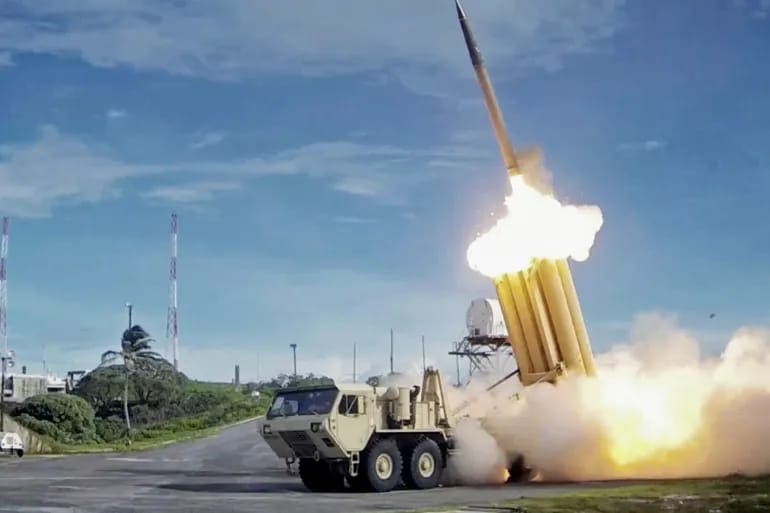
The missile relies on a miniature nuclear engine that allows it to stay in the air for long periods without the need to refuel, which gives it a unique ability to bypass conventional air defense systems and reach distant targets from unexpected paths.
However, this "technological achievement" cannot be separated from its political and military context. Putin announced the experiment at a sensitive moment: it coincided with the escalation of Russian attacks in Ukraine, the deterioration of relations with the West, and the imposition of new sanctions by Washington on Russian energy companies. Therefore, many analysts believe that Moscow wanted to send a double message from the announcement:
Internally, to repair the image of Russian power after a long and costly war.
Externally, to remind Washington and NATO that Russia is still capable of surprising them technologically and militarily.
– The American response: balancing deterrence or a return to nuclear display?
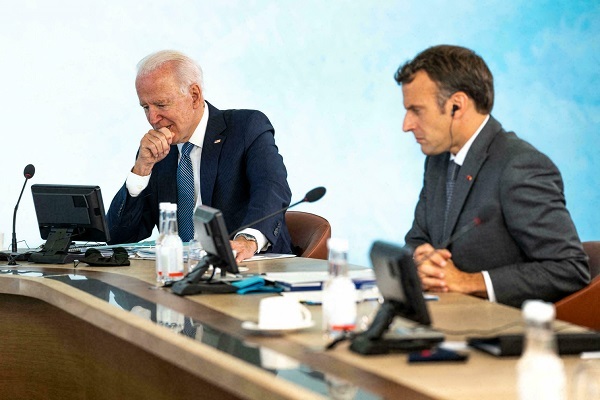
The response of US President Donald Trump came quickly, as he commented, saying that the United States has "nuclear submarines that are the greatest in the world, stationed near Russia," in reference to Washington's continued superiority in naval nuclear capabilities.
Although Trump tried to downplay the importance of the Russian experiment, his statement clearly reflects Washington's concern about any breach of the nuclear deterrence balance that has remained relatively stable since the end of the Cold War.
This verbal exchange brings to mind the stage of the "arms race" between the Soviet Union and the United States in the 1950s and 1960s, when each power sought to prove its ability to comprehensive deterrence and technical superiority, even through dangerous experiments.
– The world between the balance of terror and nuclear technology
The new Russian missile, if its capabilities are true, does not represent just a new weapon, but a transformation in the concept of deterrence itself. Previous nuclear missiles relied on a specific path and high speed, while this new type combines continuity, maneuverability, and stealth, making it theoretically able to go around the planet and hit targets from any direction.
But this development carries with it enormous environmental and technical risks. The small nuclear engines that power the missile raise fears of radiation leakage in the event of a failed launch, which was indicated by previous reports of incidents during initial tests of this project since 2019.
– Is the world heading towards a new hegemony?
It can be said that the "Burevestnik" experiment does not represent just a military advance, but an expression of a shift in the balances of global hegemony. Russia, which is facing economic and military isolation, seeks to confirm its position as a great power capable of breaking Western superiority through technological innovation in the field of nuclear deterrence.
In contrast, this development may push the United States and China to accelerate their programs for hypersonic missiles and miniature nuclear reactors, which opens the door to a new arms race, more complex and less controllable through traditional treaties.
– Return to the logic of force
The Russian nuclear-powered missile experiment is not just a military event, but a declaration of the return of the logic of nuclear force as a tool for geopolitical influence. While Washington tries to maintain a balance of deterrence through its naval and technical superiority, Moscow seems determined to rewrite the rules of the game.
The question that imposes itself today: Are we facing a new nuclear multipolarity led by technological innovation, or the beginning of a stage of strategic chaos where nuclear deterrence itself becomes a hostage to political adventure?