HIBAPRESS – Youssef Akdad
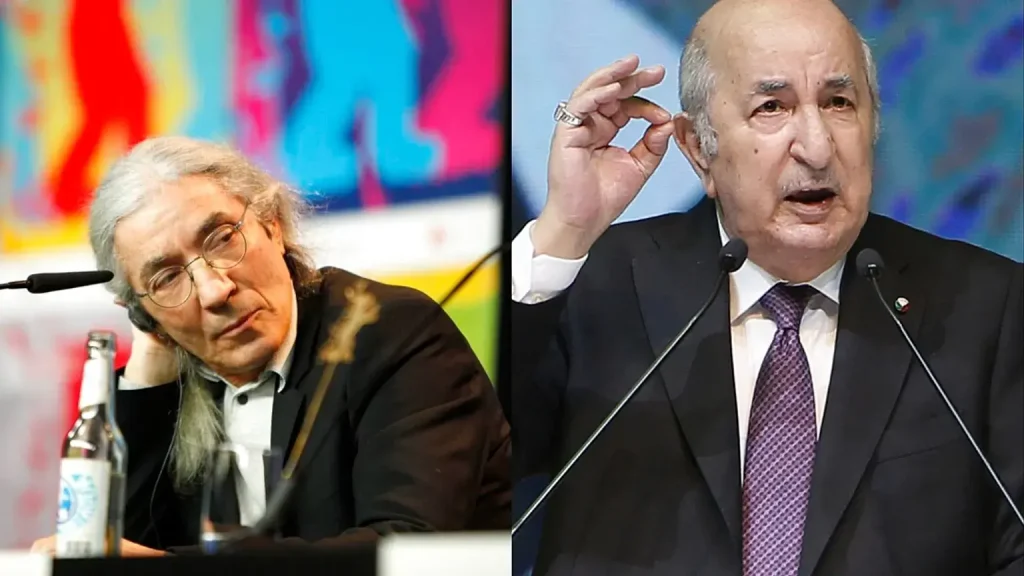
In a scene that reflects the contradictions of the official Algerian discourse and the duality of its positions, the Algerian presidency announced a presidential decision to pardon the writer Boualem Sansal, in response to a request submitted by the President of the Federal Republic of Germany, Frank-Walter Steinmeier, for reasons described as "humanitarian."
However, this decision, which was officially promoted as a "humanitarian gesture," actually revealed the fragility of the sovereign discourse promoted by the Algerian regime, which has long boasted that it is an "independent regional power that is not subject to external pressures." The statement issued by the presidency did not hide that the pardon decision came in direct response to a request from the German President, which observers considered an implicit admission of the subjugation of the Algerian political decision to external dictates, specifically from Western capitals, which the Algerian regime claims to stand against in defense of "national dignity." It is ironic that the same regime that attacks Morocco for its advanced pattern of European and international partnerships did not hesitate to implement an external demand when it came to an internal file, which puts the slogans of "independence and sovereignty" in the category of hollow slogans. The official talk about "humanitarian motives" in the pardon of Boualem Sansal sparked a wave of ridicule and widespread criticism on social media platforms, where many wondered: Where was this humanity when Algerian prisons were filled with journalists, opponents, and activists of the Hirak? And how can a regime that practices systematic repression, tries free voices in sham trials, and muzzles independent media, talk about a "humanitarian initiative" when it does not spare its own people if they express a dissenting opinion? The Algerian regime has presented itself for years as an "emerging regional power," but in reality, it shows clear confusion whenever it comes to an international position or external pressure. Many observers believe that the pardon of Sansal, despite its symbolism, was not a sovereign decision as much as a calculated submission to Western dictates, aimed at improving the shaky image of a regime suffering from diplomatic isolation internally and externally. While the authorities continue their campaigns against critical voices, they are at the same time trying to show a "humanitarian" face to the West, in an obvious duality that highlights the crisis of moral and political legitimacy that the regime is experiencing. It is evident that what happened in the Boualem Sansal file is nothing more than a mirror of a regime that lives its contradictions, a regime that publicly condemns external interventions, and secretly submits to them; then raises the slogan of sovereignty, but responds to orders. Others commented on the Algerian presidential decision by saying: "Tebboune talks about humanity, while he oppresses his citizens and throws them in prisons in very tragic conditions." Thus, what was described as a "humanitarian pardon" did not show the humanity of the Algerian regime as much as it exposed its political cowardice and the contradiction of its discourse, confirming that the alleged "regional power" is nothing more than a verbal facade that hides the weakness of the internal decision and its subjugation to foreign powers.