HIBAPRESS – Abdellatif Barka
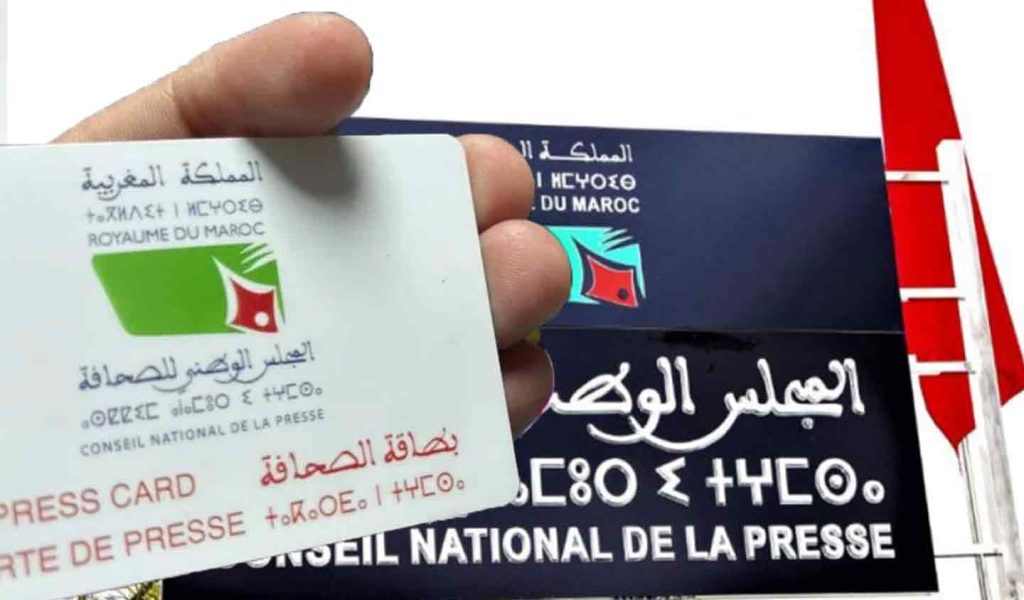
With the approach of 2026, the Moroccan journalistic community is experiencing an unprecedented state of anticipation due to the ambiguity surrounding the fate of the professional press card, in light of the ongoing institutional vacuum within the National Press Council, and the increasing tension between the supervising ministry, the National Syndicate of Journalists, and the expired temporary committee in charge of managing the file.
– The beginning of the crisis: The end of the council's term and the rise of the temporary committee
The outlines of the crisis go back to the end of the term of the National Press Council about two years ago, which prompted the government to form a temporary committee to manage the affairs of the council, on the understanding that this would be a “transitional measure.” However, with the passage of time, the committee turned into a major player in granting press cards and handling files, which sparked widespread objections, especially from the National Syndicate of Journalists, which considers the committee's actions “illegal” after relying on a special card system for 2025, and excluding the syndicate from attending the committee for receiving files related to applications for the 2025 card, and thus the absence of professional representation within it.
– 2024-2025… Increasing tension and demands for transparency
In 2024, and with the handling of the 2025 card files, the disagreements exploded. The union accused the temporary committee of lacking transparency in its acceptance and rejection decisions, and demanded the publication of the lists and the provision of clear justifications for those rejected, in addition to criticizing what it called “selectivity” within the ethics committee.
In January 2025, the committee announced the opening of the digital platform to complete the files, and indicated that it had processed more than 4,300 applications, confirming that it was working in accordance with the law regulating the profession (89.13) and the decree defining the procedures for granting the card (2.19.121). However, the union maintained its position that the legal framework was incomplete and that professional participation was absent.
– The government proposes draft law 26.25… An attempt to get out of the impasse
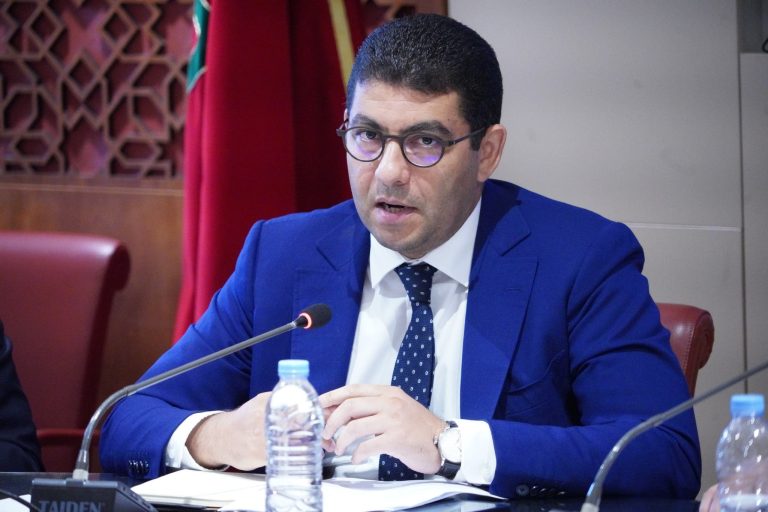
In the face of this impasse, the government approved in mid-2025 draft law 26.25 to reorganize the National Press Council in Parliament amid massive protests from professional and trade union bodies. The Minister of Communication, Mohamed Mehdi Bensaid, considered that the project aims to “establish a stable and transparent legal environment” and end the temporary situation.
The new law promises to elect a legitimate council with clear powers, and relies on the conclusions of the work of the temporary committee, which the National Syndicate of Moroccan Journalists refutes. Today, the project has been in the second chamber since the beginning of September, and is experiencing great controversy after the emergence of two advisory opinions from the Economic and Social Council and the National Human Rights Council, which means that the mechanisms for managing the 2026 card have not yet been definitively decided.
– In the meantime… the 2026 card file is pending
Since it was customary to open the reception of card applications during the month of November, the temporary committee was expected to announce the date for submitting applications for the 2026 card. But with the continuation of the legal debate and the delay in deciding the structure of the council, the official announcement remained suspended, which prompted many journalists to fear a repetition of the 2025 imbalances or the occurrence of an administrative vacuum that could affect their work and their accreditation in official institutions.
– The future horizon… three scenarios
With the situation becoming complex, three possible paths appear before the scene, the first of which, although unlikely at the present time, is a new extension of the temporary committee to pass the 2026 card in a transitional manner, while the debate over its legitimacy remains.
The second is the election of a new council as soon as law 26.25 is approved, which is the most effective solution, but it clashes with the complexities of the ongoing conflict and the difficulty of implementation, especially if the union continues to reject its terms, and in any case it will need additional time.
The third is to develop an emergency formula for managing the card independently of the current crisis, to avoid disrupting journalistic work, which is possible either by adopting the principle of the validity of the professional cards and the train card for 2025 during this year or its middle, at least.