HIBAPRESS
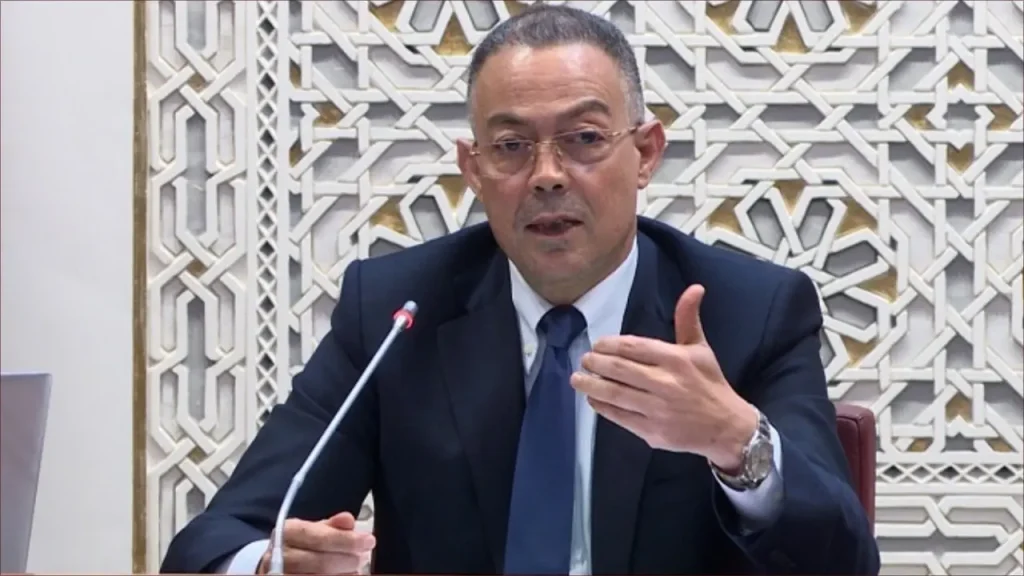
Fouzi Lekjaa, president of the Royal Moroccan Football Federation, confirmed today, Monday, in Rabat, that the Moroccan experience in the field of football is a model that consolidates the strategic role of the sports system, especially football, in socio-economic development.
Lekjaa explained, in a speech during the opening of the fourth session of the African Investment and Employment Days, organized under the high patronage of King Mohammed VI, that the "real start" to reforming the national football system dates back to the Royal Message addressed to the Skhirat Conference in 2008, which formed a clear and detailed roadmap for restructuring sport in Morocco. He highlighted, on the occasion of this event organized by the Faculty of Legal, Economic and Social Sciences of Souissi Rabat, in partnership with the Royal Moroccan Football Federation, that the establishment of the Mohammed VI Football Academy embodied this trend, and it "has today turned into a real reservoir of competencies, contributing to the formation of players who play professionally in major international competitions, reflecting the clarity of vision in the medium and long term." Lekjaa added that making sport, and football in particular, a strategic driver for economic and social development passes, essentially, through investment in training in various age groups, where Morocco has made an exceptional effort in this field, by mobilizing qualified frameworks. He stressed, in the same context, that the governance of the system remains an essential condition for the success of this path, by working to keep the legal framework under which football is managed up to date with the ongoing transformations, because this sport "is no longer a limited-resource activity but an economic system, which requires the modernization of management mechanisms." For his part, Minister of Higher Education, Scientific Research and Innovation, Azzdine El Mdaoui, pointed out that this meeting provides a clear vision about the reasons for the successes achieved by national football, noting that these achievements "were not the result of chance, but rather the result of a strategic path based on a comprehensive analysis of the various components of the system", from training and infrastructure, to modern technology and performance analysis, through governance, and reaching the economic, social and sports dimensions, considering football as a fundamental lever for development. The Minister affirmed that the challenge today lies in keeping up with national and international transformations, and modernizing governance and management models within institutions, stressing the importance of developing the frameworks of the system, so that it becomes able to create wealth and effectively contribute to development. For his part, the president of Mohammed V University, Mohamed Ghachi, confirmed that the sports economy, headed by the football economy, emerges as a promising path to support the dynamics of growth, attract investments, create job opportunities, and improve social and economic indicators, noting that football is no longer just a sporting practice, but has become an economic industry, a symbol of belonging, and a pillar of Moroccan soft power, and an effective means of enhancing social and continental integration. After shedding light on the continent's potential for conditions for take-off from a young human capital, rich natural resources and promising innovative energies that are not sufficiently exploited, Ghachi stressed the pivotal role of the university, as a strategic actor whose role is not limited to teaching only, but extends to contributing to the formulation of public policies and building future visions. He noted that the fourth session of the African Investment and Employment Days constitutes "a qualitative step in the path of African academic cooperation", and an opportunity for collective thinking about the future of sport, empowering youth and building a sustainable economy, in a way that guarantees seriousness and national and continental commitment. For his part, the dean of the Faculty of Legal, Economic and Social Sciences, Omar Hanish, said that the Moroccan university is an institution that produces knowledge and directs the vision, and contributes to public policies, and is a major actor in national and continental development. He also stressed the keenness to ensure that this approach is reflected in the work of the session, and that in-depth scientific discussions are opened on the reality of African sport, in addition to presenting practical proposals that can benefit public policies and decision-makers. This fourth session of the African Investment and Employment Days, organized over two days, under the slogan "Sport and Development in Africa… Football as a tool for social and economic integration", aims to highlight the Moroccan experience through the historic achievements of the Atlas Lions in the Qatar 2022 World Cup and the crowning of the national team U20 globally, which constitutes a source of inspiration for developing African strategies that are in line with each national context. This session, which focuses on the strategic role of football in the social and economic development of the African continent, also seeks to mobilize the African sports system, structure value chains and the sports economy, especially football, develop human capital and training in sports governance, support innovation and digitalization in sports, as well as promote social and economic integration through sport.