HIBAPRESS – Abdellatif Baraka
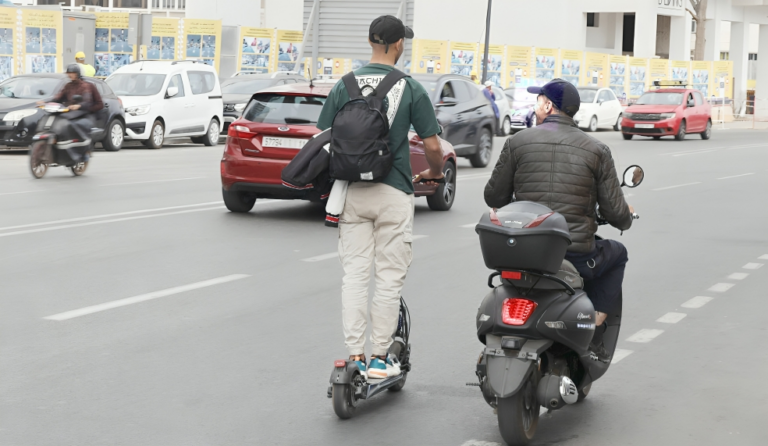
Moroccan cities have witnessed in recent years a rapid and noticeable spread of electric bicycles, especially what is known as "electric scooters," which have become a preferred mode of transportation for wide segments of youth, students, and workers within urban centers. Despite its advantages related to ease of movement, overcoming traffic congestion, and low cost, this spread is occurring in the absence of a clear legal framework, which has created an unregulated situation and sparked a wide debate about road safety and legal responsibility.
With the absence of organized legislation, thousands of users roam the streets and sidewalks without respecting traffic rules and without using protective helmets. It is sometimes observed that they use the phone while driving, or drive in the middle of the road, or ignore red lights. This reality has led to the recording of many accidents, some of which have resulted in serious injuries, especially among young people, who represent the largest segment of users of these means. Despite the lack of precise official statistics to date, the testimonies of doctors and citizens indicate a rise in the number of accidents related to electric scooters, which reflects the size of the problem resulting from the legislative vacuum. In light of this situation, the Ministry of Transport and Logistics has initiated the preparation of a draft law to amend the traffic code with the aim of including electric bicycles within the legal framework for urban transport. The project defines a clear definition of personal mobility vehicles, obliges drivers to wear helmets and respect signals, prohibits the use of the phone while driving, and gives the authorities the possibility of impounding the vehicle in certain cases, and sets the maximum speed at 25 kilometers per hour. However, the project, despite its importance, has sparked a debate about other details that still need to be refined, such as compulsory insurance, lighting and night vision conditions, and the issue of preparing special paths for these bicycles within cities. What is clear today is that the expected legal framework alone will not be enough to address the situation, as integrating this new type of means of transport requires an urban vision that relies on road education, preparing appropriate spaces, and launching awareness campaigns for the benefit of young people, with the participation of local groups and civil actors. Electric bicycles are not just a means of rapid transportation, but have become an essential element in the transition towards more sustainable cities, but their continued use outside the law turns them from an opportunity for modernization into a source of chaos and risks. While waiting for the approval of the draft law, hope remains that this framework will constitute a first step towards the rational organization of this phenomenon, balancing freedom of movement and safety requirements, and transforming electric bicycles from a daily problem into a real lever for modernizing urban transport in Morocco.