HIBAPRESS – Abdellatif Baraka
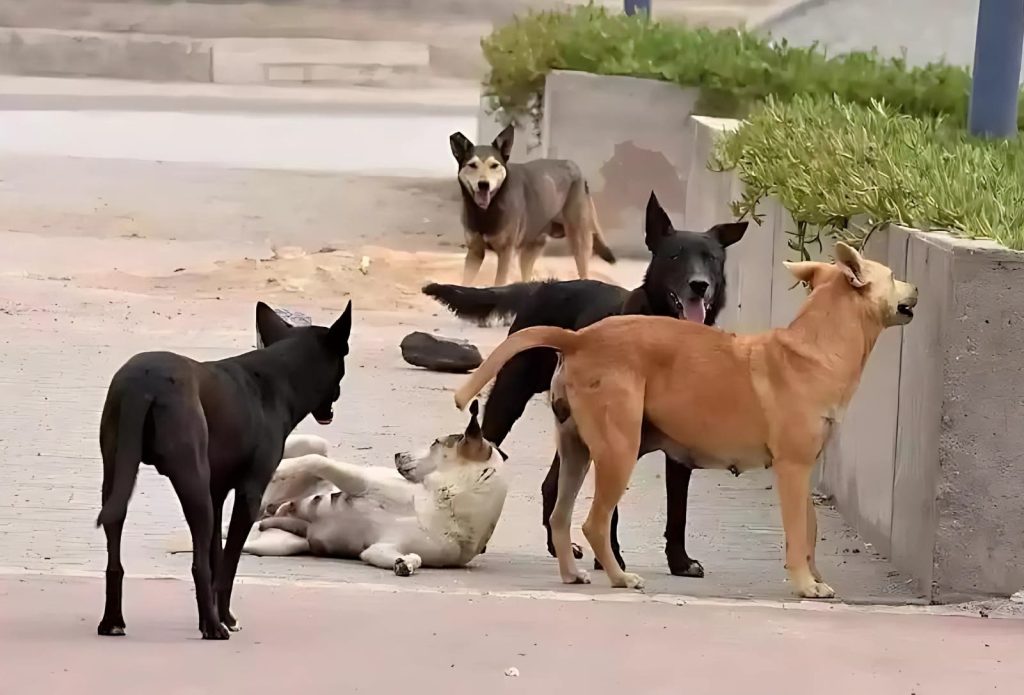
Recently, indicators of concern related to the spread of stray dogs in a number of Moroccan cities are increasing, given the real health risks that this phenomenon poses to the safety of citizens. Official figures revealed the size of the problem, after more than 100,000 cases of bites and scratches were recorded in one year, in addition to dozens of deaths due to rabies, as well as hundreds of infections with parasitic and infectious diseases, which makes the phenomenon a health and environmental challenge that requires urgent treatment.
The available data confirms that stray dogs are a major carrier of serious diseases, including rabies, hydatid cysts, and leishmaniasis, which puts them at the heart of public health concerns. In this context, local authorities are held primarily responsible for health prevention and combating the spread of these animals, as they are part of their direct competencies related to protecting the population.
In an attempt to limit the exacerbation of the situation, Morocco has adopted a new approach since 2019 based on surgical sterilization and vaccination against rabies, within the framework of multiple institutional partnerships aimed at controlling the proliferation of stray dogs gradually, instead of the traditional solutions that have proven to be limited. Significant financial investments have been allocated in recent years to establish and equip special centers for collecting and sheltering these animals, some of which have entered into operation, while other projects are in advanced stages or under study in a number of cities.
Innovative field experiments have also been launched, including mobile veterinary complexes, which provide vaccination, treatment, sterilization, and temporary shelter services, and are distinguished by their flexibility and speed of intervention, especially in areas that lack a permanent infrastructure. These experiments are expected to be evaluated in preparation for the possibility of generalizing them nationally if they prove effective.
At the legislative level, the authorities are moving towards a new legal framework that balances the protection of animals and ensuring the safety of citizens, through a draft law that regulates reproduction, defines responsibilities, and establishes mechanisms for deterrence and penalties, in addition to establishing a national database. This trend is accompanied by a program that aims to strengthen and support communal health offices with qualified veterinary frameworks.
Regarding the fight against rabies, significant financial appropriations are allocated annually to purchase vaccines and serums and distribute them to hundreds of health centers, with support for scientific research through new experiments, including oral vaccination of stray dogs in some regions as a preliminary model.
Despite these efforts, the challenge remains, which necessitates the concerted efforts of the state, local authorities, and civil society in order to address a phenomenon that has become a direct threat to the health of Moroccans in a radical and sustainable manner.