Hibapress
The thematic working group on linguistic policy in Morocco called, on Tuesday in Rabat, for the strengthening of multilingualism in public policies, in order to enshrine the linguistic and cultural openness that distinguishes Moroccan identity.
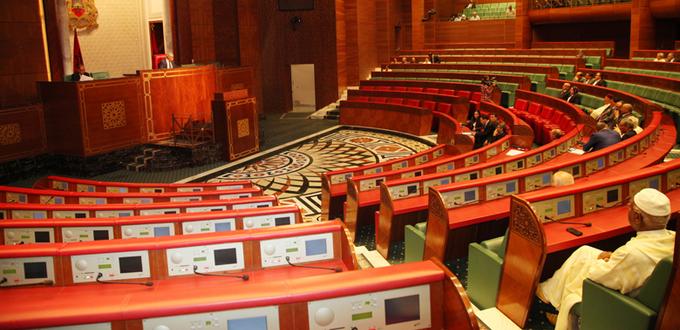
During a plenary session devoted to the examination of its report to the House of Advisors, the group highlighted the importance of this theme in the public policies of the Kingdom, in the wake of the issues and challenges linked to the development process in Morocco in all areas.
In its final recommendations, the group advocates the strengthening of the teaching of the two official languages, the development of modern and effective teaching programs, the periodic evaluation and regular review of the linguistic policy to ensure the achievement of its objectives and its adaptation to social and economic developments, in addition to the alignment of legislative and regulatory texts and public policies in the cultural field with the provisions of the constitution in the linguistic field.
Regarding sectoral recommendations, the report insists, with regard to the education and training system, on the need to promote the teaching of the two official languages in Moroccan universities alongside foreign languages, by establishing Arabic as the main language of instruction, and by providing teaching, training and research staff with solid linguistic training. With regard to the justice system, the report emphasizes the promotion of social assistance within the various jurisdictions of the Kingdom, as well as the integration of the Amazigh language in the process of digitizing the judicial administration.
In the field of media, the report of the thematic working group recommends the establishment of a guide to the vocabulary used by the media, the adoption of the teaching of Arabic and Amazigh in media training establishments, as well as the strengthening of monitoring of media compliance with specifications relating to languages.
Speaking on this occasion, the chairwoman of the ad-hoc thematic working group on linguistic policy in Morocco, Fatiha Khourtal, indicated that the issue of linguistic pluralism was at the center of fruitful meetings initiated by the group with the Royal Institute of Amazigh Culture, the Academy of the Kingdom of Morocco, the Higher Council for Education, Training and Scientific Research, and the Institute for Studies and Research on Arabization, in addition to hearing and interaction sessions with the various government sectors concerned by this theme.
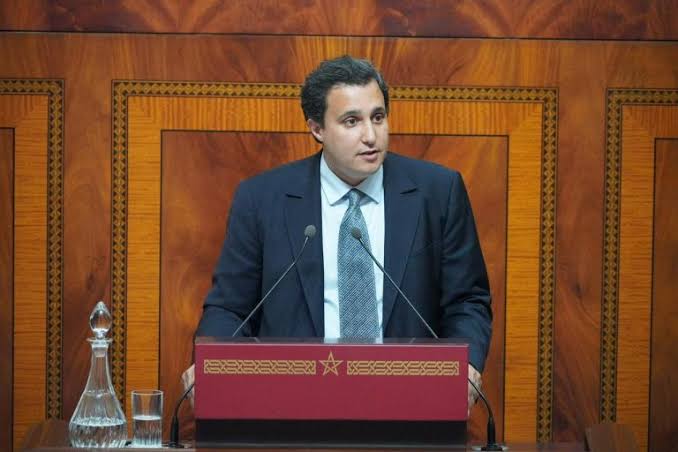
Reacting to the findings of this report, the Minister of Justice, Abdellatif Ouahbi, affirmed that the government takes into consideration the linguistic policy in its programs, taking into account the challenges related to the preservation of the components of the Moroccan cultural identity, noting that “the executive has developed a judicious linguistic concept that takes into account the Moroccan linguistic specificity, in order to preserve this cultural diversity.” In this regard, he highlighted a number of legal texts that insist on strict respect for cultural and linguistic diversity in Morocco.
For his part, the Minister of National Education, Preschool and Sports, Chakib Benmoussa, reviewed the achievements made in the field of national education, highlighting the importance that the ministry gives to learning and teaching languages, and to the adoption of an educational concept based on the diversification of the linguistic offer and the strengthening of the personality of students.
For his part, the Minister of Higher Education, Scientific Research and Innovation, Abdellatif Miraoui, indicated that the government is working to promote multilingualism, notably through the adoption of eight degree courses (outside the field of arts and letters), the creation of certification centers in several universities in the Kingdom, the training of 489 professors at the university level, and the equipment of multimedia rooms in universities to allow students to follow courses for free.
As for the Minister Delegate in charge of Digital Transition and Administrative Reform, Ghita Mezzour, she noted that her department has proceeded to the creation of a directorate for the use of the Amazigh language and to the support of a number of important projects in this field, including the promotion of reception in the Amazigh language in central and decentralized administrations in the regions of the Kingdom.
The Minister of Youth, Culture and Communication, Mohamed Mehdi Bensaid, noted that the linguistic policy in the field of media is based on legal foundations, citing in particular Law 77.03 relating to audiovisual communication which commits public audiovisual communication companies to contribute to the consecration of the constants of the Kingdom and the strengthening of the foundations of national identity and social cohesion. Parliamentarians in the House of Advisors, on this occasion, stressed that the work of linguistic policy in Morocco is of great importance due to the linguistic and cultural diversity that characterizes Moroccan identity, which requires the expression of this diversity in public policies in all areas of public life.