HIBAPRESS – Yassin Al-Dhamiri
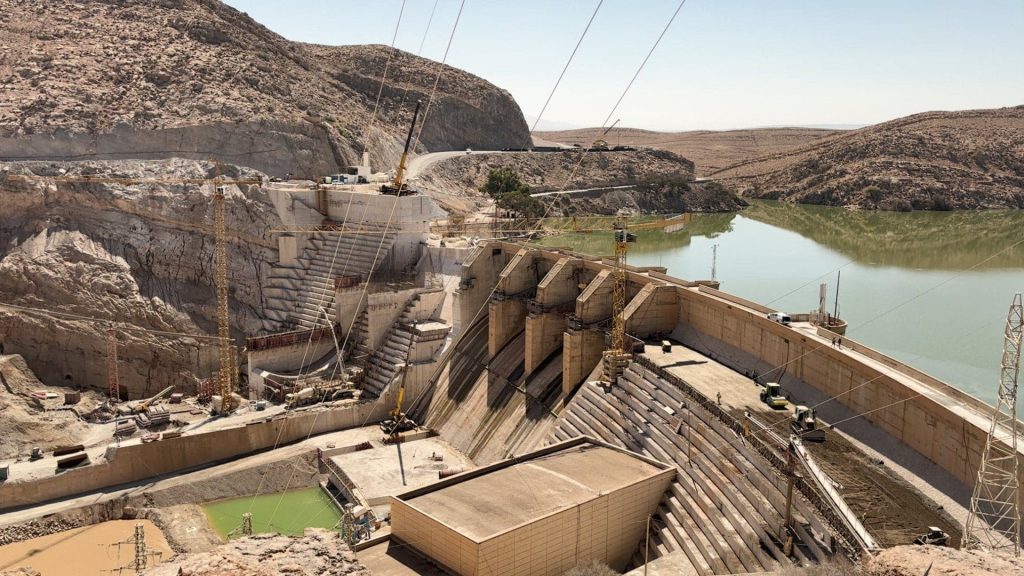
Dams in Morocco are not just concrete structures for holding water; they are a sovereign choice and a long-term vision that Morocco has chosen for decades to face climate fluctuations and ensure water and food security.
A vision founded on the firm conviction that the future is built through planning and action, not through noise and empty slogans. This wise policy was initiated by the late King Hassan II, may God have mercy on him, when he made the construction of dams a strategic choice for the state, and King Mohammed VI, may God protect and support him, continued on this path, developing and expanding this vision in line with the challenges of the twenty-first century. In this context, the decision to build the Khank Krou dam near Figuig, in the eastern region of the Kingdom, came as part of an integrated strategy to develop water facilities, secure the needs of the local population, support agriculture, and face the consecutive years of drought that are no longer an exception but have become a reality that requires action and interaction. However, this development project within Morocco, and in an incomprehensible way, aroused the resentment of the rulers of the El Mouradia Palace, who have been monitoring everything that is being done in Morocco, not with the aim of benefiting or imitating successful experiences, but only to look for what they can occupy their people with from their real crises. Whenever Morocco inaugurates a development project, the distraction machine in the eastern neighbor moves, sometimes through statements talking about "the arrest of drug smugglers" near the borders, and other times through absurd military parades that do not benefit or satiate, as if Moroccan development has become a nightmare that haunts the decision-makers there. The matter did not stop at this, but went as far as directing the soldiers to paint some stones near the borders, in scenes closer to political absurdity than the behavior of a state that respects itself and its people, at a time when efforts should have been spent on building schools, hospitals, and real dams. Even more dangerous than that is the decline of the official discourse to the level of street language, through presidential statements that draw from the populist excitement dictionary, in a desperate attempt to tickle the feelings of the Algerian street, instead of confronting it with the facts and facing the accumulated development failure. The street, which should have been concerned with its future and basic rights, is found today drowning in TikTok, sharing clips of "Uncle Al-Bahlawan," who, unfortunately, does not seem to understand yet that he is the president of a country called Algeria, not a content creator looking for viewing rates. In contrast, Morocco continues, calmly and steadily, to build dams, construct roads, and develop infrastructure, without the need to shout or create crises, believing that real development does not need justification and that achievement is the most eloquent response to all attempts to create confusion. The Khank Krou dam is not just a water project, but a symbol of a fundamental difference between two countries: a country that has chosen the path of construction and investment in the future, and another that is still a prisoner of reactions and political clowning, a difference that is embodied every day in reality, not in speeches or circulating clips. And within the framework of its focus on the set goals, Morocco will continue to work, construct, and progress, not caring about the barking there behind the borders, because the path of development does not stop at the noise of the incapable, and whoever dares to cross the red lines or test the patience of the state will find himself, in the near future, repeating the familiar phrase: "The Moroccans have oppressed us, bro."