HIBAPRESS
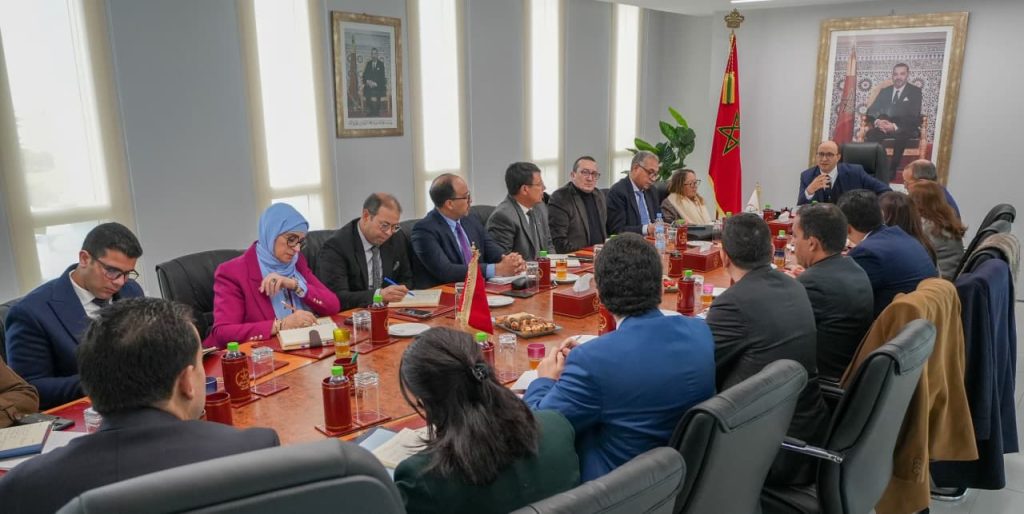
The Kingdom's Mediator announced today, Monday, February 16, 2026, the reorganization of the work of its regional and local representations, within the framework of a new vision aimed at strengthening proximity to users and ensuring the efficiency and effectiveness of institutional mediation, in line with the regionalization project in which the Kingdom is engaged under the leadership of Mohammed VI.
A statement by the institution clarified that this step stems from the connection of the effectiveness of the institutional mediation function with the ease, free of charge, and smoothness of users' access to its services to manage their administrative grievances, while emphasizing that territorial proximity remains at the forefront of the reference conditions framing this facility.
Under this new vision, it was decided to adopt the "Regional Delegation" as a reference territorial structure in managing and addressing grievances at the regional level, with the coordination of the work of local delegations and their contact points, based on the provisions of Law No. 14.16 concerning the Kingdom's Mediator, especially Articles 29 and 30 thereof.
The measures taken included the establishment of a regional delegation in the Drâa-Tafilalet region in the city of Errachidia, and the upgrading of the contact point in Marrakech to a regional delegation in the Marrakech-Safi region with the expansion of its jurisdiction to include the Béni Mellal-Khénifra region, in addition to supervising the local delegation in Béni Mellal.
The contact point in the Souss-Massa region was also upgraded to a regional delegation with the expansion of its jurisdiction to include the Guelmim-Oued Noun region, and supervising the contact point in Guelmim, as well as upgrading the two contact points in the Béni Mellal-Khénifra and Oriental regions to the level of two local delegations, and establishing a contact point in the city of Guelmim.
It was also decided to expand the territorial jurisdiction of the Fès-Meknès Regional Delegation to include the Oriental region, with its supervision of the local delegation in Oujda and the contact point in Meknes, in addition to expanding the jurisdiction of the Laâyoune-Sakia El Hamra Regional Delegation to include the Dakhla-Oued Ed-Dahab region, with the supervision of the contact point in Dakhla.
Based on these measures, the regional structure of the institution now relies on seven regional delegations in each of the Tangier-Tétouan-Al Hoceima, Casablanca-Settat, Fès-Meknès, Laâyoune-Sakia El Hamra, Marrakech-Safi, Souss-Massa, and Drâa-Tafilalet regions, supported by two local delegations in Oujda and Béni Mellal, and three contact points in Guelmim, Dakhla and Meknes.
In the context of accompanying this organizational workshop, the institution announced the establishment of a "Regional Coordination and Follow-up Unit" at the central administration level, under the supervision of the General Secretariat and the Studies, Follow-up, and Analysis Pole, which is entrusted with following up on the work of the regional and local representations and unifying work methodologies.
The statement affirmed that the institution is looking forward, as it is about to announce its new strategic plan (2026-2030), to accelerate the pace of its regional presence by establishing new regional delegations and strengthening the network of local delegations at the level of the various provinces and prefectures of the Kingdom.