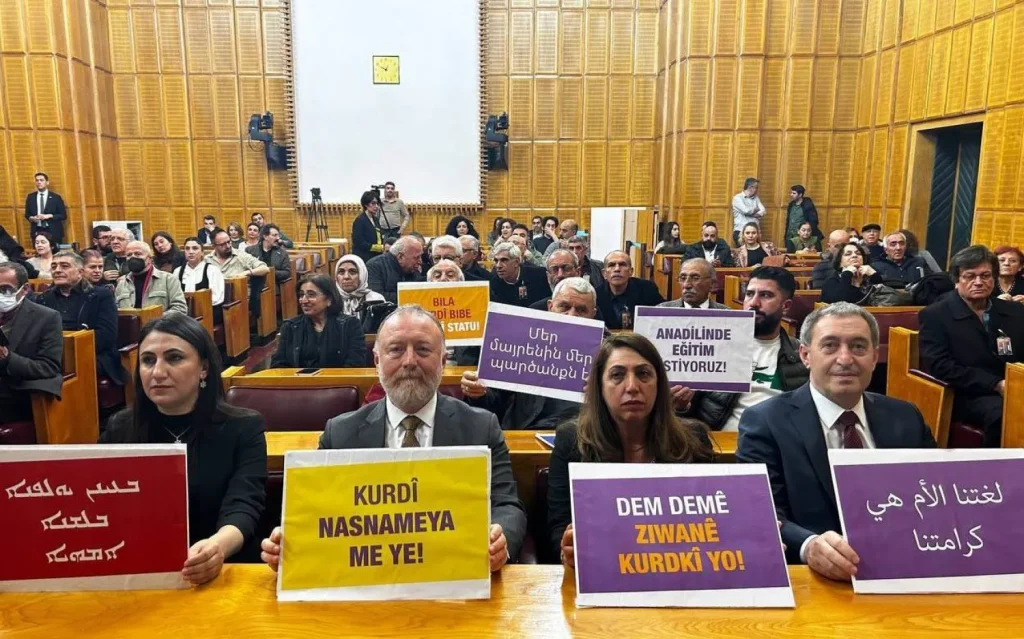
The Turkish Parliament launched an accelerated process to discuss what has become known as the "Peace Law," in a notable political move that comes after the Kurdistan Workers' Party announced its readiness to dissolve itself and disarm. However, this trend sparked widespread protests and objections from the Kurdish side within the parliament, due to the absence of issues of identity and the mother tongue, and the restriction of the Kurdish file to the security approach.
The Speaker of the Turkish Parliament, Numan Kurtulmuş, announced the commencement of the discussion of the legal regulations related to the "peace and democratic society process" immediately after the end of Ramadan, stressing that the matter requires the enactment of a special and temporary law, after the Kurdistan Workers' Party responded to the call of its leader Abdullah Öcalan to dissolve the organization and lay down arms, within the framework of what the government describes as "a Turkey free of terrorism."
In contrast, the pro-Kurdish Peoples' Democracy Party expressed its rejection of the contents of the parliamentary committee's report, considering that it ignores the political and historical dimension of the Kurdish issue.
Its co-chair, Tuncer Bakırhan, confirmed that reducing a century-old issue to a security file is a denial of basic rights related to language, identity, and citizenship, stressing that the real solution lies through deep democratic reforms and a legal framework that recognizes pluralism.
The intensity of criticism escalated with the entry of the "Union of Kurdish Democratic Societies" on the line, describing the committee's report as "shameful," and demanding that the Turkish state fulfill its political and legal obligations after the party's announcement of abandoning armed struggle. The Union considered that any peace process cannot succeed without tangible measures that guarantee democratic integration and recognition of the collective rights of the Kurds.
In parallel, statements by Kurdish MPs re-highlighted the situation of Abdullah Öcalan, after he announced his desire to meet with journalists and speak directly about the peace process and evaluate its stages. While legislative procedures continue amidst heated political debate, the future of the "Peace Law" remains contingent on Ankara's ability to strike a balance between the security approach and the requirements of a comprehensive democratic solution.