HIBAPRESS – l.Abrouk
With the end of the current government term approaching, the debate is once again returning regarding the evaluation of Aziz Akhannouch's government's performance, and the extent of its members' success in implementing the announced programs and achieving tangible results on the ground.
We will dedicate this weekly series to reading the outcomes of a number of ministers whose names stood out during this stage, through an objective evaluation based on numbers and data, far from the logic of political alignment or preconceived positions.
The success of any governmental experience is not measured by slogans or promises, but by its ability to provide practical solutions that reflect on the lives of citizens, especially in sectors directly related to daily living, foremost of which are housing and urban planning.
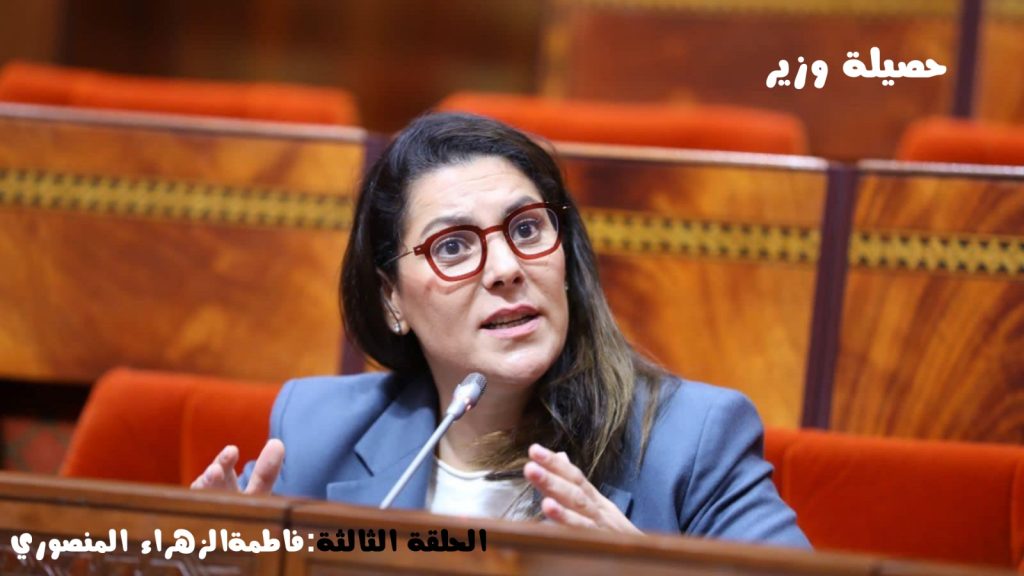
In this episode of the series, we shed light on the performance of the Minister of National Territory Planning, Urban Planning, Housing and City Policy, Fatima Zahra Mansouri, who managed one of the most sensitive and complex sectors, given its direct link to the demand for decent housing and balanced territorial development.
Third Episode: Fatima Zahra Mansouri
One cannot talk about the achievements of the Akhannouch government without referring to one of the most important government programs that came during this term, represented by the housing support program, which the Minister of National Territory Planning, Urban Planning, Housing and City Policy, Fatima Zahra Mansouri, oversaw and enabled the largest segment of citizens to benefit from it.
Reforming Housing Policy: From Supporting Developers to Supporting Citizens
Among the most prominent projects that the ministry worked on during this term was the launch of the direct support program for housing acquisition, a program that represented a shift in the philosophy of the state's intervention in the housing sector.
After years of relying on supporting real estate developers, the government chose to direct support directly to citizens wishing to acquire housing, through financial grants that help them bear part of the purchase cost, especially for the middle class and young people.
This program bets on facilitating access to housing for wide segments of society, while stimulating the real estate sector, which is one of the main engines of the national economy.
Updating Urban Planning Documents and Organizing the Urban Field
The urban planning sector also witnessed during this stage a series of measures aimed at accelerating the approval and updating of urban planning documents, allowing for the organization of urban expansion and the provision of a suitable real estate container for investment.
The ministry also worked on simplifying the administrative procedures related to construction and urban planning, with expanding the adoption of digitization in managing files, which contributed to reducing the timelines for studying projects and improving the investment climate in the urban field.
Continuing Programs to Combat Inadequate Housing
The file of inadequate housing also remained present among the ministry's priorities, through continuing programs to eliminate slums and rehabilitate inadequately equipped neighborhoods, in addition to projects to rehabilitate old cities and deteriorated urban areas.
These programs seek to improve the quality of life within cities, and to address urban imbalances that have accumulated over decades of rapid urban expansion.
Increasing Attention to the Rural World
The ministry's work was not limited to cities only, but also included the rural area, through initiatives aimed at improving urban planning in villages and emerging centers.
Work has been done to simplify construction procedures in the rural world and provide technical and architectural support to residents, with the aim of reducing spatial disparities and promoting balanced development between the various regions of the Kingdom.
Contribution to the Reconstruction of Areas Affected by the Al Haouz Earthquake
The repercussions of the 2023 Al Haouz earthquake constituted one of the most prominent challenges facing the government during this term, where the Ministry of National Territory Planning, Urban Planning, Housing and City Policy participated in the program to rebuild and rehabilitate the damaged homes, especially in the mountain villages.
This project included providing financial and technical support to the affected families, in addition to following up on reconstruction operations according to engineering standards that ensure safety and sustainability.
In addition to that, and despite these projects, the evaluation of the performance of the housing and urban planning sector remains linked to the extent of the ability of the adopted policies to reduce the housing crisis, especially in light of rising prices and increasing demand within the major cities.
Also, the challenges of unplanned urban expansion, addressing spatial disparities between regions, and ensuring sustainable urban planning remain among the most prominent bets facing this vital sector.