HIBAPRESS
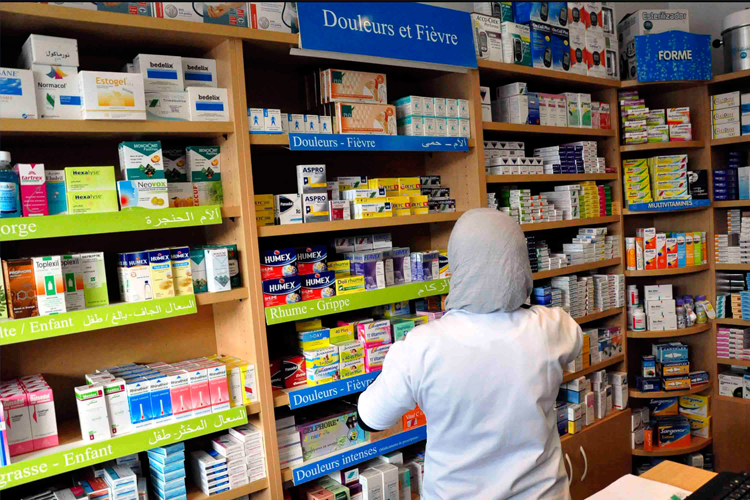
The Competition Council recommended a thorough review of the system for setting and compensating drug prices in Morocco, as part of an opinion on the state of competition in the drug distribution markets.
The Council explained in its opinion number R/6/25 that the current framework, despite its role in establishing clarity and transparency, is now casting a shadow on the resilience of actors in drug distribution, and on the competitiveness of local production, which necessitates its review to ensure more fairness, and to adapt it to economic realities in a better way, while taking into account the continuity of profit margins, the availability of drugs, and the need to support the national industry. The Council recommended reconsidering the compensation model for pharmaceutical institutions that distribute wholesale, by establishing a hybrid model that mixes a profit margin proportionate to the factory price without calculating fees and a fixed lump sum paid for each unit distributed, which guarantees a minimum compensation regardless of the price of the drug, and ensures the continuity of this essential component of the distribution chain, and the continuation of drug supply. At the same time, the Council recommended adopting a mixed model for compensating pharmacists, consisting of a commercial profit margin and fees for dispensing drugs, which contributes to valuing pharmaceutical work, and implementing public health goals. In addition, the Council called for re-evaluating the profit margins derived from expensive drugs, included in sections 3 and 4, to ensure their availability in this chain, and their distribution throughout the country, and to avoid distorting the course of competition. It considered that clearly differentiating between imported drugs and locally manufactured drugs is an essential necessity, in a context in which imports reached more than 10.6 billion dirhams in 2024, compared to approximately 1.6 billion dirhams in exports in the same period of the year, which led to a trade deficit estimated at 9 billion dirhams in 2024. The Council pointed out the need to exclude drugs with a very low factory price excluding fees (PFHT) from the scope of regular periodic reviews; this is due to their vital role in the distribution process, which requires maintaining their availability and avoiding weakening the financial position of the actors responsible for distributing them more. It pointed out the possibility of including an exemption clause in cases of slight price reductions, in order to avoid complex and costly administrative procedures, which do not bring real benefit to patients and do not have a tangible effect on health expenditures, but may, in return, lead to destabilizing the economic balance of the actors in the sector. The Council also recommended reconsidering the methods of reviewing drug prices, by reducing the review period from five years to three years and adapting the methods adopted, which allows for enhancing harmony and reducing disparities in the prices applied in the Moroccan market and foreign markets. It considered that it is preferable to start liberalizing the prices of drugs whose expenses are not accepted to be returned, known as “non-essential drugs,” by providing competitive conditions in the market that sets their prices, in accordance with the practices adopted in many comparative international experiences.