HIBAPRESS
In a context characterized by the strengthening of governance mechanisms and the monitoring of fishing activities to ensure the sustainability of fisheries, Morocco has adopted advanced technological means since the launch of the Halieutis strategy to ensure sustainable management of its marine resources.
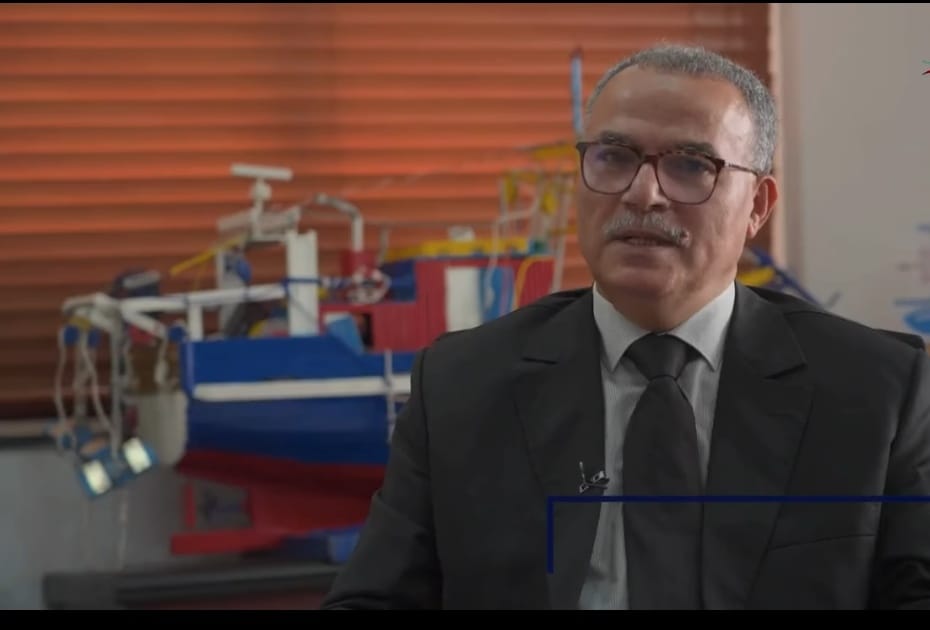
Among these mechanisms, the National Center for the Monitoring of Fishing Vessels stands out, as a pivotal structure in tracking and monitoring marine fishing activities, as confirmed by Mr. Abdelhakim Ouragh, the Central Director of Monitoring of Marine Fishing Activities at the Secretariat of State for Marine Fisheries.
In this context, the Director of Monitoring of Marine Fishing Activities at the Secretariat of State for Marine Fisheries stated that this center, which was established in 2013 with a budget of 12,917,536 dirhams, at the headquarters of the Secretariat of State for Marine Fisheries, before being attached in 2016 to the Directorate of Monitoring of Marine Fishing Activities. He added that this structure consists of three departments and has modern means that enable the collection, processing and analysis of data related to fishing vessels.
The center's work is mainly based on the Vessel Monitoring System (VMS), which allows the transfer of data via satellites from devices installed on board more than 2,000 active fishing vessels. This data includes the vessel's identity, its geographical coordinates, direction and speed, which provides the competent authorities with an accurate and real-time view of the movements of the fishing fleet.
In parallel with the establishment of the center, VMS tracking devices were purchased and installed on board 2,250 fishing vessels, with a budget of 75,468,210 dirhams, which greatly contributed to strengthening national maritime monitoring capabilities.
Access to the VMS system is immediately available to several regulatory bodies, including the National Center for the Monitoring of Fishing Vessels, the Royal Navy, and the Royal Gendarmerie, which enables effective coordination that ensures continuous tracking of fishing activities and complements the field monitoring operations carried out by these departments at sea.
Monitoring operations within the center are supervised by qualified cadres including engineers, officers and technicians who have undergone specialized training. Temporal and spatial monitoring includes several basic criteria, including the availability of licenses, respect for fishing areas and periods, distance from the coast, biological rest periods, in addition to verifying the regularity of VMS system signals.
This system also allows tracking of foreign vessels licensed to operate in Moroccan waters, where they are monitored from their entry into the exclusive economic zone until their departure, which, over the years, has contributed to improving the management and conservation of marine resources.
Like previous years, the National Center for the Monitoring of Fishing Vessels confirmed its strategic role during 2025 in protecting marine resources, as it constitutes a fundamental pillar in monitoring fishing activities, through accurate tracking of vessels operating outside the permitted areas or without a license.
The year 2025 witnessed the processing and analysis of more than 9.7 million messages issued by the VMS system, an increase of 2.17% compared to 2024. This data resulted in the detection of 181 violations in various fisheries, an increase of 55 cases, i.e. a percentage of approximately 44% compared to the previous year.
At the national level, monitoring and inspection operations during 2025 enabled the detection of 536 violations of marine fishing laws, which concerned the licensed fleet and facilities.
A pivotal mechanism to combat illegal fishing
The center's efforts fall within a comprehensive strategy to combat illegal, unreported and unregulated fishing, as confirmed by Mr. Abdelhakim Ouraghi.
Within the framework of the "Halieutis" strategy, the Secretariat of State for Marine Fisheries launched several structured projects to enhance the monitoring of fishing activities and reduce this phenomenon.
Among these initiatives are the adoption of a special legal arsenal to combat illegal fishing, the establishment of a national plan to monitor marine fishing activities, and the strengthening of satellite monitoring, in addition to establishing a system for documenting catches, and adopting electronic identification of traditional fishing boats through RFID technology.
The national plan is being implemented through 18 regional plans at the level of the marine districts, which ensures the unification of intervention methodologies and improves the effectiveness of monitoring operations. The catch documentation system also enables, through an information platform, ensuring the digital tracking of marine products through the various stages of the value chain, from unloading to export, while enhancing the transparency and credibility of Moroccan products in international markets.
Within the framework of strengthening the monitoring system, special departments for monitoring fishing activities have been established within 18 delegations for marine fisheries. Training courses are also organized for monitoring agents with the aim of developing their technical, professional and behavioral skills, and enabling them to perform their tasks in monitoring, tracking and regulation more effectively.
Human resources were also strengthened at the Directorate of Monitoring of Marine Fishing Activities by hiring 10 new cadres, who, when needed, carry out inspection and monitoring tasks, especially in ports that require additional support, whether in terms of monitoring the unloading of vessels, or fishing equipment, or assessing the stocks of octopus within the processing and storage units.
Thanks to these measures, which are mainly aimed at combating illegal fishing, the Secretariat of State for Marine Fisheries continues to strengthen the monitoring and tracking system, which ensures the conservation of marine resources and encourages responsible and sustainable fishing. In this context, the National Center for the Monitoring of Fishing Vessels constitutes an essential link in the monitoring system, by ensuring permanent tracking of fishing activities and supporting national efforts to combat illegal fishing.