HIBAPRESS – Ahmed Sabbar
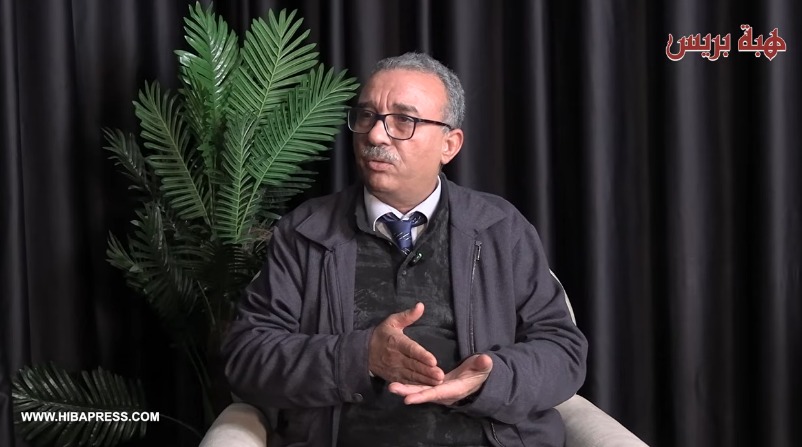
In a new episode of the "Hiba" podcast, the coordinator of the new renewed left-wing current from within the Unified Socialist Party presented several political responses that addressed the reality of the Moroccan left and the challenges of the current stage, presenting a critical diagnosis and a forward-looking vision for the future of left-wing action in Morocco.
Harroudi began his talk about the reality of the Moroccan left, considering that it is experiencing a complex crisis in which organizational, intellectual, and political factors intersect, and pointed out that organizational fragmentation and weak societal framing have deprived the left of much of its historical luster, despite its continued symbolic presence in defending social justice issues. He also stressed that overcoming this crisis passes through rebuilding trust with the citizen and opening up to the issues of the new generation. Harroudi paused at the position of the Unified Socialist Party, considering that it faces pivotal challenges that require it to renew its political discourse and develop its organizational mechanisms, and stressed that the stage requires clarity in positions, especially with regard to political alliances, calling for the building of a democratic left front capable of influencing the balance of power, instead of being satisfied with symbolic positions. As for the economic and social level, Harroudi painted a relatively bleak picture, pointing to the exacerbation of social disparities and the rise in fragility rates, especially in light of global economic transformations, and considered that current public policies lack spatial justice and do not adequately respond to the expectations of vulnerable groups, calling for the adoption of a more equitable development model that puts people at the heart of the priorities. In the context of his talk about the protest movements, Harroudi stressed that they reflect a deep crisis of trust between the citizen and the institutions, pointing out that the absence of strong political intermediaries drives citizens to the street as a means of expression, and called for the necessity of framing these protest dynamics within a democratic reform project, which preserves stability and at the same time guarantees the expansion of the margin of freedoms. Harroudi, in the course of his statements, touched on the assessment of the freedoms situation, where he acknowledged the existence of important gains achieved during the past decades, but he warned of setbacks in some areas, especially with regard to freedom of expression and political action, and stressed that strengthening the rule of law passes through ensuring the independence of the judiciary, expanding the spaces of political participation, and respecting the basic rights of citizens. The statements of Alami Harroudi, in his opinion, came to reflect the critical awareness of the reality of the Moroccan left, and also raise fundamental questions about ways to renew it in light of rapid political and economic transformations, and between the frank diagnosis and the call to action, the biggest challenge remains the ability of the left to regain its position as an effective proposing force within the Moroccan political scene. Details of the podcast guest episode HIBAPRESS Professor Alami Harroudi at the link below: https://www.youtube.com/watch?v=CVi-h_PTzsY