HIBAPRESS
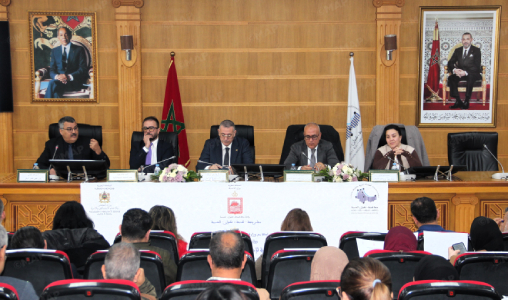
The Tangier-Tetouan-Al Hoceima Regional Council and the Ministry of Solidarity, Social Inclusion, and the Family organized consultative workshops in Tangier on Thursday regarding the preparation of the Regional Disability Plan for the region for 2025-2035.
The workshops aim to involve various actors and stakeholders in diagnosing the disability situation in the region, exchanging views on the constraints and challenges, and proposing measures and solutions to prepare an integrated and ambitious regional plan that meets the expectations of people with disabilities and enhances their social and economic inclusion.
These workshops, held under the slogan "Towards an inclusive and participatory approach in the Tangier-Tetouan-Al Hoceima region: Jointly Building the Regional Disability Plan 2025-2035," will clarify a clear vision to make the region inclusive and committed to the rights of people with disabilities and their families.
The initial participatory diagnosis results on disability, which were presented on this occasion, highlighted a set of challenges, mainly represented by an estimated prevalence rate of disability at 5.2 percent, the existence of disparities between urban and rural areas, as well as disparities related to the type of disability, weak access to education and health services, and the urgent need to strengthen coordination and convergence between various stakeholders.
In a speech on the occasion, the Vice-President of the Regional Council, Toufiq Al-Bourch, emphasized that the development of this plan falls within the framework of the Regional Council's efforts to build a modern, accessible, and supportive territorial area by implementing concrete measures to ensure the actual enjoyment of the rights of people with disabilities, considering that "the implementation of the Regional Disability Plan will give momentum and moral value to these efforts, thanks to the contribution of national and international energies and expertise specialized in the field of disability."
He noted that "the challenge is not only in preparing the plan document, but in establishing a responsible regional contract based on clear commitments, measurable indicators, and the implementation of programs with a tangible impact," highlighting in this context that the organized workshops will enrich the plan with practical recommendations that include the areas of health, social protection, education and training, economic integration and employment, accessibility, and governance.
The representative of the State Secretariat in charge of Social Inclusion, Mohamed Baghdadi, considered that the preparation and activation of a regional plan to promote the rights of people with disabilities comes as an embodiment of advanced regionalization and administrative decentralization, which our country is pursuing under the wise leadership of King Mohammed VI, stressing that the plan aims to lay solid territorial foundations to achieve spatial justice, and will also ensure convergence with the second national action plan to promote the rights of people with disabilities as a sectoral mechanism for implementing the integrated public policy for disability and regional development programs.
He reaffirmed the Ministry of Solidarity, Social Inclusion, and the Family and the State Secretariat in charge of Social Inclusion's keenness to adopt a participatory and integrated approach in preparing the second national action plan, believing in the need to open up to territorial actors and civil society associations, stopping at a set of achievements made for the benefit of this segment of society, especially the issuance of Framework Law No. 97.13 for people with disabilities, and continuing to implement structured projects such as the disability assessment system, the "Accessible Cities" program, and programs for empowerment and social support.
The remaining interventions, which were immediately translated into sign language, addressed the basic principles for preparing the Regional Disability Plan, making it an integrated strategic framework for guiding and coordinating various interventions at the regional level, which are represented in its horizontal nature to integrate the disability approach into regional public policies, the territorial characteristics of the plan, and the participatory and rights-based approaches in its preparation.
Five thematic workshops were programmed with the participation of institutional officials, representatives of civil society organizations, and experts on "Health and Social Protection," "Inclusive Education and Training," "Economic Integration and Employment," "Comprehensive Accessibility and Digital Inclusion," and "Participatory Governance."