HIBAPRESS
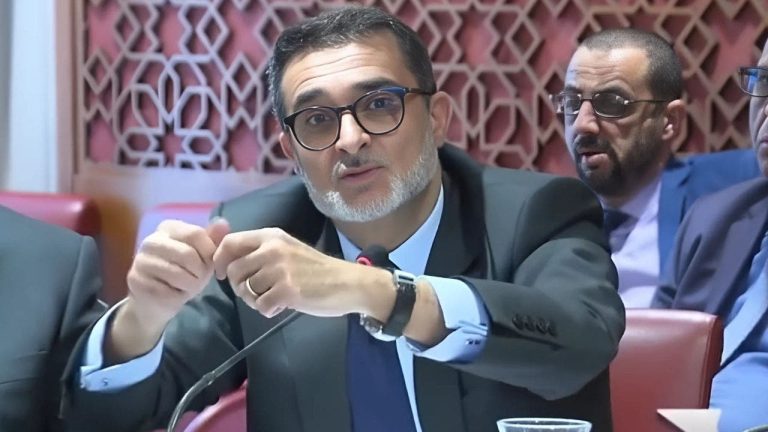
The Justice, Legislation and Human Rights Committee in the House of Councillors approved, by majority, on Monday, draft law No. 16.22 related to the regulation of the profession of Adoul, in the presence of the Minister of Justice, Abdellatif Ouahbi.
The draft law was approved by seven councillors, while three abstained from voting, without any opposition being recorded. Regarding the amendments, the government approved a number of proposals issued by the sub-committee emanating from the Justice Committee, which focused, in particular, on some provisions contained in Article 5, relating to the conditions for exemption from the admission competition, training and the end-of-training examination, to include, in the new form, judges who practiced their duties in this capacity before accepting their resignation, or referring them to retirement unless that was for a disciplinary reason, and former Adouls who stopped practicing the profession for a reason unrelated to what affects its honor. The agreed amendments also included the provisions of Article 36, which stipulated that the Adoul bears responsibility for everything he includes in contracts and certificates of statements and data that he knows are contrary to the truth, before it was amended by stipulating his responsibility for statements and data that contradict what the parties have stated. The amendments also concerned the provisions of Article 101, where it stipulated that the Adouls practice their duties under the supervision of the judge in charge of documentation in the district of their offices, before it was supplemented by stipulating that this supervision is carried out in coordination with the President of the Regional Council of the competent Adouls. The Minister of Justice had confirmed, during his presentation of the draft law, that the amendments included in it aim to upgrade the profession by reviewing some of the conditions for accessing it, qualifying it, strengthening its role within the justice system, and supporting the professional capacities of its members by establishing training institutes, in addition to establishing the obligation of continuing training, and strengthening the profession with qualitative competencies by opening the field for some professional groups to access it. He added that the new project stipulated providing legal protection for members of the profession by enacting new legal provisions, and organizing it within the framework of a national body with legal personality instead of the professional association, and strengthening the supervisory bodies through expanding its representative powers, as well as legitimizing the decisions emanating from it in its field of competence, and achieving female representation within the bodies of the national body.