HIBAPRESS – Rabat
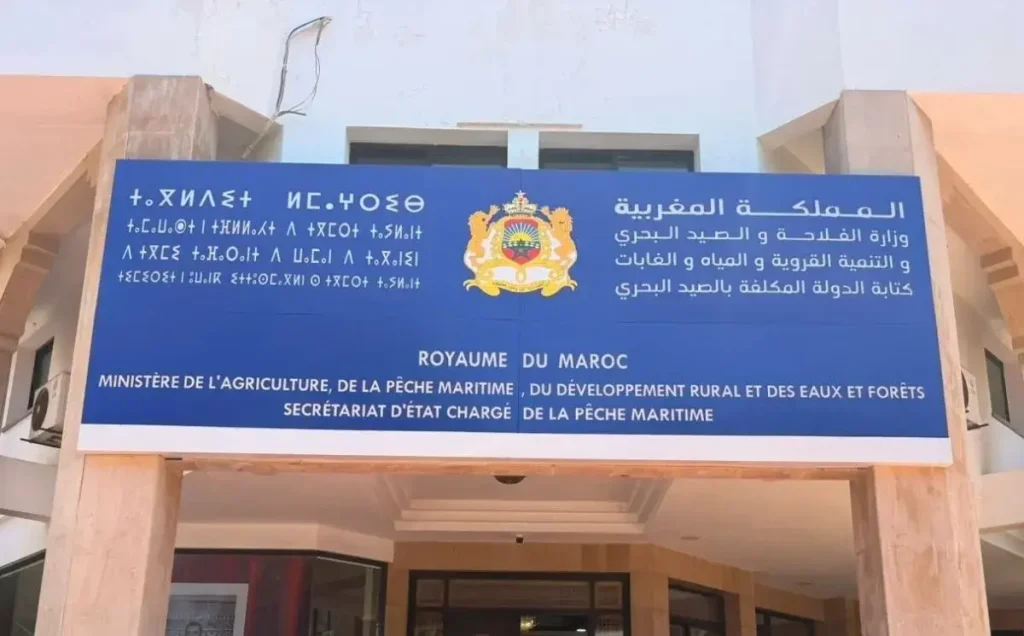
The Ministry Delegate for Maritime Fisheries has intervened in the recent controversy surrounding the management of octopus fishing activity, in light of statements and data attributed to a political party, which it described as containing "false claims" that could undermine the organization of this activity.
The Ministry Delegate, in a public statement, affirmed that the various decisions and ministerial decrees regulating the maritime fisheries sector are based on scientific data, reports, and technical opinions issued by the National Institute for Research in Maritime Fisheries, with the aim of preserving the sustainability of marine resources and reducing the risks of overexploitation.
It clarified that the adopted measures are not limited to the environmental dimension but also take into account the social and economic balances of the sector, ensuring improved conditions for maritime fisheries professionals, maintaining job opportunities, and stabilizing direct and indirect economic activities related to the sector.
Regarding the octopus stock, the Ministry Delegate reviewed a number of regulatory measures adopted to protect juvenile octopuses and their spawning grounds.
It pointed to Ministerial Decree No. 08/2026, issued on August 17, 2026, which orders the closure of the "juvenile octopus" area south of the Sidi El Ghazi region, specifically south of latitude 22 degrees and 42 minutes North, in order to protect juvenile marine life and contribute to stock regeneration.
It also referred to Ministerial Decree No. 10/2026, issued on August 27, 2026, which amends certain provisions of Ministerial Decree No. 05/2026 issued on June 29, 2026.
This decree, according to the statement, prohibits bottom trawling for deep-sea trawlers and coastal trawlers in the maritime area extending between latitudes 26 degrees and 24 minutes North and 22 degrees and 42 minutes North, at a distance of 18 nautical miles, from August 28 to September 10, 2026.
It was also decided to completely halt trawling activity for all affected vessels in the area starting September 10, based on the opinion of the National Institute for Research in Maritime Fisheries, as well as observations received by the Ministry Delegate regarding the concentration of juvenile octopuses in the area.
The Ministry Delegate revealed that the biological rest for octopus was scheduled to come into effect from September 16. However, a significant appearance of juvenile octopuses in catches, exceeding 60 percent, prompted, based on the opinion of the National Institute for Research in Maritime Fisheries, a proposal to advance the fishing cessation date to September 1.
It added that considering socio-economic considerations and in response to the sector professionals' requests, an agreement was reached to postpone the cessation date to September 10, in parallel with adopting special measures to prevent fishing in octopus spawning areas and protect this stock.
On the political front, the Ministry Delegate for Maritime Fisheries categorically denied taking, or directing to take, any decision or measure that would enable any entity or individual to obtain financial resources or privileges that could be used for partisan or electoral purposes.
It stressed that the management of national marine resources is based on scientific assessments and national interest, within the framework of the major orientations of the "AlloTyss" plan and the roadmap for the period 2025-2027.
It also affirmed that the granting of licenses and the taking of administrative decisions in the maritime fisheries sector are carried out in accordance with applicable laws and regulations, and based on objective criteria and procedures.