HIBAPRESS – Yassin Al-Damiri
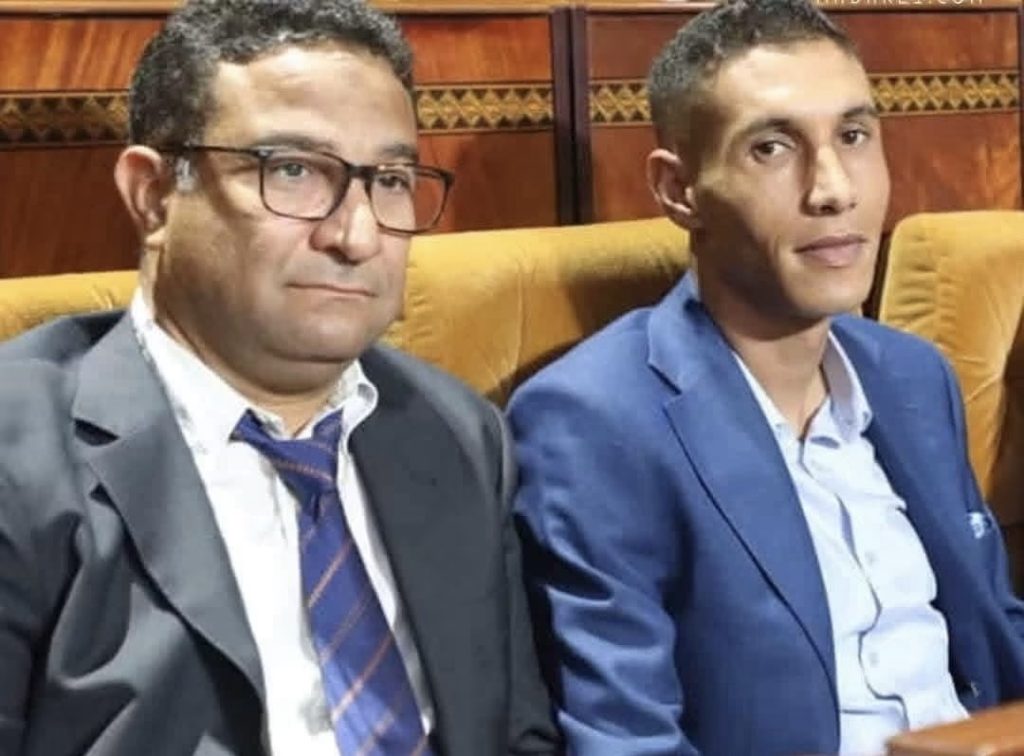
The beginning of the new legislative term was not calm for parliamentary deputy Osama Barik, who found himself facing a political reality different from what he aspired to, after the collapse of the agreement he had relied on to form a parliamentary group within the House of Representatives. This development brought to the forefront the logic of shifting alliances and the calculations that govern negotiations between deputies at the start of each legislative term.
The details of the case go back to an agreement that brought together Osama Barik, representing the Unity and Democracy Party, and Al-Arabi Sharai and Amal Aydouq from the Al-Insaf Party, along with two deputies from the Democratic Forces Front Party and another parliamentary deputy from the New Democrats Party. The aim was to gather the legal number required to establish a parliamentary group that would allow its members institutional coordination within the Council. However, this agreement did not last long, as three of the signatories chose to join other parliamentary groups, which led to the agreement losing its numerical basis and the group's project being thwarted before it saw the light of day.
In parallel, the map of parliamentary formations was completed with the announcement of eight parliamentary groups and one parliamentary association, which collectively included 392 deputies out of 395 elected members. Meanwhile, Osama Barik, Al-Arabi Sharai, and Amal Aydouq remained outside these formations without affiliation.
Thus, the three deputies found themselves facing a fait accompli imposed by the results of the negotiations, after they were unable to reach the minimum legal requirement to establish a parliamentary group, which is set at four members according to Article 40 of the internal regulations of the House of Representatives.
For Osama Barik, who entered the legislative institution supported by local electoral support, the failure to form the group places him in a different experience from the image he may have drawn for the beginning of his parliamentary presence. The absence of affiliation with a parliamentary team or group deprives him of a ready collective framework for coordinating positions and managing participation in the Council's work, and makes his experience dependent on his ability to adapt to the new balances and find a position within the parliamentary scene.
However, the collapse of the agreement opens the door to political questions that go beyond mere changes in affiliation or the failure of negotiations to form a parliamentary group. Are these systematic attempts at isolation, or individual calculations and legitimate political choices made by the deputies who changed their direction, or does what happened reflect a broader struggle for positions of influence and positioning within the legislative institution? And to what extent can initial negotiations turn into a field for redrawing the balance of power before the actual parliamentary work begins?
These questions intensify considering that some deputies who found themselves outside the collective formations are considered prominent figures close to citizens and popular segments, and enjoy significant electoral support within their constituencies. However, talk of a premeditated plan to isolate or exclude them remains a hypothesis that cannot be definitively asserted without clear data. Moreover, electoral results, regardless of the nature of the popular base on which a deputy relies, do not exempt them from the necessity of building the necessary consensus to exercise their duties within the legislative institution.
Between what can be considered a failure in managing negotiations to form a parliamentary group, and what the coming days may reveal of new alliances, the question remains: Was the departure of the three deputies from the agreement merely a political choice dictated by their own calculations, or did the behind-the-scenes formation of parliamentary groups and associations witness other arrangements that did not come to light? While waiting for the picture to become clear, Osama Barik finds himself facing his first political test within Parliament, the title of which is the search for an institutional position in a scene whose features have been largely determined before the start of legislative work.