HIBAPRESS – Abdellatif Baraka
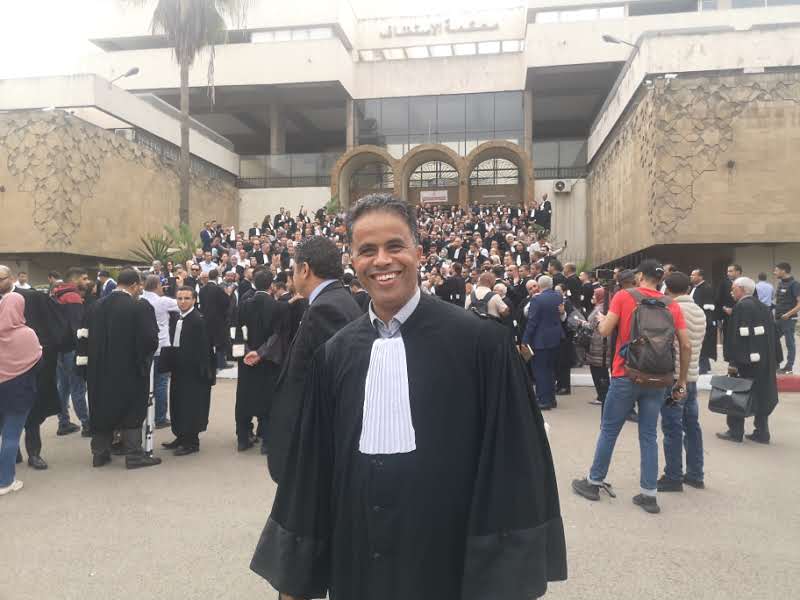
The case presented before the Court of Appeal in Casablanca, concerning the lawyer Mohamed Chamsi, sparked a wide discussion within legal and human rights circles, after he was followed up on the basis of a post he published on his “Facebook” page, in which he questioned the fate of complaints he submitted on behalf of his clients.
The case, on the surface, seems simple: a lawyer is performing his role in following up on his clients' files and raising questions about their fate after they have been delayed or become ambiguous, but its developments revealed a deeper problem related to the limits of professional expression within the justice system, and how legitimate questions can turn into the subject of follow-up. From a professional angle, the lawyer is supposed to be a link between the litigant and the institutions of justice, and to oversee the follow-up of procedures and guarantee the rights of his clients, including inquiring about the fate of complaints and files. In this context, a number of professionals believe that what Mohamed Chamsi did falls within the core of his duties, especially if it is proven that he has exhausted the usual administrative and institutional channels without obtaining clear answers. However, the problem arises when these questions are transferred to the public space, specifically through social media. The law governing the legal profession, as is the case in a number of judicial professions, imposes restrictions related to the duty of confidentiality and respect for the institutions of justice, which is what is relied upon in such follow-ups. And here the fundamental question arises, does raising general questions about the progress of complaints violate the duty of confidentiality, or does it fall within the freedom of expression associated with defending the interests of clients? What is noteworthy in this case is that the decision to save the complaint by the captain, on the grounds that the actions do not warrant disciplinary action, did not end the controversy, after the appeal and the re-presentation of the file before the judiciary. Which reflects a difference in assessment between professional bodies and the judicial authority regarding the nature of the actions and their limits. The announcement of a large number of lawyers to support their colleague increased the intensity of the discussion, in a step that was considered an expression of professional fear of the possibility of narrowing the margin of initiative for the lawyer in following up on his clients' files, especially when it comes to criticizing the slowness or ambiguity of the procedures. In contrast, another trend believes that resorting to digital platforms to raise issues related to the course of justice may open the door to interpretations that affect the image of institutions, even if the goal is to demand clarification, which requires, according to this opinion, taking greater caution and adhering to official channels. The case, in its depth, is not only about a post on “Facebook”, but rather raises a bigger question about a delicate balance: How can a lawyer defend the rights of his clients with transparency and boldness, without being accused of exceeding the boundaries of the profession? Where do the duties of confidentiality end, and where does the responsibility to draw attention to imbalances begin? Pending what the court will decide, it appears that Mohamed Chamsi's file has turned into a mirror that reflects wider problems within the justice system, related to communication, transparency, and the limits of professional criticism in the digital age.