HIBAPRESS – Follow-up
Relative calm prevailed in the Strait of Hormuz during the early hours of Sunday morning, after days of sporadic attacks, while the United States awaits Iran's response to its latest proposals to end the war that has been going on for more than two months, in preparation for the start of peace talks.
Despite this, Tehran continues to remain silent regarding the American proposal, which aims to officially end the war before moving on to discussing the most sensitive files, foremost among them the Iranian nuclear program.
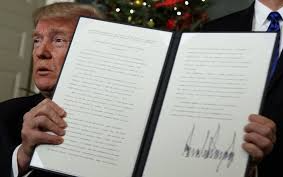
American President Donald Trump said that he expects Washington to receive a response from Iran soon regarding the draft agreement proposed to end the war, stressing in statements to the French channel LCI that Tehran "still strongly desires to reach an agreement."
In contrast, Israeli Channel 13 quoted a senior Israeli official as saying that Trump pledged to Israeli Prime Minister Benjamin Netanyahu not to make any concessions related to the enriched uranium file during the ongoing negotiations with Iran, noting that Israel is preparing for all possible scenarios.
With Trump's expected visit to China approaching this week, international pressure is increasing to end the war, which has exacerbated the global energy crisis and has become a growing threat to the global economy.
In this context, Tehran imposed almost complete restrictions on the passage of non-Iranian ships through the Strait of Hormuz, through which about 20 percent of global oil supplies used to pass before the outbreak of the war.
The strait and its surroundings witnessed the most violent escalation in recent days since the ceasefire came into effect about a month ago, while the UAE was subjected to new attacks on Friday.
The semi-official Fars News Agency stated that sporadic clashes erupted on Friday between Iranian forces and American ships in the strait, while the US military announced the targeting of two ships linked to Iran that tried to enter an Iranian port, which forced them to retreat.
Washington had imposed a naval blockade on Iranian ships last month, but an informed American official revealed that an assessment by the US Central Intelligence Agency (CIA) indicates that Iran will not face significant economic pressures as a result of this blockade before about four months pass, which raised questions about the effectiveness of the pressure cards that Trump possesses in this war.
For his part, Iranian Foreign Minister Abbas Araqchi said on Friday: "Every time a diplomatic solution is proposed, the United States chooses to carry out a reckless military adventure."
In a related development, Britain, which is working in coordination with France to prepare a proposal to ensure the safety of navigation in the strait after the situation stabilizes, announced that it will send a warship to the Middle East to participate in a possible international mission to secure maritime passage.