HIBAPRESS
The government's record highlighted that the alternative penalties law constituted a pivotal milestone in the process of modernizing the national criminal policy, as it is a qualitative shift towards a more balanced and humane penal approach, based on reform and reintegration, and reconciling the protection of society with the preservation of the dignity of individuals.
— Humanizing the Penal System —
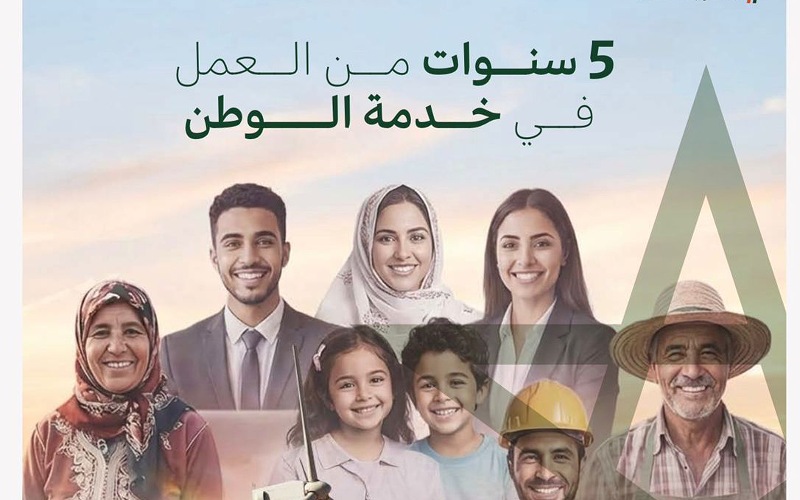
A book on the government's record, entitled "5 Years of Work in the Service of the Nation", stated that this project closed a legislative gap that had persisted since the issuance of the Penal Code in 1962, by transitioning from a purely punitive logic to a modern criminal philosophy that provides additional opportunities for people in contact with the law, in line with constitutional principles and Morocco's international obligations in the field of human rights.
In this context, the law introduced the system of alternative penalties to custodial sentences, specifying their forms in work for the public benefit, electronic monitoring, control, therapeutic or rehabilitation measures, in addition to the daily fine, while limiting their scope to misdemeanors whose penalties do not exceed five years in prison, and excluding serious crimes and misdemeanors related to recidivism.
Statistical data revealed that various courts in the Kingdom issued, from the entry into force of the law on August 8, 2025, until December 31 of the same year, a total of 1001 judgments with alternative penalties that included 1077 people, distributed between 490 daily fines, 330 decisions for work for the public benefit, and 245 penalties that included restricting some rights or imposing control, therapeutic or rehabilitation measures, while electronic monitoring rulings did not exceed 12 cases.
— Access of Vulnerable Groups to Justice —
In the context of promoting access to justice, the book confirmed that the government continued to consolidate the rights-based approach by developing protection and support mechanisms for women and children victims of violence, victims of human trafficking, and immigrants, in a way that ensures the humanization of justice and the achievement of social integration.
In this regard, 39 cells were established and equipped to care for women and children victims of violence in the courts of appeal and the courts of first instance, in addition to the establishment of 23 "blue spaces" in the family justice departments, which are spaces prepared to receive children and listen to them in conditions that take into account their psychological conditions and facilitate their interaction with judicial procedures.
Two temporary and emergency shelters were also opened for victims of human trafficking in the Tangier-Tetouan-Al Hoceima and Fez-Meknes regions, within the framework of strengthening the social and legal protection system for vulnerable groups.
— Modernizing the Legal System —
At the legislative level, the government continued to modernize the national legal system by adopting a set of laws and regulatory texts aimed at increasing the effectiveness of the justice system and improving the performance of the judiciary.
These reforms included the adoption of laws related to alternative penalties, the management of prison institutions, and the Higher Institute of Judiciary, in addition to draft criminal procedure and civil procedure laws, and the law relating to the establishment of the National Agency for the Protection of Childhood, as well as the continuation of studying draft laws concerning the organization of the professions of notaries, lawyers and judicial experts.
During the government's term, legal and regulatory texts related to the basic statute of judges and the Supreme Council of the Judicial Authority were also ratified, in addition to the issuance of other texts related to judicial organization, arbitration and mediation, and the adoption of decrees concerning the organization of the Ministry of Justice, updating the judicial map of the Kingdom, and the basic statute of the court registry body.