HIBAPRESS – Mohammed Zariouh
In a cultural scene reflecting the depth of historical ties and civilizational exchange between the two shores of the Mediterranean Sea, the Spanish Tarragona Port Theater hosted a high-level scientific and cultural meeting, dedicated to highlighting the richness of the shared historical and maritime heritage between the Kingdom of Morocco and Spain; where this ancient Mediterranean space formed a platform to recall the common roots and shed light on the human bonds that have only been strengthened and rooted over time.
This distinguished academic forum came within the framework of the radiation activities of the "Moroccan Studies Chair" at the "Rovira i Virgili" University, a scene that reflects the growing interest in issues of cultural and historical heritage between the two countries; where the meeting witnessed a significant presence of an elite group of institutional officials, researchers, and specialists in archeology, along with a group of professors, students, and civil society figures, which contributes to establishing a permanent space for intellectual dialogue between the two neighbors.

Under a telling title that carries strategic dimensions: "Maritime Antiquities between the Two Shores: Shared Heritage between Morocco and Spain," this lecture and its accompanying exhibition were organized on a noble initiative from the General Consulate of the Kingdom of Morocco in Tarragona, and in close cooperation with the National Institute of Archeology and Heritage Sciences in Morocco, the Institute of Human Fossil Excavations and Social Development in Tarragona (IPHES), and with the active participation of Mohammed I University in Oujda, as well as the distinguished logistical support provided by the "Qased for Training" Foundation.
Professor Jordi Carbonell, the director of the Chair, efficiently managed the details of this scientific session, which was initiated by the researcher and professor at the (IPHES) Robert Sala with a valuable intervention in which he reviewed the results of two decades of fruitful scientific cooperation in the eastern region of Morocco; followed by sound scientific presentations presented by Dr. Abdeljalil Bouzoukar, Director of the National Institute of Archeology and Heritage Sciences, and Professor Mohammed Al-Shazly, where they informed the audience of the latest and most prominent archaeological discoveries that the Moroccan soil has witnessed recently, which amazed the international scientific circles.

The discussions of the interveners branched out to touch on fundamental issues related to the preservation and protection of Mediterranean maritime heritage, highlighting the utmost importance of archaeological research in deciphering the secrets of the past, and the role of international scientific cooperation as an indispensable channel for a deeper understanding of the history of humanity and the successive civilizations that took the Mediterranean basin as their cradle throughout the centuries, thus forming a universal legacy that requires concerted efforts to document and protect it.
In an eloquent emotional and political speech, Ms. Ikram Chahine, the Consul General of the Kingdom of Morocco in Tarragona, emphasized the deep anthropological ties, saying: "Our origins all go back to Africa," while at the same time expressing her great pride in the prestigious position that Morocco holds today as an unavoidable global reference in the field of archeology and as the first cradle of human civilization, which is confirmed by the amazing and qualitative archaeological discoveries that the Kingdom has achieved in recent years.

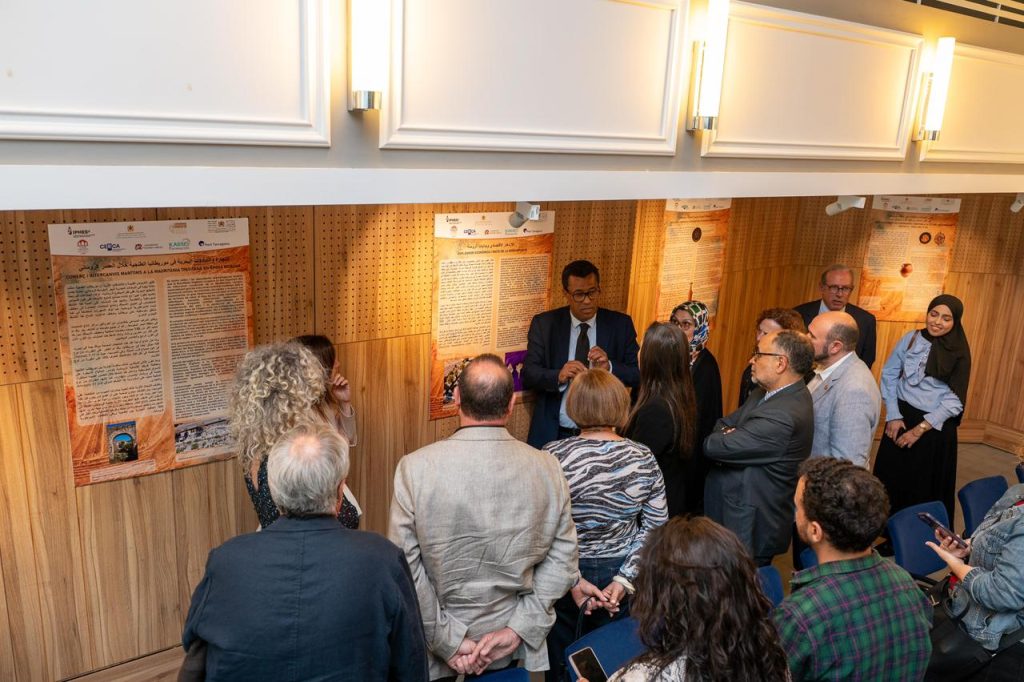
The meeting was not limited to intellectual debate, but rather extended to touch the visual sentiment of the audience through a thematic photographic exhibition dedicated to the shared maritime and archaeological heritage, as the exhibition provided the general public and those interested with a unique opportunity to travel through time, and to closely examine the folds of the shared historical memory and the manifestations of the maritime heritage that shaped the cultural identity of the two shores of the Mediterranean.
On the sidelines of this event, and as a culmination of the visit of the delegation of the National Institute of Archeology and Heritage Sciences, fruitful work meetings and institutional visits were held, which included the (IPHES) Institute and the Catalan Institute of Classical Archeology (ICAC); where it was agreed to launch a promising tripartite partnership agreement that brings together the National Institute of Archeology and Heritage Sciences, Mohammed I University in Oujda, and the (IPHES) Institute, in a practical step aimed at institutionalizing and developing scientific and archaeological cooperation between these ancient institutions, followed by an exploratory tour of the delegation in the Roman city of "Tarraco" classified as a world heritage site by UNESCO, to conclude the visit by confirming Tarragona's leadership as an eternal space for the convergence of civilizations.