HIBAPRESS – Casablanca
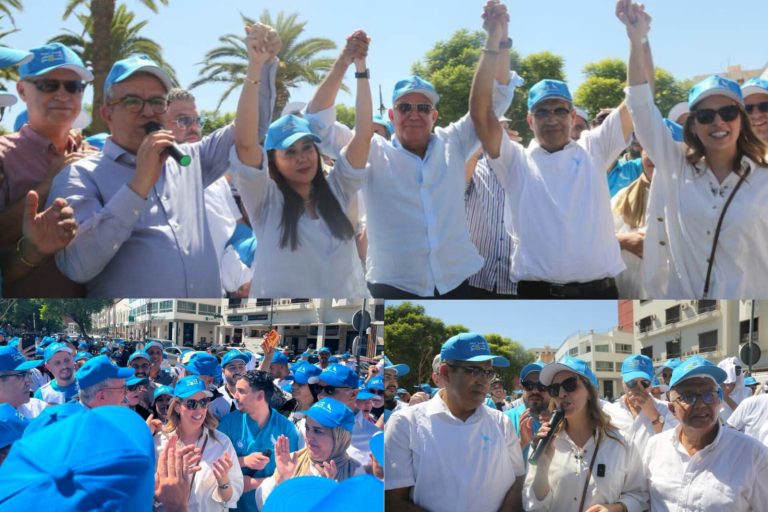
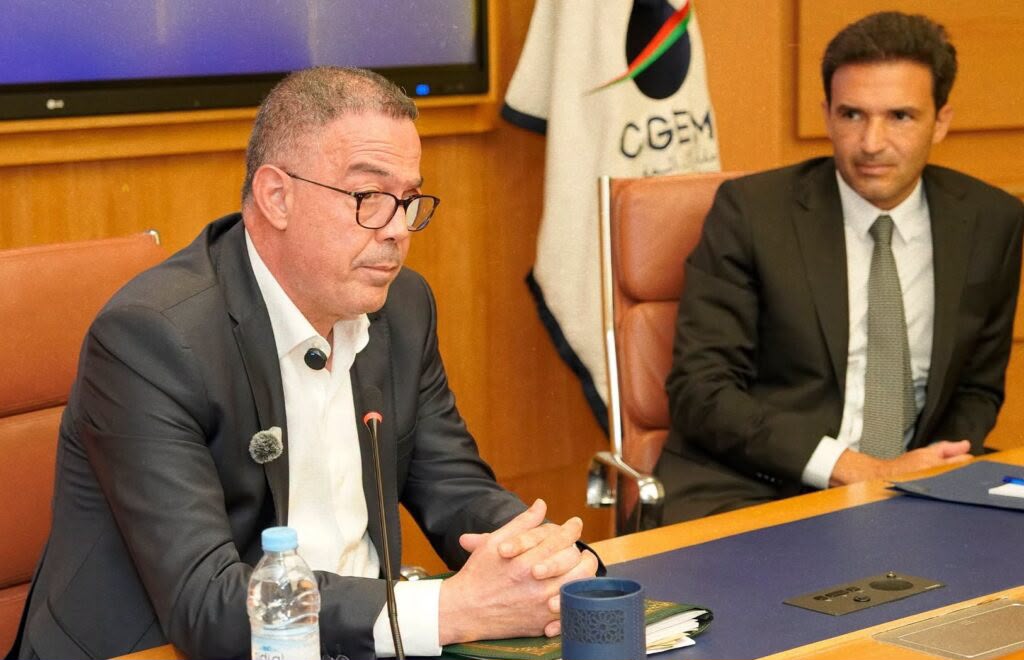
Fawzi Lakjaa, a member of the Political Bureau of the Authenticity and Modernity Party (PAM), stated during a working meeting that brought together a leading party delegation with representatives of the General Confederation of Moroccan Enterprises (CGEM) on Thursday, September 10, 2026, at the CGEM headquarters, that the integration of the informal economy is a fundamental means to regulate economic activity. He emphasized the necessity of joint work between the state and the private sector to succeed in this endeavor and in addressing challenges that can be agreed upon.
Lakjaa highlighted that the economy structuring project will commence in 2027, coinciding with the preparation of the finance law. He stressed that the objective is not to collect additional tax revenue, but rather to enable economic actors to operate within a clear and transparent framework, and to benefit from support and incentive mechanisms that help them develop and improve their activities.
He pointed out that there is a vision that can be shared with the General Confederation of Moroccan Enterprises, aiming to move Morocco towards advanced levels by 2030, by learning from the experiences of countries with a developmental level close to Morocco's that have achieved significant progress in economic organization. This transformation is linked to expanding financial inclusion, developing electronic performance, and adopting new methods in managing economic transactions.
The government official affirmed that for the Authenticity and Modernity Party, enterprises represent a key partner in implementing commitments and achieving the goals outlined in the electoral program. He added that the private sector is the engine of development, wealth creation, and job opportunities, and that the state's role should be directed towards serving investment and supporting enterprises to reach higher developmental levels.
He emphasized that this stance stems from a conviction that has accompanied him throughout his professional career, affirming his rejection of dealing with the private sector from a populist perspective, and highlighting that Morocco has made significant gains in infrastructure and investment across various sectors.
In this context, the member of the PAM's Political Bureau pointed to a rise in public investment by approximately 110 billion dirhams, considering the figure to be significant. He also mentioned that the highway network has reached about 1800 kilometers, confirming that the next challenge is to complete a route connecting Marrakech to the north via Fes, which will help break the economic and tourism isolation of Fes and Meknes, and connect them to Marrakech on one hand, and to the infrastructure in the north on the other.
Fawzi Lakjaa touched upon air transport, noting that passenger traffic has reached about 36 million passengers, with expectations of a significant increase due to airport renovation projects and preparations for hosting the World Cup.
He also addressed the situation of workers, explaining that the status of declared employees is now regulated, as are categories that previously benefited from the "RAMED" system. However, a portion of approximately one-third remains in a situation requiring attention, whether due to job instability or fluctuating income. He considered that addressing this category is essential for the successful generalization of social protection.
He indicated that the number of beneficiaries currently stands at about 7 million, while the concerned populations exceed this number. He called for joint work with the General Confederation of Moroccan Enterprises and professional federations, especially for farmers, artisans, temporary workers, and those in various professions that are difficult to categorize into a single model.
Lakjaa stressed the necessity of identifying the categories for which the state should cover social contributions, versus those capable of paying their contributions themselves, calling for this issue to be addressed with clarity and boldness.
The government official presented a set of figures, indicating that budgetary support reached 280 billion dirhams, while the health budget increased from 19 to 40 billion dirhams, and the education budget rose from 58 to 97 billion dirhams.
Regarding education, Lakjaa stated that the system costs approximately 100 billion dirhams annually and results in about 300,000 school dropout cases that warrant serious discussion. He explained that the cost represents about six points of the gross domestic product, which necessitates placing the quality of outcomes at the heart of the discussion.
He reported that the education budget has approximately doubled, reaching 97 billion dirhams, while the results continue to pose significant challenges. He recalled a previous reform from about twenty years ago that aimed for the private sector's share in education to reach 25 percent, whereas the percentage, according to him, remains around 13 percent.
He called for an open discussion on the reasons for the private sector's low interest in investing in education, the difficulties it faces, the incentives that can be adopted, the required adjustments, and how to regulate prices and fees.
Lakjaa then moved on to discuss commercial intermediaries, warning against the expanding role of some of them in absorbing a significant portion of value at the expense of investors and consumers. He considered that a developed economy is built on investment and risk-taking, not on the inflation of commercial mediation links.
He provided an example with agricultural products, questioning the logic of the price increasing four or fivefold between the producer, who works all year, and the final consumer. He considered that commercial activity should not capture a value several times greater than what the producer receives.
He stated that some products that pass through organized distribution networks, such as dairy products and soft drinks, do not experience the same discrepancies, which, according to Lakjaa, confirms a genuine problem in some marketing and distribution channels.
He also addressed the disparities in economic activity between men and women, noting that the activity rate is about 69 percent for men compared to 19 percent for women. He considered that having approximately half of society outside of economic activity represents a major challenge that requires identifying its causes and developing solutions to address it.
Lakjaa considered that the electoral program presented by the Authenticity and Modernity Party, consisting of 46 pages, is based on detailed work of approximately 1200 pages, including simulations, modeling, and in-depth studies. He explained that the party chose not to publish all these documents from the outset due to their specialized nature.
He announced his intention to send these documents within two or three days to political parties and the General Confederation of Moroccan Enterprises, in order to open a detailed discussion on how to build proposals and what can be modified or corrected, emphasizing readiness to acknowledge any error and make necessary adjustments.
Regarding youth, the Minister Delegate for the Budget stated that Morocco faces a difficult situation with about 2.9 million young people outside of education, training, and employment systems, in addition to about 300,000 annual dropouts, bringing the concerned group to nearly three million young people.
He added that the unemployment rate for the age group between 15 and 24 years is, according to the figures he presented, 27.2 percent, calling for this indicator to be treated as a major economic and social challenge.
The leader of the Authenticity and Modernity Party stressed the need to distinguish between the concept of employment and the concept of income, referring to discussions related to the possibility of some individuals receiving limited and intermittent incomes without this meaning they have stable work. He considered that addressing employment and social protection issues requires a precise understanding of this difference.