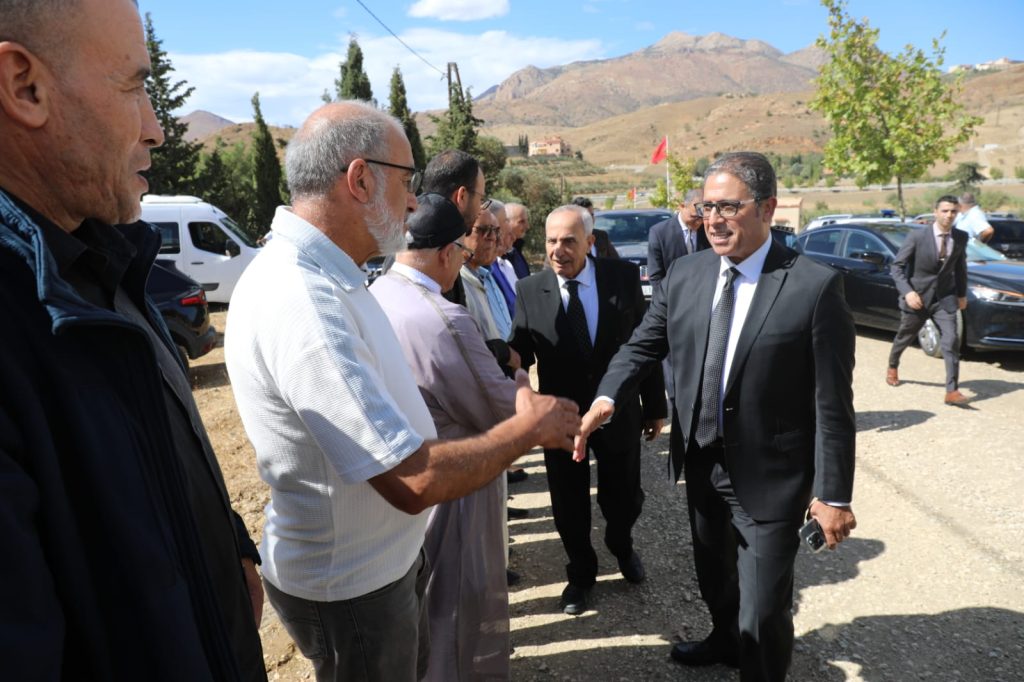
In an atmosphere dominated by the evocation of national memory and a spirit of loyalty to the sacrifices of the men of the Resistance and Liberation, the province of Taza hosted, on Friday, October 2, 2026, events commemorating the seventy-first anniversary of the launch of the first operations of the Liberation Army in the north of the Kingdom, a prominent historical milestone in the path of national struggle for freedom, independence, and national sovereignty.
This occasion is organized by the High Commission for Former Resistance Members and Liberation Army Members, in cooperation with the Taza Provincial Prefecture, under the supervision of the High Commissioner for Former Resistance Members and Liberation Army Members, Mostafa El Ktiri, and the Governor of Taza Province, Rachid Benchikhi, in the presence of their accompanying official delegation, as well as a number of elected officials, local figures, and members of the Resistance and Liberation Army families.
The program began with field visits to the Martyrs' Cemetery in Taghzeratain, in the commune of South Exnana, and the Martyrs' Cemeteries in the communes of Tizi Ousli and Ajdir, where verses from the Holy Quran were recited, and prayers were offered in remembrance of the souls of the resistance martyrs who made immense sacrifices for the sake of the nation's independence and the preservation of its dignity.
These events served as an occasion to recall bright pages from the history of the national resistance, and to remind of the prominent roles played by the fighting tribes and regions in the province of Taza in confronting colonialism, as well as emphasizing the necessity of transferring national memory to the new generations, with the values of sacrifice, loyalty, and national cohesion it carries.
In the commune of Ajdir, the land allocated for the establishment of a historical memory space for the Resistance and Liberation was inspected, a step aimed at strengthening the presence of national memory locally and providing a space to showcase the epics that marked the region's history and its contribution to the battle for independence.
The commune also witnessed the organization of a celebratory speech festival, which began with listening to the national anthem, before the High Commissioner for Former Resistance Members and Liberation Army Members delivered a speech in which he recalled the historical significance of the launch of the Liberation Army's operations in the north of the Kingdom on October 2, 1955, as one of the pivotal milestones in the path of national struggle against colonialism.
In his speech, El Ktiri highlighted the images of steadfastness and adherence to national dignity that characterized that phase, while praising the roles played by the tribes of Taza in the resistance movement and the liberation battle, and the sacrifices made by their sons, which will remain a firm part of national memory.
The High Commissioner affirmed that the Commission continues its efforts to promote the historical glories of Morocco, document the epics of independence and the struggles of the resistance, and highlight their significance to the rising generations, in addition to honoring the symbols of the resistance and the members of the Liberation Army and caring for their families.
The occasion also provided an opportunity to reiterate the importance of preserving national memory as a historical and symbolic asset, and to connect new generations with the history of their country and the struggles Morocco has undertaken that contributed to the restoration of independence and the consolidation of national sovereignty.
In the framework of a culture of recognition and gratitude, the speech festival witnessed the honoring of a number of former resistance members and Liberation Army members from these regions, in appreciation of their sacrifices and the national values they embodied during the phases of national struggle.
Financial aid and social assistance were also distributed to a number of members of the Resistance and Liberation Army families in the province, as part of the social care provided by the Commission to this category, and in remembrance of the sacrifices made by the resistance fighters for the sake of the nation.
The events of this occasion concluded with the recitation of the text of the pledge of allegiance and loyalty addressed to King Mohammed VI, in an expression of loyalty to national constants and the evocation of the symbolism of this historical occasion in the collective memory of Moroccans.