

HIBAPRESS – Abdel Latif Baraka
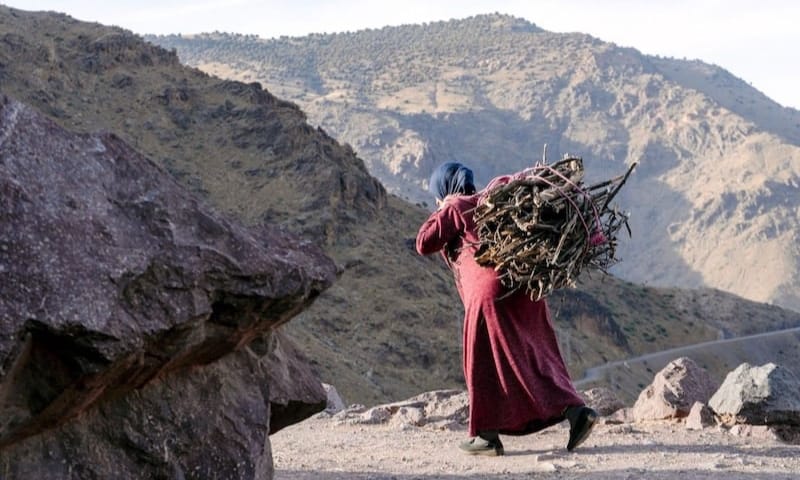
In the Souss-Massa region, the battle for territorial justice does not begin in the city centers, but rather in the high mountains and scattered villages that continue to face daily challenges related to roads, water, health, education, transportation, and job opportunities.
While the major cities have made strides in modernizing their infrastructure and facilities, vast mountainous areas, from Idautanan in the north to Chtouka Ait Baha, Taroudant, Tiznit, and Tata, are still searching for the minimum conditions for a dignified life.
The paradox is that the region has a Regional Development Program for 2022-2027, which explicitly adopts the principle of equity between the region's areas and includes spatial planning, social development, infrastructure, and transportation among its axes. Furthermore, the development of mountainous areas, the revitalization of rural areas, breaking isolation, and generalizing access to potable water and electricity fall within the shared responsibilities of the region and the state. However, the question that arises today is to what extent do these programs reach the mountains?
Idautanan… The mountain close to Agadir but far from some services
The Idautanan mountains present one of the clearest examples of this paradox. The mountainous area is not far from Agadir, one of Morocco's most important tourist and economic cities. Yet, some communities and hamlets still face constraints related to roads, pathways, transportation, and health and education services. This means that geographical proximity to the city does not necessarily equate to proximity to development. Hence, there is a need for a different approach that does not consider mountainous areas merely an extension of rural areas, but rather as areas with specific topographical, economic, and social characteristics that require targeted and continuous investments, instead of relying on sporadic projects that do not eradicate the roots of isolation.
Chtouka… Agricultural wealth in exchange for social questions
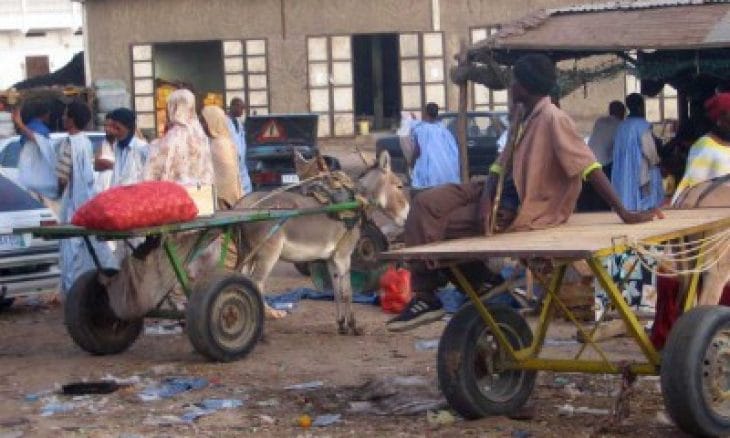
In Chtouka Ait Baha, significant agricultural and economic dynamism coexists with mountainous and rural areas that need a larger share of the fruits of this dynamism. What is required is not only to develop production and investment, but also to ensure that economic wealth translates into better services, opportunities, and living conditions for the populations in areas far from the centers.
Territorial justice does not mean distributing projects on a purely arithmetical basis, but rather directing investment to the areas that suffer the greatest deficits, so that mountainous geography does not become a factor of social and economic punishment.
Taroudant… The vastness of the province complicates development efforts
The province of Taroudant perhaps presents a more complex model due to the vastness of its territory and the multiplicity of its mountainous and rural areas. The distance between hamlets and urban centers makes reaching a hospital, an educational institution, an administration, or transportation a costly journey for low-income families.
Therefore, territorial justice in Taroudant cannot be reduced to building a road here or a facility there; it requires an integrated network of all-weather roads and pathways, regular public transport, accessible health facilities, equipped schools, digital coverage, and economic projects capable of retaining young people in their regions instead of pushing them to migrate to cities.
Tiznit… The mountain and the coast on the same equation
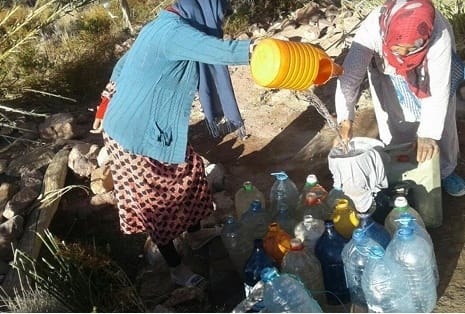
The province of Tiznit, in turn, reveals a need to achieve a balance between coastal areas, urban centers, and mountainous and inland regions. Tourist and economic investment should not be concentrated in specific areas while other regions suffer from a lack of equipment and services.
Official data related to the preparation of the Regional Development Program indicate that the territorial diagnosis included the province's districts, including Tiznit, with priorities identified in the health, water, transportation, infrastructure, and employment sectors. This confirms that the real challenge today is no longer diagnosing the deficit, but rather translating this diagnosis into tangible results on the ground.
Tata… When distance and geography become an additional cost
In the province of Tata, the issue takes on a more acute dimension due to the geographical nature, the vastness of the territory, and the difficulty of accessing many areas. The tragedy that occurred due to the distance of hospitals reveals the extent of the population's suffering. Therefore, the needs of the province cannot be measured by the same standards as those of densely populated cities.
One kilometer of road in a mountainous or desert area may have a much greater social value than a similar project in an urban area, as it may mean connecting a village to a health center, enabling a student to reach their school, facilitating the access of an ambulance, or transporting local products to markets.
The region has previously programmed projects related to reinforcing roads and breaking isolation in Tata, which reflects the importance of infrastructure in addressing territorial imbalances. However, the scale of the challenges necessitates the continuation and expansion of this effort.
The mountain does not want pity… but its right to development
What is required today is based on the High Royal Discourse, which revealed that Morocco is currently moving at two different speeds, meaning there are disparities between cities and rural areas. This necessitates a shift from the approach of dealing with mountainous areas as areas needing seasonal assistance, to considering them as key partners in regional development. These areas possess great potential in mountain agriculture, local products, natural and cultural tourism, handicrafts, and renewable energy. However, they need infrastructure, training, marketing, and investment for these potentials to translate into local added value.
Most importantly, territorial justice should become a criterion in prioritizing projects, giving preference to the areas with the greatest deficits, not to the regions most capable of attracting projects.
The region itself affirms that the development of mountainous areas, the revitalization of rural areas, breaking isolation, and providing water and electricity fall within its areas of shared intervention with the state.
Therefore, the continued disparities between cities and mountainous areas raise a legitimate question about the effectiveness of public policies in reaching the last inhabited point within the mountain.
From Idautanan to Chtouka, and from Taroudant and Tiznit to Tata, mountainous areas do not need seasonal electoral promises as much as they need a clear development contract with deadlines, financing, and measurable indicators. Development does not become just when it reaches cities only, but rather when a citizen at the highest point of the mountain feels that their right to roads, water, health, education, transportation, and dignified living opportunities is no less than the right of a citizen in the heart of the city.