This article was automatically translated from HIBAPRESS, the Arabic version:
This article was automatically translated from HIBAPRESS, the Arabic version:
Heba Press – Rabat
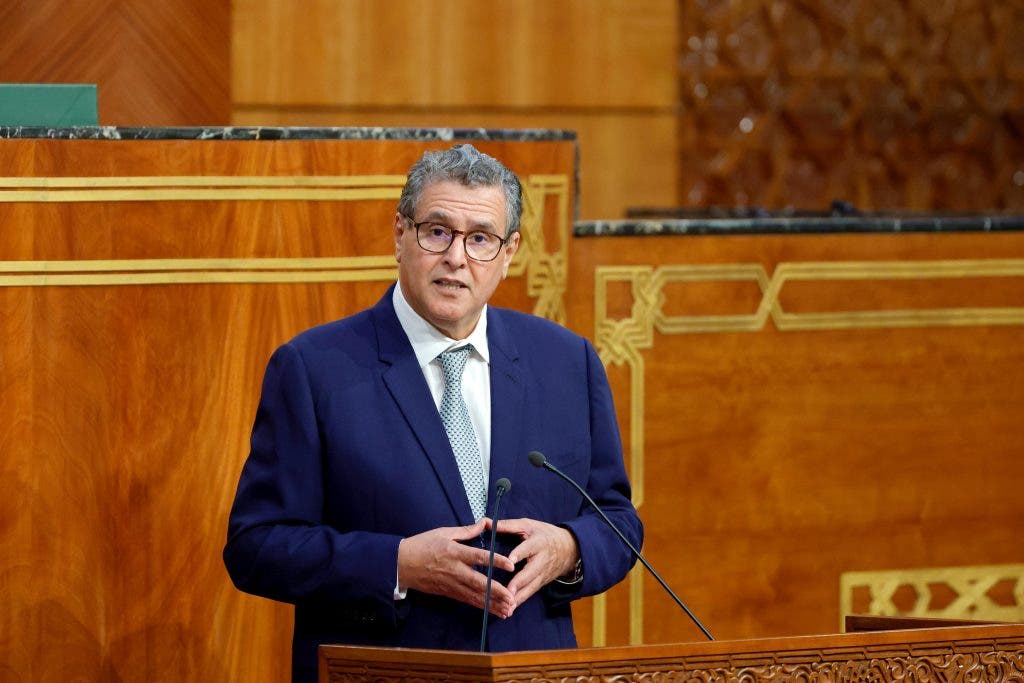
Prime Minister Aziz Akhannouch confirmed today Monday in the House of Representatives, during the monthly accountability session on public policies, on the theme: “Basic infrastructure is a lever for economic and social development”, that his government, with a strong political policy and will, increased the budget for the education sector from 62 billion dirhams in 2022, to more than 85 billion dirhams in 2025.
It was noted that the government, according to a solid and precise methodology, continues to create attractive school spaces capable of accommodating the axes of the new road map, particularly with regard to the universalization of primary education, the creating leadership institutions, improving school sports and developing group schools, boarding schools and school feeding.
Akhannouch stressed that higher education universities, in turn, will benefit from this dynamic of transition, while the national plan was developed to accelerate the transformation of the higher education system, among its main objectives, the revision of the model of institutional governance of the sector, focusing on improving the accessibility of national universities, strengthening their absorption capacity and reconsidering spaces for research and technological transformation.
He indicated that the government has adopted unprecedented measures to improve the attractiveness of vocational training, in particular by accelerating the implementation of the road map linked to the cities of vocations and skills, the completion rate of which is at an advanced level in the 12 regions of the Kingdom. , and which will constitute an institutional lever for identifying the skills needs of the regions and formulating training programs.
In this context, the Prime Minister added that 7 cities of professions and skills are currently open at the level of 7 regions, and it is planned to open the remaining five cities in the rest of the regions for the 2025 academic season- 2026. Once completed, these cities will provide 34,600 teaching places and 5,600 beds in the interior districts.
The spokesperson revealed that, within the framework of the partnership between the public and private sectors in the management of vocational training, the number of delegated management institutes has reached 14 training institutes in strategic professions for our country, such as such as: the automobile industry, aviation, renewable energies. energy, transport and logistics services, textiles, clothing and agriculture, which achieve a professional integration rate of 70.3 percent.
The Prime Minister concluded that this success reflects the government’s efforts to build a modern institutional structure with well-accessible social infrastructure to keep pace with this historic transition.