This article was automatically translated from HIBAPRESS, the Arabic version:
Hibapress-Rabat-Mee The Minister of Equipment and Water, Nizar Baraka put forward, in Kuwait, the strategic orientations of the Kingdom to ensure the sustainability of the water supply.
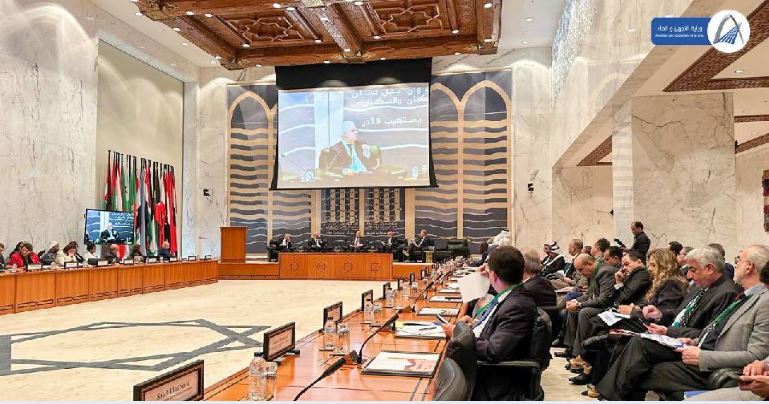
Speaking during a ministerial session on “the scarcity of water: the dynamics of supply and demand, and the repercussions of climate change”, within the framework of the high -level forum on the financing of Water development for the MENA region, Mr. Baraka indicated that water safety is a national priority for Morocco, recalling that SM King Mohammed VI had stressed in his speech on the occasion of the 25th anniversary of the Accession of the sovereign to the throne of his glorious ancestors, the need to adopt urgent and innovative measures to prevent water shortage.
In this wake, he continued, the Moroccan government has adopted an anticipatory, inclusive and global water policy aimed at ensuring the supply of drinking water to all citizens and to cover 80% of the irrigation needs on The entire national territory, while strengthening advanced regionalization, as a lever for development and social and territorial justice. He specified that this policy is based on several axes, the first concerns the development of traditional water resources, through the acceleration of the construction of small, medium and large dams, the collection of rainwater, the implementation of projects water transfer between basins and the sustainable exploitation of underground resources, in addition to cleaning the dams.
While the second axis relates to the development of non-traditional water resources, through the desalination of seawater, he said, noting that the objective is to mobilize 1.7 billion m3 D ‘Here 2030 to meet the needs in drinking water, irrigation and for industrial uses.
This axis also includes the use of wastewater to irrigate green spaces and artificially recharge the water tables, in order to triple the reused water volume by 2027, added Mr. Baraka.
Regarding the third axis, the Minister indicated that it is the management of water demand, through the improvement of the efficiency of drinking water networks, canals and conduct of services multiple, through a program to improve hydraulic efficiency for all water uses, as well as the conclusion of groundwater management contracts to protect them.
As for the fourth axis, it concerns the awareness of populations to the shortage of water and the importance of its preservation, while encouraging innovation and new technologies as a common element accompanying structural projects, -It specified.
In this sense, Mr. Baraka stressed that these strategic axes, illustrated by concrete projects and measures, will allow the Kingdom to strengthen its adaptability to climate change, noting that the implementation of this plan is done Through the national drinking water supply and irrigation water program for the period (2020-2027), and in the long term through the national water plane.
Furthermore, the Minister explained that the implementation of projects related to the water theme and capable of adapting to climate change requires the allocation of significant funds, noting that this funding depends mainly on the budget of the ‘State.
He said, in this regard, that the national drinking water supply and irrigation water program requires investments of around $ 14 billion, a budget that highlights the extent of the financial challenge which is confronted by the water sector.
The contribution determined at the national level as activated in 2021, reflecting national priorities to meet the impacts of climate change, revealed investment needs exceeding 40 billion US dollars for adaptation, since the majority of These needs are linked to projects in the water sector, he noted.
“We work to evolve towards an innovative financing approach which is based on different sources and tools of financing,” assured the minister, considering that the first lever being to encourage the private sector and financial institutions, especially national, in Invest in the water sector and to become essential partners of this transformation, in particular through public-private partnerships.
The private sector and financial institutions have resources and skills necessary to accelerate the implementation of sustainable projects, in addition to the ability to innovate and improve financing mechanisms, such as green and blue obligations , he recalled.
The second lever aims to adopt a mixed financing approach, which combines the state budget and regional budgets through collaborative and financial agreements, he said, adding that this model allows the implementation of Large projects with high impact, difficult to finance from a single source, while the third lever concerns the search for access to climate financing.
Initiated by the Arab Fund for Economic and Social Development (FADES), in partnership with the World Bank, this two -day forum is looking at the improvement of water management, the promotion of water economy technologies, Unlocking financing for essential projects, as well as on the examination of related policies and regulations.
Led by Mr. Baraka, the Moroccan delegation taking part in this event includes in particular the director general of hydraulic engineering at the ministry, Abdelaziz Zerouali, and the ambassador of Morocco to Kuwait, Ali Benaissa.