This article was automatically translated from HIBAPRESS, the Arabic version:
This article was automatically translated from Hibapress, the Arabic version:
Muhammad Manfalti_ Heba Press
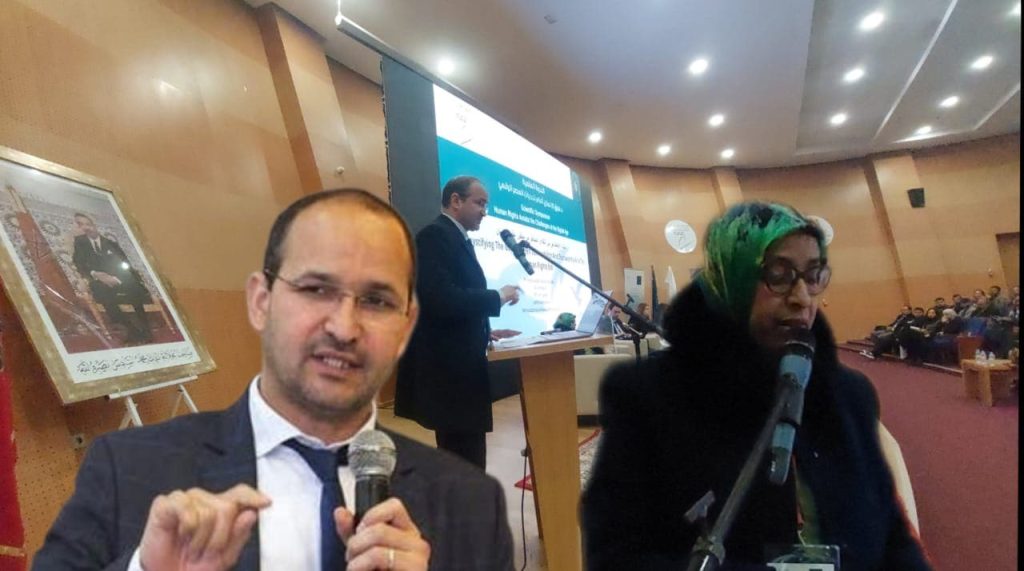
In his academic scientific intervention on Artificial Intelligence and the Foundth Generation of Rights and Freedoms on the Sidelines of the Works of the International Scientific Symposium Embraced by Hassan I University in a Period of Three Days, (Emphasized) Human Rights Organizations, (Stresed) (Stresed) Underlined) human rights organizations. And agreements, in particular its inclusion in the constitutional document of countries.
Professor Al -Younesi added that the agreement on the content of the fourth generation will not be easy, because it is linked to two variable areas: the first is the individual rights in the light of the discipline of neoliberalism of Economic , economic and cultural fields, where the individual is the center of his interest and what this means questions such as the merciful and the right to privacy and others the interest of the actors, and the second is linked to the impact that the technological revolution in the world has caused and spoken, in particular artificial intelligence.
Thanks to his dismantling of this data, Professor Al -Yunnes tried to face the global problems posed by the interaction of artificial intelligence and the fourth generation of rights and freedoms, at two levels: the first: the effect Artificial intelligence on individual rights and the value system and the second level: artificial intelligence and the right to privacy – a study of the best experiences.
This is considered by Professor Hafeez al -Younesi of higher education teachers, the College of Legal and Political Sciences of Settat, where he worked as deputy dean of the Faculty of Law, in charge of educational and academic affairs from February 2015 until January 1, 2020, as well as an effective member of the Democratic Transition Laboratory at the Faculty of Law, Hassan I University – Setting, he is also considered an expert with a legal organization for civil society in Washington and the supervisor of a research contract linked to the proposal of the law on public consultation, a member of the university network in North Africa and the Middle East affiliated to The Trance International, and member of the Executive Office Center for Studies in Governance and Territorial Development in Mekns.
For his part, Professor Khadouj Falah, who is the sixth of Higher Education, the College of Legal and Political Sciences, in Settat, and a professor of criminal sciences and criminal law for affairs specializing in private attron The digital space “, where it stressed that the current scientific revolution in the field of information, communications and the acceleration of technological developments, has been reflected positively on human life in all its aspects, but in Back, he was a real threat and danger to his private life.
Professor Falah added that the right to privacy constitutes an urgent necessity in contemporary democratic societies, as well as a slogan as revolutionary movements, liberation forces, political parties and many countries, national constitutions and organizations Human rights have only one time the guarantees to respect freedoms and protect privacy, and situate themselves within the framework of privacy, the individual has his photos, his declarations or his private conversations …
She continued by saying: given the dangerous violations of these images and sayings in the digital space and before the technological and scientific development that criminals have exploited for violation and touching human rights and their own life, with these challenges, it has become necessary to protect the right to privacy and fight all forms of crimes which violate the right to images and words in the digital space, which was limited to the Moroccan legislator, similar to comparative legislation for Fighting the digital crime of people with the right to image and words.
Professor Falah asked: to what extent was he able to protect this criminal right? What is its extent in which technological development accelerates and the dangerous touch of privacy resulting from artificial intelligence software?
The professor addressed this problem by standing on the efficiency and effectiveness of this criminal protection in his two sides of the objective and the subject, with the analysis and discussion of various problems of excitement and an attempt to ‘Extend certain suggestions and solutions to the machine.
The organized scientific symposium of Hassan I University in establishment on “human rights before the challenges of the digital age” continues in partnership with the Arab University of Naif for the security sciences, which gave Its launch Abdul Latif Makram, President of the University, to communicate today, Thursday, the third session on the ethics of artificial intelligence and human rights, which is the session led by Professor Bin Yahya Sofneh, who holds the position of chief of the national crime observatory – the Directorate of Criminal Affairs, Pardon and Ministry of Surveillance of the Crime of Justice.
Other details in the following video:
https://www.youtube.com/watch?v=u5a7en1txiu