Heba Press – Rabat
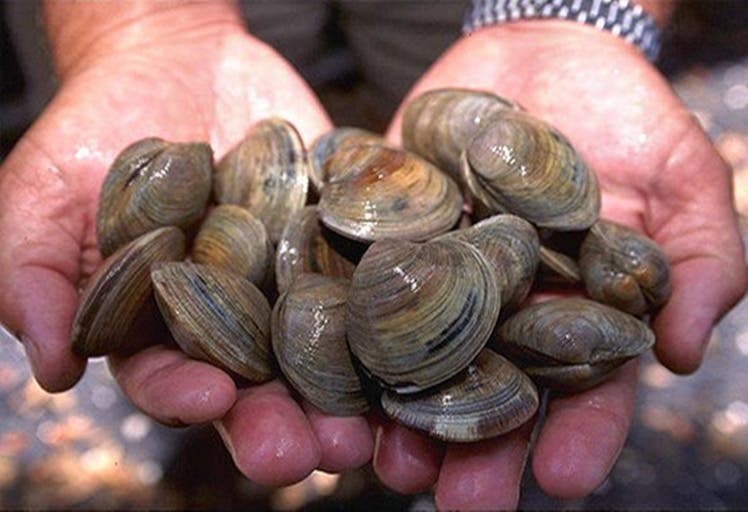
During the first eight months of 2025, shellfish landings along Morocco’s Mediterranean coast experienced an exceptional surge, according to the latest report from the National Office of Fisheries on traditional fishing landings. These landings exceeded 525 tons, with a total value of nearly 1.37 million dirhams. This represents an increase of over 1300 percent in volume and more than 1200 percent in value compared to the same period last year, which recorded negligible results according to the report.
This remarkable improvement, according to Mohamed Albahraoui, head of the Targa Traditional Fishing Cooperative, is attributed to the new classification of marine areas adopted by the National Institute of Fisheries Research. This decision allowed professionals access to new marine areas classified as category “A,” expanding the scope of officially monitored maritime activity. This step, along with adherence to the technical standards set by the Jbehet monitoring committee (limiting each boat to 300 kilograms per day), contributed to increased landings. The number of licensed areas has also increased to five, spread between Targa and El Chamaâla, Oued Laou and Qaa Assras, Cabo Negro and Martil, then Oued Nkor and El Mdiq, reaching Fnideq and Jbehet. Professionals are hoping to establish this organization permanently to support the shellfish fishing season.
In the same context, Mustafa Lamqadem, head of the Tjejass Traditional Fishing Cooperative, pointed out that this year’s shellfish fishing season was marked by instability due to frequent weather disturbances along the Mediterranean coast. This negatively impacted the regularity of the traditional fishing fleet’s activity, otherwise the figures would have been better. Despite these constraints, the quantity of shellfish caught and landed at the El Chamaâla unloading point reached approximately 228 tons out of the season’s total quota of 1336 tons, distributed between the Jbehet and El Mdiq regions. 800 tons were allocated to the area extending from El Chamaâla to Jbehet, and 500 tons from Targa to El Mdiq.
The same speaker confirmed that local professionals are relying on shellfish fishing after the closure of the octopus fishing season. He noted that this transition requires specific investments, including boat maintenance, rope purchases, and the modernization of equipment. These upgrades can cost over 30,000 dirhams, demanding extra effort from professionals to ensure sustainable profitability. Operators in this sector hope for improved prices in the local market to compensate for the general decline in the profitability of fishing due to the decrease in the biomass of various marine species.
The latest report from the National Office of Fisheries indicated that the quantities of shellfish marketed showed an upward trend until August 2025. The El Chamaâla unloading point topped the ranking with 228 tons, valued at 1.36 million dirhams, followed by the Targa equipped unloading point with 171 tons at a nearly similar value of around 1.37 million dirhams, then Qaa Assras with 89 tons valued at 533,000 dirhams. The Amttar point recorded the lowest quantities with 32 tons valued at 194,000 dirhams.