HIBAPRESS: Mohamed Zariouh
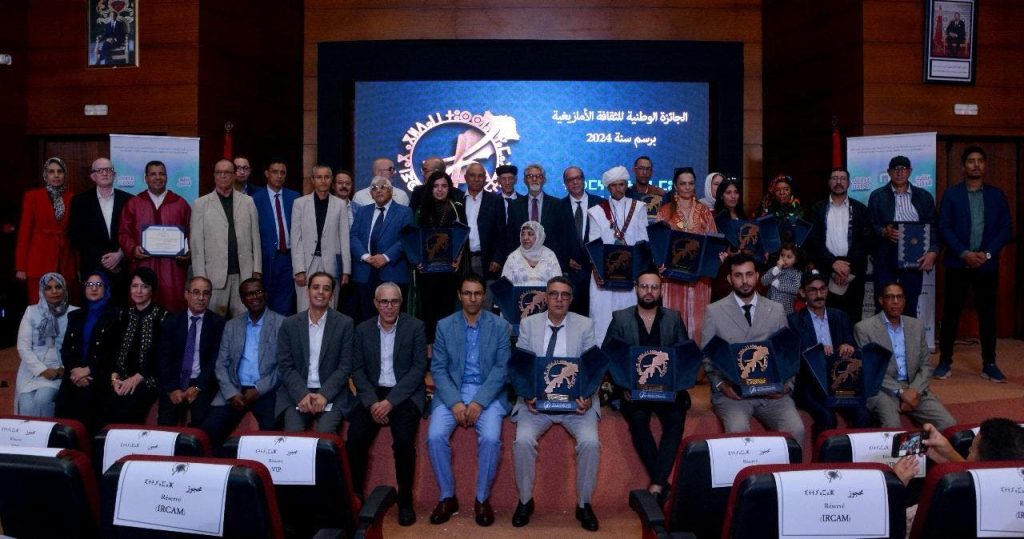
Moroccan director Axel Fawzi, (Mohamed Fawzi), won the Best Amazigh Film award this evening, within the activities of the National Award for Amazigh Culture, in a crowning of his rich artistic career, and for his distinguished cinematic work that embodies the issues of the Amazigh people with a modern visual vision and a deep human sense.
Axel Fawzi, who was born in the city of Nador in 1979, is one of the most prominent figures in the contemporary Amazigh cinematic scene. After emigrating to Spain to study "Architecture," he chose the path of the seventh art, driven by an old passion for photography and visual narrative, to later become a director and screenwriter who currently resides in the United States of America, and signs his works under the artistic name "Axel Rifman".
Fawzi has made his mark with a number of cinematic works that have attracted the attention of critics and the public alike, including: "The Nador Trilogy", "The Killing Silence", and "*Monsters*" for which he won an award from the Royal Institute for Amazigh Culture in 2019, in addition to his film "A Corpse on the Marchica Shore", which won the award for best screenplay at the Isni n' Ourgh International Film Festival in Agadir in 2025.
This new crowning is the second of its kind that the director has received from the Royal Institute for Amazigh Culture, after his first crowning in 2018-2019, which confirms the continuity of his giving and his excellence in developing Amazigh cinema. It is worth mentioning that Axel was the first director to produce a special Amazigh film for the Amazigh channel, the film "The Killing Silence" which won the screenplay award in the city of Meknes, and he is also considered a pioneer in directing the first sitcom in Rif Amazigh, in a step that strengthened the presence of the Amazigh language on the small screen.
The director was also known for his ability to achieve independently, as he directed his third film without any institutional support, which reflects his deep commitment to the message of independent Amazigh art, and his belief in the necessity of producing cinema that expresses the Moroccan reality with all its cultural and linguistic diversity.
During the award ceremony, Axel Fawzi gave a moving speech that received wide interaction from the audience, starting with an Amazigh greeting, saying: “Azul… As-salamu alaykum. Today, as I carry this award, I feel proud… and sad.” He added that this award is not for him alone, but for everyone who makes his films with a borrowed camera, and tells his stories in a language that some still refuse to hear.
In his powerful speech, the director directed explicit criticisms to the reality of Amazigh cinema, considering that "the Amazigh film, which is the Moroccan film in its first language, is still absent from most festivals," adding: "We are not guests in our home, we are the origin, the first image and the first word of this land." He also called for the real application of the law that stipulates that 30% of television programs must be in Amazigh, stressing that the percentage in reality "is almost zero".
Axel did not stop at the diagnosis, but launched a sincere appeal to establish a special fund to support Amazigh cinema within the Moroccan Cinema Center, with the aim of producing twelve Amazigh films a year, saying: “A film every month, a dream every month. Because Morocco will not know itself truly until it sees itself complete." He also stressed that the Royal Institute for Amazigh Culture must continue the struggle to achieve this dream, considering it "the only refuge for Amazigh creators."
With this word full of symbolism and emotion, the director expressed an artistic and human vision that transcends the boundaries of awards, to touch the depth of the issue of cultural diversity in Morocco. For him, the real recognition of Amazigh culture is not only through tributes, but through supportive and continuous cultural action.
This new crowning confirms the position of Axel Rifman as one of the most important creators in independent Amazigh cinema, and an artistic voice that honestly expresses the concerns of the Moroccan people, and the aesthetic of his unique visual language that makes his works honest mirrors of a Moroccan identity that is diverse and rich in life.