HIBAPRESS – Abdellatif Baraka
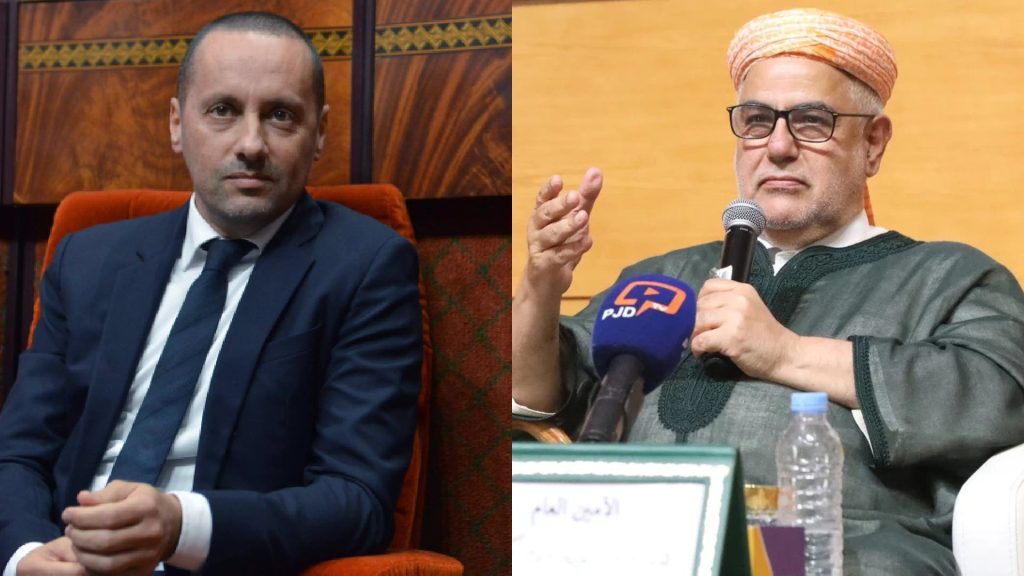
The recent statements of the Minister of Health, Amin Tahraoui, before the Social Sectors Committee sparked widespread controversy, not only because of their content related to the situation of the health sector, but also because of the language used in defending the reform project. The minister spoke with unusual frankness about the "trial of intentions" he is subjected to, and about "fallacies and lobbies" that are tampering with the sector and hindering the efforts made to restructure it, which are statements that brought to mind the political discourse that the former head of government, Abdelilah Benkirane, was famous for when he raised the slogan of confronting the "ghouls and crocodiles." Between two speeches separated by a decade, it seems that the battle against resisting change in Morocco is still ongoing, no matter how different the faces and government portfolios are.
When Tahraoui announced the suspension of support directed to private clinics pending a deep review of health policy, and considered that some institutions exploit the health vulnerability of citizens, it seemed as if he was drawing a complex conflict map within the sector, which is being pulled by influential financial and administrative interests. He also did not hesitate to announce administrative decisions that included the dismissal of regional officials suspected of involvement in violations, thus indicating that reform in his view is not just about raising the budget or modernizing equipment, but rather confronting a deep-rooted structure of imbalances that extends from the office to the resuscitation rooms.
This speech, although new in terms of the health context, reproduces the same political logic that Benkirane adopted when he launched his famous phrase about the "ghouls and crocodiles" that hinder the government's work. Benkirane was then directing strong political messages to public opinion and to those he considers "unseen opponents," in an attempt to fortify his reform project and disavow the consequences of economic and social setbacks. Today, it seems that Tahraoui, intentionally or unintentionally, is employing the same communication strategy, by drawing clear boundaries between "state reformers" and "resistors of change," in a sector that is considered one of the most sensitive sectors and touches the lives of citizens.
What is striking in this intersection between the two experiences is that Morocco, despite the multiplicity of reforms and the diversity of governments, is still living with the impact of a continuous conflict between the state's desire to modernize its institutions and the reality of interest networks that benefit from the status quo.
When a technocratic political discourse intersects with a previous populist political discourse, this reflects the size of the structural accumulation that impedes reform, and confirms that the problem is not only in people or governments, but in a resistance structure that is still stronger than the speed of change.
By carefully reading Tahraoui's statements, one can understand the implicit message he wants to convey, namely that real reform in the health sector will not be achieved without a direct confrontation with parties that are accustomed to benefiting from weak governance, and that attempts to disrupt it are nothing more than a natural reaction from the parties that see reform as a threat to their interests. This is a message that reflects the gradual shift in the language of technocratic ministers, who have begun to use a more frank, and perhaps more political, discourse in the face of the challenges of the sectors they manage.
However, the central question that imposes itself today is: Is it enough to adopt a discourse of confrontation to achieve reform? Or will this discourse, no matter how strong it seems, turn over time into a mere peg on which failures are hung, just as happened in previous reform experiences? The Moroccan citizen, who lives daily with the crisis of medical appointments, the shortage of human resources, and the disparity between the public and private sectors, is no longer ready to hear the language of conflict without seeing tangible results on the ground.
Linking responsibility to accountability, which is a constitutional slogan before it is political, requires officials to balance between clarifying the obstacles and providing solutions, between exposing interest networks and implementing reform measures effectively. And unless this language is translated into practical reforms that can be measured and evaluated, the discourse will remain a new repetition of old speeches that aroused sympathy at the moment, but did not bring about the expected change.
In the end, Tahraoui's statements may be an indication of a health conflict deeper than it seems, and it may also be the beginning of a new phase in the style of communication between ministers and public opinion. But what is certain is that Morocco today needs real reforms that go beyond rhetoric, and a political and administrative capacity that puts an end to the power of the "health ghouls," if the expression is correct. Reform is not just linguistic courage, but a system of continuous decisions that are not affected by the noise of the lobbies and do not just hold them responsible for failure.