HIBAPRESS
The American attacks in Venezuela and the announcement of the arrest of its president, Nicolas Maduro, are part of a long history of military and intelligence interventions by the United States in South America.
Since the beginning of the twentieth century, the United States has repeatedly intervened in what it calls its "backyard," in the internal affairs of countries on the South American continent, often under the pretext of "protecting American interests," or "containing communist influence."
These interventions have left their mark on the political landscape in the region in a sustainable way, and have led to the emergence of widespread tensions.
During the Cold War decades, American interventions in South America escalated significantly, with the American Central Intelligence Agency "CIA" and other American intelligence agencies supporting coups against democratically elected governments, which Washington considered to be excessively leftist or hostile to the United States.
An example of this is Chilean President Salvador Allende, who was overthrown in 1973 by the army led by Augusto Pinochet.
The military council in Argentina also received American support after its coup in 1976.
One of the most prominent examples of this is also what became known as "Operation Condor" during the seventies and eighties of the last century, within the framework of which authoritarian regimes in countries in South America, including Chile, Argentina, Uruguay, Paraguay, Bolivia and Brazil, and with the effective support of the United States, coordinated operations to pursue and assassinate political opponents, headed by leftists, unionists and intellectuals, across the borders of these countries.
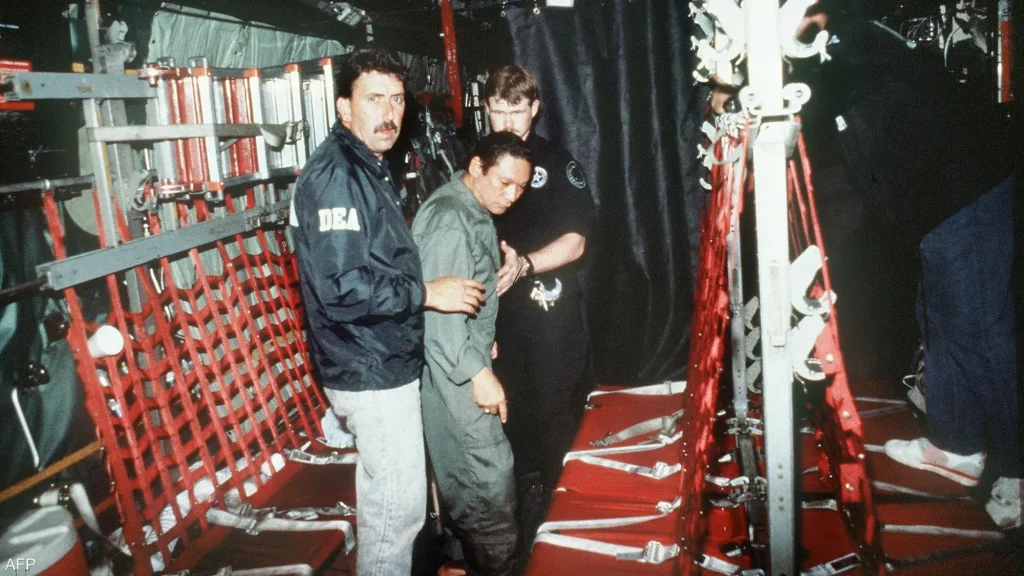
History witnessed a case of arrest similar to what happened with Maduro today exactly 36 years ago.
On January 3, 1990, the governor of Panama, Manuel Noriega, surrendered to the American forces that had attacked the Central American country in late 1989.
In 1992, Noriega was convicted in the United States of committing crimes, including drug trafficking, and remained in prison until his death in 2017.
At the same time, authoritarian regimes, but loyal to the United States, received military and economic support, especially in Central America, such as Guatemala or El Salvador.
The United States often justified these interventions by "combating communism," or "combating drug trafficking."
(Sky News)