HIBAPRESS – Fikri Ouldali
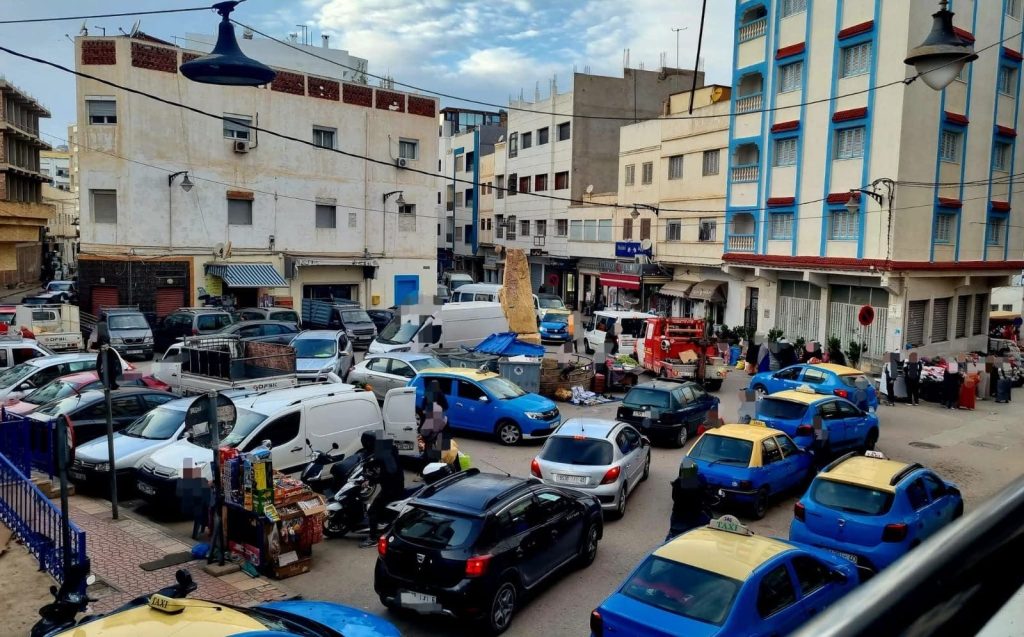
The Mujahideen Square, located in the heart of Al Hoceima, is considered its first face and its urban mirror, but what the visitor sees today is a chaotic scene that offends the symbolic and aesthetic status of this public space. The disruption of traffic flow, and the disorganized spread of street vendors, create real difficulties in movement and undermine the flow within the square, making it a bottleneck instead of an urban outlet.
The situation becomes more complicated with the poor lighting at night and the disruption of public order during the day, which makes the square lose its role as the beating heart of the city and a tourist destination that is supposed to reflect order and attractiveness. Also, the existing memorial in the square does not receive the necessary care, as its surroundings are disfigured by the presence of waste containers, in a scene that raises more than one question mark about the management of public space and respect for its symbolism.
In the face of this reality, the urgent need for comprehensive rehabilitation and restructuring emerges, based on an integrated approach that regulates traffic and reduces chaos, with the adoption of humane and fair solutions for street vendors, preserving their dignity and ensuring their right to a decent life within an organized and legal framework. The matter also calls for improving lighting, and taking care of urban decoration, which restores the square's attractiveness and makes it a space suitable for common life.
The fundamental question remains: What is the role of the Municipal Council in this continuous imbalance? The council, as the body responsible for managing local affairs, is required to assume its full responsibility, by programming concrete interventions, activating monitoring and follow-up mechanisms, and coordinating with the other stakeholders to restore the square.
Saving Mujahideen Square is not an urban luxury, but an urban, tourist and cultural necessity. It is a clear call for officials to take urgent action, and restore this space to its natural status: a space for dignity, beauty, and a civil life that befits the city and its residents.