HIBAPRESS – Rabat
Iran is witnessing a state of ambiguity in the indicators of power management, after a series of contradictory events and statements issued within one day. The Iranian President apologized to the Gulf countries this Saturday morning, announcing the cessation of attacks against them, before the Revolutionary Guard sent hundreds of missiles in their direction in the evening.
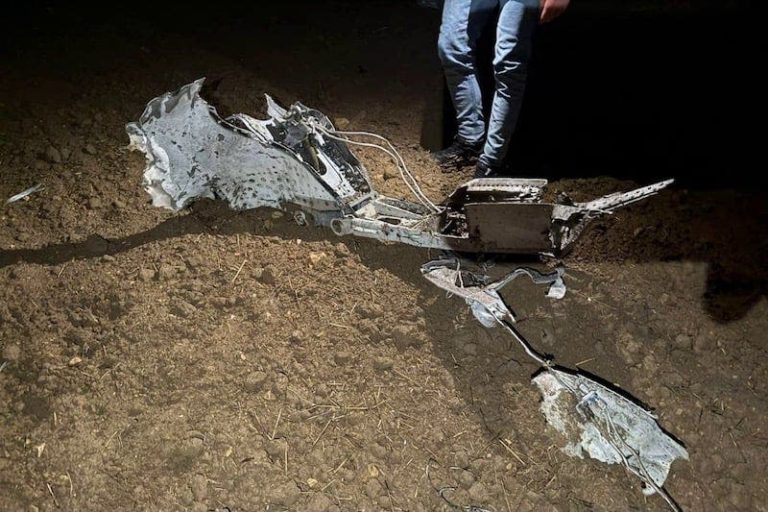
Hours after the Iranian President's statements, Qatar, Kuwait, the UAE, Jordan, and Bahrain announced that they were subjected to missile and drone attacks by Iran, and were able to repel most of them, while others fell on the lands of these countries.
These developments reveal a divergence between official positions at the political level and the operational orientations of military institutions, especially the Revolutionary Guard, which has broad influence and is largely independent of the executive authority.
Reuters quoted sources close to the Iranian leadership as saying that President Pezeshkian's apology to the Gulf countries sparked the objection of hardliners in the Iranian Revolutionary Guard and its senior leaders, which explains the continuation of missile attacks against the Arab countries despite the Iranian President's statements.
Pezeshkian said in a speech broadcast on Iranian state television that the temporary leadership council decided in its meeting on Friday not to target neighboring countries and not to launch missiles at them unless Iran was attacked from the territories of these countries.
Pezeshkian added: "I apologize on my behalf and on behalf of Iran to the neighboring countries that Iran attacked," stressing that Tehran does not intend to attack any country.
Only a few hours after Pezeshkian's apology, air defense systems in several Gulf countries intercepted a barrage of ballistic missiles and drones launched by Iran.
In Doha, the Qatari Ministry of Defense announced that it had intercepted a missile attack targeting the country today without providing details about the number of missiles or targets.
In Bahrain, sirens sounded more than 5 times during the hours, calling on residents to go to the nearest safe place.
The General Command of the Bahrain Defense Force announced that its systems had succeeded in intercepting and destroying 86 missiles and 148 drones since the beginning of the attacks.
In the UAE, the Dubai Media Office announced the death of an Asian resident after debris from an aerial interception fell on his car in the Al Barsha area.
The Saudi Ministry of Defense also confirmed the interception and destruction of two ballistic missiles that targeted Prince Sultan Air Base in the city of Al-Kharj, in addition to six drones that were heading towards the Shaybah oil field. It also pointed out earlier to the downing of a drone east of the capital, Riyadh.
Furthermore, the National Guard in Kuwait announced the downing of a drone at one of the sites belonging to the Kuwaiti Ministry of Defense's tasks. The Guard stressed, in a statement, its high readiness in coordination with the army and police to protect vital facilities, warning that it would deal firmly with any threats or attempts to disrupt the security of the country.