HIBAPRESS – Ahmed Sabbar
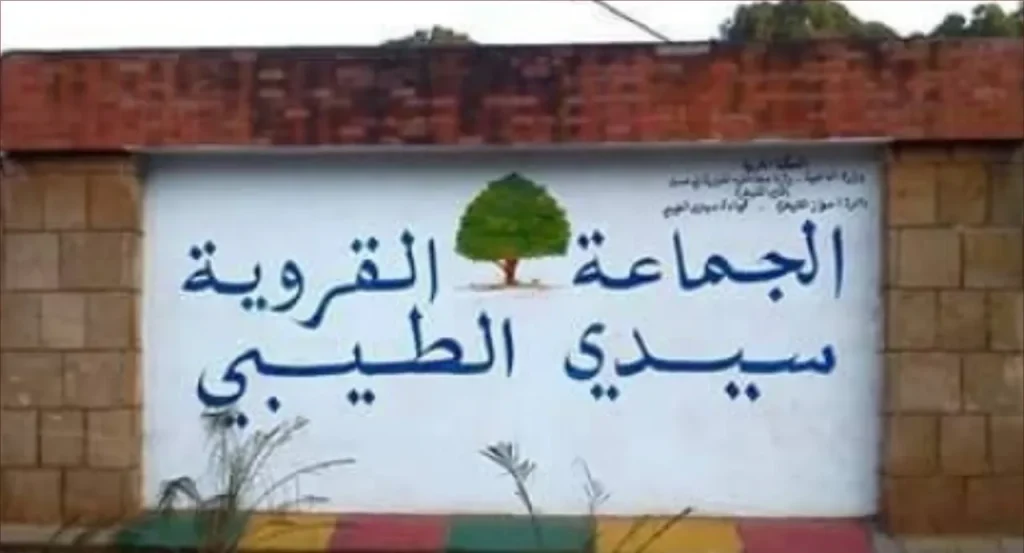
The Sidi Taibi commune, administratively affiliated with the Kenitra province, embodies a striking example of the development paradox in a semi-urban area, where natural potential and strategic location coexist with a faltering social and economic reality, raising more than a question mark about the effectiveness of public policies directed towards this area.
The Sidi Taibi commune is located at a sensitive strategic geographical point, making it a link between Rabat, the administrative capital, and Kenitra, the capital of the West. This location was supposed to qualify it to be a rising economic pole, capable of attracting investments and creating sustainable development dynamics. However, reality reflects the opposite, as the commune still suffers from structural imbalances at the level of infrastructure, weak basic equipment, and the absence of a clear vision for valuing its natural and tourism qualifications.
Despite the region's abundance of fertile agricultural lands and natural areas suitable for eco-tourism investment, these resources remain underutilized, in the absence of structured projects capable of converting these potentials into real added value for the benefit of the population. Also, the fragility of the local economic fabric and the lack of job opportunities push a wide segment of young people to migrate to neighboring cities, especially Rabat, Kenitra and Tangier, in search of better opportunities.
Among the most prominent challenges hindering the region's take-off is the file of restructuring the villages, which has been the title of postponed expectations for years. This workshop, which is supposed to improve living conditions and reorganize the urban area, is slow in implementation, which negatively reflects on the quality of daily life for the population, and consolidates manifestations of marginalization and spatial exclusion.
In contrast, the security aspect constitutes the unique positive exception in this complex equation, as the elements of the Royal Gendarmerie were able to impose their field presence and enhance the sense of security among citizens. These efforts contributed to erasing the stereotypical image that was being promoted about security breaches, and restored tranquility to the public space, in a basic step for any potential development path.
Local affairs followers believe that the security stability that Sidi Taibi is experiencing constitutes a real opportunity that must be invested, by launching development projects that benefit from this positive climate, and transform the commune from a marginal space into an attractive area for investment. However, this transformation remains contingent on a strong political will and effective coordination between various actors, from local authorities, elected officials and economic actors.
Achieving balanced development also requires the effective integration of the commune into the major regional programs, especially in light of the dynamics experienced by the Rabat-Salé-Kenitra region, which is supposed to reflect its effects fairly on its various affiliated communes, instead of leaving some of them outside the circle of benefit.
Sidi Taibi today does not need a new diagnosis as much as it needs practical and courageous decisions that end the state of long waiting and open real horizons for its population, especially the youth who pin their hopes on a better future within their territorial area.
In light of this reality, the question remains hanging, will Sidi Taibi turn from the margin of development to its heart, or will it continue as the title of a Moroccan paradox that is repeated in more than one field? This is what the next few months will reveal, especially as we are approaching entitlements that will determine the features of a political map that may do justice to Sidi Taibi or take it back to before…
To be continued…