HIBAPRESS – W.M.A.
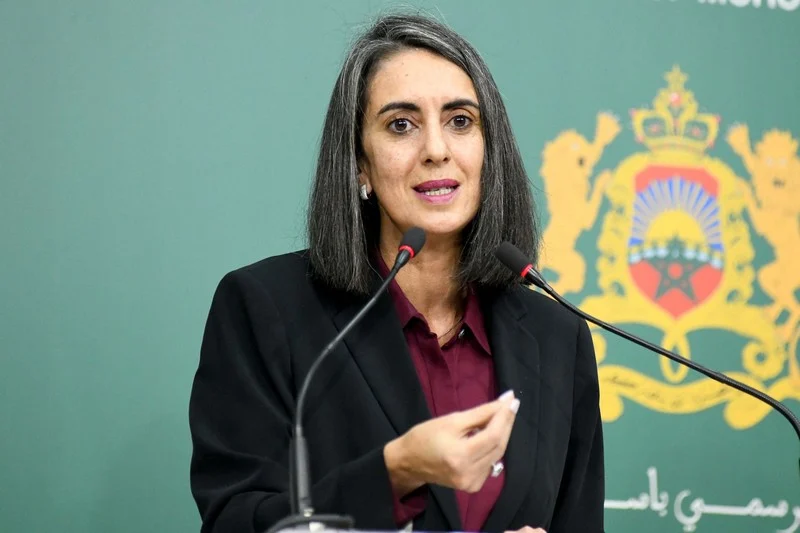
Nadia Fettah, the Minister of Economy and Finance, confirmed on Thursday in Tangier that the Kingdom of Morocco, under the wise leadership of King Mohammed VI, has made a strategic choice by making innovation a key pillar in its development model, through launching an ambitious and advanced economic transformation journey, based on technology and innovation.
Nadia Fettah said, in a speech during the work of the Conference of African Ministers of Finance, Planning and Economic Development (COM2026), organized within the framework of the 58th session of the United Nations Economic Commission for Africa, that Morocco has made significant investments in digital infrastructure, and has also launched ambitious strategies to accelerate digital transformation, focusing particularly on expanding access to high-speed Internet, developing e-government, promoting digital skills and job opportunities for young people, and supporting the emergence of dynamic digital environments. She added that the goal of these measures is to "make Morocco a regional hub for artificial intelligence and digital technologies," highlighting that "Morocco has also developed integrated, high-performance industrial systems." In her remarks on the continental context, the minister reiterated that "Morocco's commitment goes beyond national development goals. The Kingdom believes that its future is closely linked to the future of the African continent," adding that, in accordance with royal directives, Morocco has been pursuing an effective African cooperation policy for years, based on solidarity, partnership and joint development. In the same context, she noted that the approaches followed at the national level are no longer sufficient to meet the serious challenges posed by these transformations to economies and societies, considering that "strengthening cooperation at the continental level will contribute significantly to achieving common aspirations and benefiting from the potential offered by technology and innovation." The minister stressed that by valuing the dynamics of continental integration, African countries can pool their investments and enhance resource sharing, encourage the exchange of skills and best practices, coordinate their systems, and create larger and more integrated and interconnected markets, calling on African financial institutions to move from their role in mobilizing financing to providing strategic support and developing sustainable, inclusive and effective environments. She noted that the theme chosen for the 58th session of the Economic Commission for Africa, "Growth through Innovation", takes on special importance in light of these profound transformations that the global economy has witnessed in recent years, especially since innovation has become the basis of productivity, and that the integration of technologies has become a key factor in economic strength and geopolitical influence. It is worth mentioning that the Conference of African Ministers of Finance, Planning and Economic Development started with a meeting of the Committee of Experts (March 28-30), followed by the organization of a series of parallel meetings (March 31 and April 1), before the ministerial segment started on April 2 and 3. During the conference, participants discuss ways to use advanced technologies, especially artificial intelligence, public digital infrastructure, and advanced data systems, in order to enhance productivity, diversify African economies, and achieve sustainable structural transformation. It is expected that these works will result in ministerial recommendations concerning digital sovereignty, data governance, innovation-based growth, and investment in digital and energy infrastructure.