HIBAPRESS
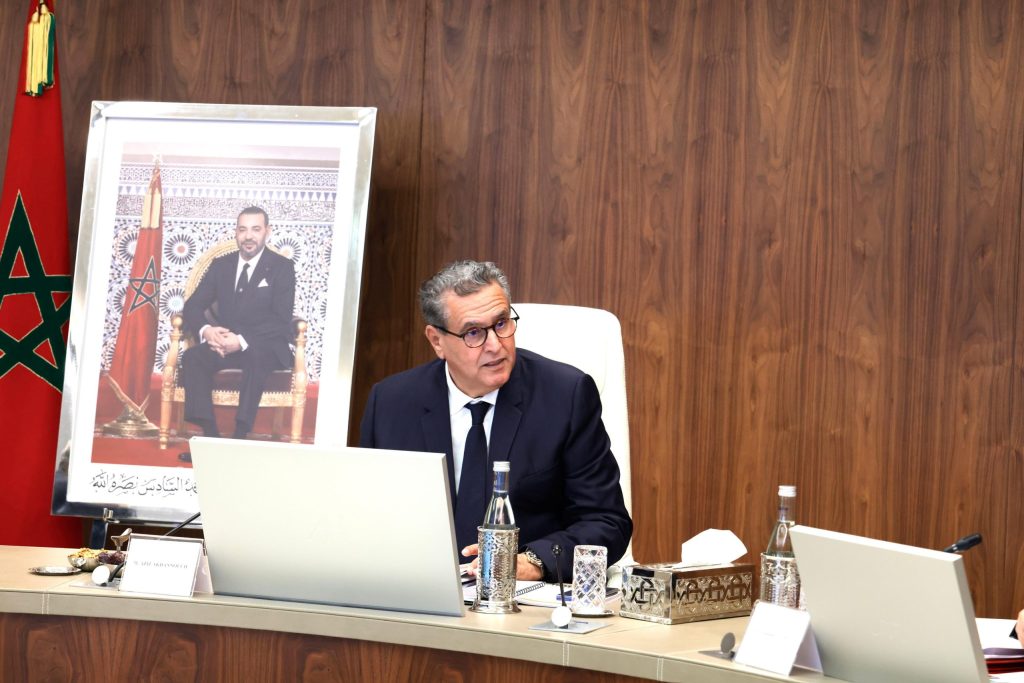
The Head of Government, Aziz Akhannouch, chaired on Tuesday, April 14, 2026, in Rabat, a meeting of the steering committee for the reform of the national health system. The meeting was dedicated to monitoring the implementation of the various components of this strategic project, in line with the high royal directives aimed at establishing an effective, sustainable, and equitable health system that ensures fair access to quality health services for all citizens.
At the beginning of the meeting, the Head of Government highlighted the forward-looking royal vision that places territorial health groups as a mechanism to achieve integration between the different levels of health care and the implementation of regional health in the Kingdom, calling for the mobilization of all sectors in order to accelerate the activation of territorial health groups, which His Majesty the King, may God protect him, preferred by appointing 5 general managers for them. The Head of Government praised the smooth running of the program to rehabilitate primary health care institutions, especially after the completion of the rehabilitation of 1,400 health centers, and the start of the second phase of the program, pointing out the governmental efforts made to lay the foundations of an effective and fair health system that puts the citizen at the heart of its priorities, in implementation of the high royal directives. During this meeting, the progress made in the implementation of structured projects was reviewed, especially the activation of territorial health groups, where a positive dynamic was recorded in the first model experience that started in the Tangier–Tetouan–Al Hoceima region, especially at the level of the increase in the number of patients who received treatment, the increase in the number of medical staff, and the improvement of coordination between health institutions within the region. The committee also reviewed the progress of health infrastructure projects. In this context, the emphasis was on accelerating the implementation of major hospital projects, where the year 2026 will witness the completion of 15 hospital projects across the various regions of the Kingdom, which will enable the strengthening of the health offer by about 3,000 additional beds, within the framework of continuing to strengthen the health infrastructure and ensuring a better spatial balance. The implementation of the program to establish 6 university hospitals was also recorded, with an investment exceeding 20.6 billion dirhams, with a capacity of approximately 3,807 beds, where the Mohammed VI University Hospital in Agadir constitutes an advanced model for new-generation hospitals, thanks to its equipment with the latest technologies. At the level of primary health care, the committee reviewed the progress of the implementation of the program to rehabilitate 1,600 new health centers, with a financial envelope of approximately 7 billion dirhams, and that is in the continuity of the program that enabled the rehabilitation of 1,400 centers, where the first phase includes the programming of 500 centers during the year 2026, which enhances proximity services and enshrines spatial justice in access to treatment, especially in rural and remote areas. In connection with the digital transformation, significant progress was recorded in a number of structured projects, where the readiness rate of data related to the health map project reached about 95%, and the development of an integrated national digital platform that brings together data from the public and private sectors was completed, provided that the final stage will be started before presenting it to the various stakeholders, which enhances the governance of the health system and improves the distribution of resources. The joint medical file and the electronic treatment sheet were also discussed, with an emphasis on completing the technical aspect and preparing for the gradual implementation during the year 2026, with the aim of enhancing the continuity of treatment, improving the coordination of care pathways, and simplifying the procedures, within the framework of a secure, legal, and integrated digital system between the various systems. Progress was made in developing the emergency medical assistance system (SAMU), starting from the regional model that was established at the level of the Rabat-Salé-Kenitra region, where it is expected to gradually expand this model, by activating the rest of the territorial health groups, which contributes to improving the speed of intervention and the quality of care for emergency cases, and enhancing coordination between the various stakeholders. In the same context, the "Health Complaint" digital platform was updated, by establishing an integrated national system for managing patient complaints, supported by a national center for listening and advanced digital tools that allow effective follow-up of various complaints. In addition to recording progress in the digitization of the Moroccan Agency for Medicines and Health Products, through the launch of the first components of the unified digital counter, and continuing to develop its other services, which enhances transparency and improves the management of procedures related to health products.