

HIBAPRESS – Mohamed Zerouih
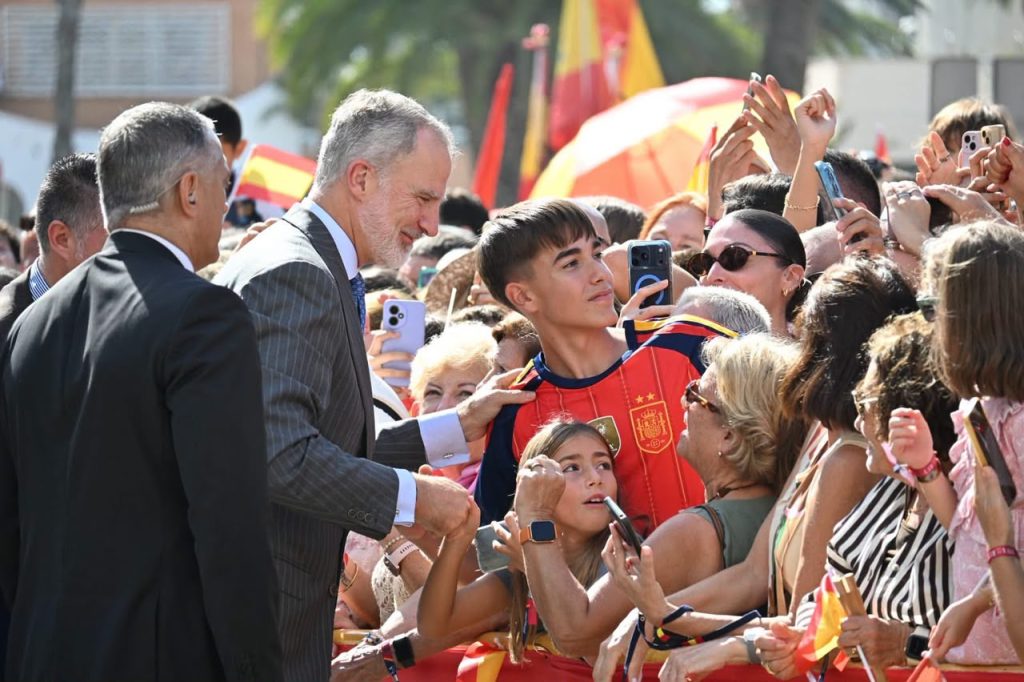
In a move that captures the attention of political and media circles, the Spanish King Felipe VI, accompanied by his wife Queen Letizia, arrived on Wednesday morning, October 14, in the occupied city of Melilla, coming from occupied Ceuta, on an official visit that reintroduces the Spanish royal presence to the forefront in both cities.
The arrival of the monarchs coincided with the raising of Spanish flags in several of the city's streets and squares, amid a local reception that reflects the importance Madrid attaches to this stop.
The visit carries significant symbolic connotations, as Felipe VI and his wife have never visited Melilla since ascending the throne in 2014, while the last visit by the Spanish royal family to the city dates back to November 2007.
The official program includes meetings with representatives of local institutions, a visit to an educational institution to learn about its experience in integration and educational innovation, as well as a meeting with several figures from the local community.
This step comes at a time when migration and border security files intersect with the calculations of Moroccan-Spanish relations, giving the visit dimensions that go beyond its protocol nature.
The participation of Spanish government officials, including the Minister of Inclusion, Social Security, and Migration, Elma Saiz, also highlights the presence of issues related to both cities within Madrid's official concerns, amidst the ongoing discussion about migration management and cooperation between the two shores of the Mediterranean.
Between the institutional nature of the visit and its political implications, attention is drawn to the messages carried by the Spanish monarch's return to Melilla after many years of royal absence.
While Madrid describes this step as an expression of support for local institutions and the city's residents, the visit remains under scrutiny in Morocco, given the connection of Melilla and Ceuta to the issue of national sovereignty, and the sensitivity that imposes in interpreting Spanish official movements and their potential repercussions on bilateral relations.