HIBAPRESS – Abdel Latif Baraka
With the beginning of Fatima Zahra El Mansouri's government, the issue of Moroccan purchasing power returns to the forefront of economic debate, amid the continued rise in prices of vegetables, fruits, and food products, and the widespread discontent among citizens who find themselves facing high prices that do not always reflect the value the farmer receives when selling their produce.
Between the farmer complaining of a weak profit margin and the consumer facing the high cost of living, the problem of intermediaries emerges as one of the links that requires radical reform within the agricultural marketing system.
In many commercial channels, the product passes from the farmer to more than one intermediary before reaching the consumer, with multiple costs and profit margins accumulating. This chain can, in some cases, turn into a field for speculation and control over supply and prices. Thus, the farmer finds themselves forced to sell their produce at a limited price, while the citizen buys it at multiples of that price, a paradox that reveals an imbalance in profit distribution within the market and raises a fundamental question about the real beneficiary of the multiplicity of intermediation links.
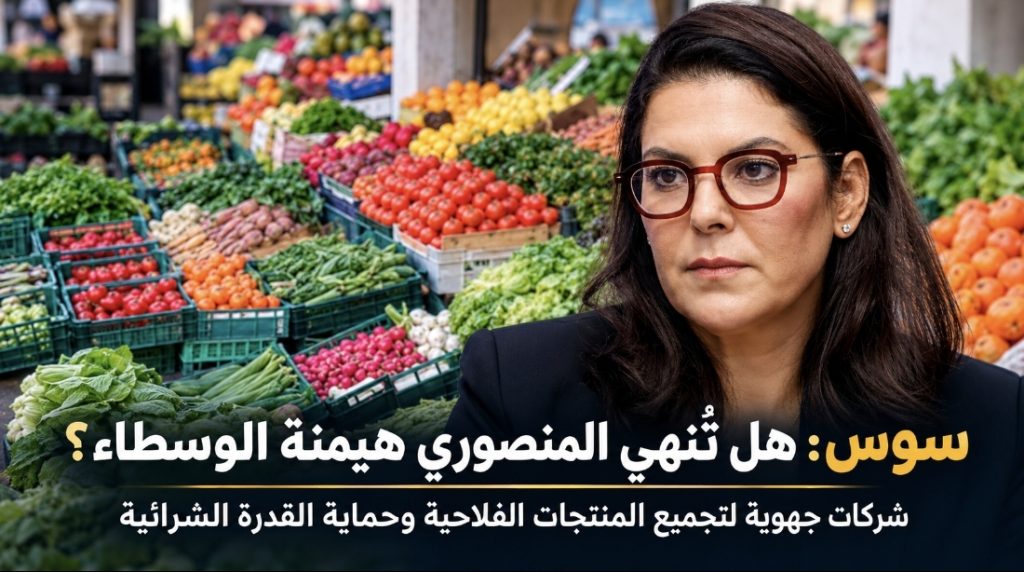
Faced with this situation, the proposal to establish regional companies for the collection and marketing of agricultural products emerges as a practical approach to break the dominance of intermediaries and reduce their influence in determining the path and prices of goods.
The idea is based on purchasing vegetables and fruits directly from producers, collecting them in equipped regional centers, and then distributing them to wholesale markets, stores, and points of sale in various cities, without allowing for a long chain of interveners who raise prices from one link to another.
This is not just about creating new companies, but about rebuilding the economic relationship between the farmer and the market by providing an organized marketing channel that competes with traditional intermediaries, grants producers the ability to sell their crops under clear conditions, and allows consumers to benefit from reduced discrepancies between the farm gate price and the final sale price.
The primary goal is to end a situation where some interveners benefit from weak organization and lack of transparency at the expense of both the farmer and the citizen.
These companies can adopt a clear system for purchasing crops according to quality standards, quantities, and reference prices, while concluding direct agreements with cooperatives and small and medium-sized producers. They can also provide transportation, storage, refrigeration, and distribution services, thereby reducing spoilage losses and offering farmers a real alternative to selling their products under pressure, especially during periods of abundant production when some intermediaries exploit the situation to impose low purchase prices before reselling the goods with high margins.
However, combating the dominance of intermediaries will not be effective without adopting a strict digital system for tracking prices, quantities, and the movement of products from the farm to the point of sale. The Ministry of Agriculture, in coordination with the relevant authorities, can establish a database that records production areas, available quantities, harvesting times, and prices at the source, while tracking selling prices in wholesale and retail markets.
This data will reveal unjustified discrepancies, identify the links where prices inflate, and direct monitoring efforts towards practices that harm competition and purchasing power.
Furthermore, publishing periodic indicators on vegetable and fruit prices and the quantities traded will limit the exploitation of information scarcity for market manipulation, and grant both farmers and consumers a clearer view of the true value of products. The adoption of digital invoices and tracking the origin of goods can be an additional means to contain illegal speculation and distinguish between intermediation that provides necessary services and practices based on controlling supply or raising prices without economic justification.
This approach is of particular importance in the Souss-Massa region, as it is an agricultural hub, especially the regions of Chtouka Ait Baha and Taroudant, which play a vital role in supplying national markets with agricultural products. Agadir could host a regional center for the collection and marketing of vegetables and fruits, linked to logistics units in production areas, which would allow for directing crops to markets with high demand and reducing the costs associated with multiple transportation, storage, and sales operations.
This model would also help the government preempt seasonal imbalances by monitoring expected production and potential shortfalls in certain essential commodities, and taking appropriate measures before a supply crisis occurs. Instead of waiting for prices to rise and then intervening to contain them, a proactive policy can be built based on accurate data regarding production, inventory, and consumption, and determining the timing of resorting to imports when necessary, thereby protecting the market from sudden disruptions.
However, the success of this project requires clear political will and strict governance that prevents the regional companies themselves from becoming new channels for monopoly or favoritism. Therefore, they must be subjected to financial and administrative oversight, and periodic data on purchase and sale prices, operating costs, and marketing margins should be published, with transparency guaranteed in deals and management, and cooperatives and producers involved in governance and evaluation mechanisms.
The challenge facing El Mansouri's government is not limited to intensifying market surveillance, but requires addressing the root causes of imbalances that allow for price inflation between the producer and the consumer. Combating intermediaries who exploit the fragility of the marketing system necessitates providing an organized and competitive economic alternative, rather than merely relying on temporary measures that do not change the market structure.
The question remains: does El Mansouri's government dare to launch a real reform of the agricultural product marketing system by establishing regional companies that block the way for price-controlling intermediaries and restore balance to the relationship between the farmer and the consumer? The success of this step would make fighting the high cost of living a tangible economic policy, not just promises related to protecting purchasing power.